
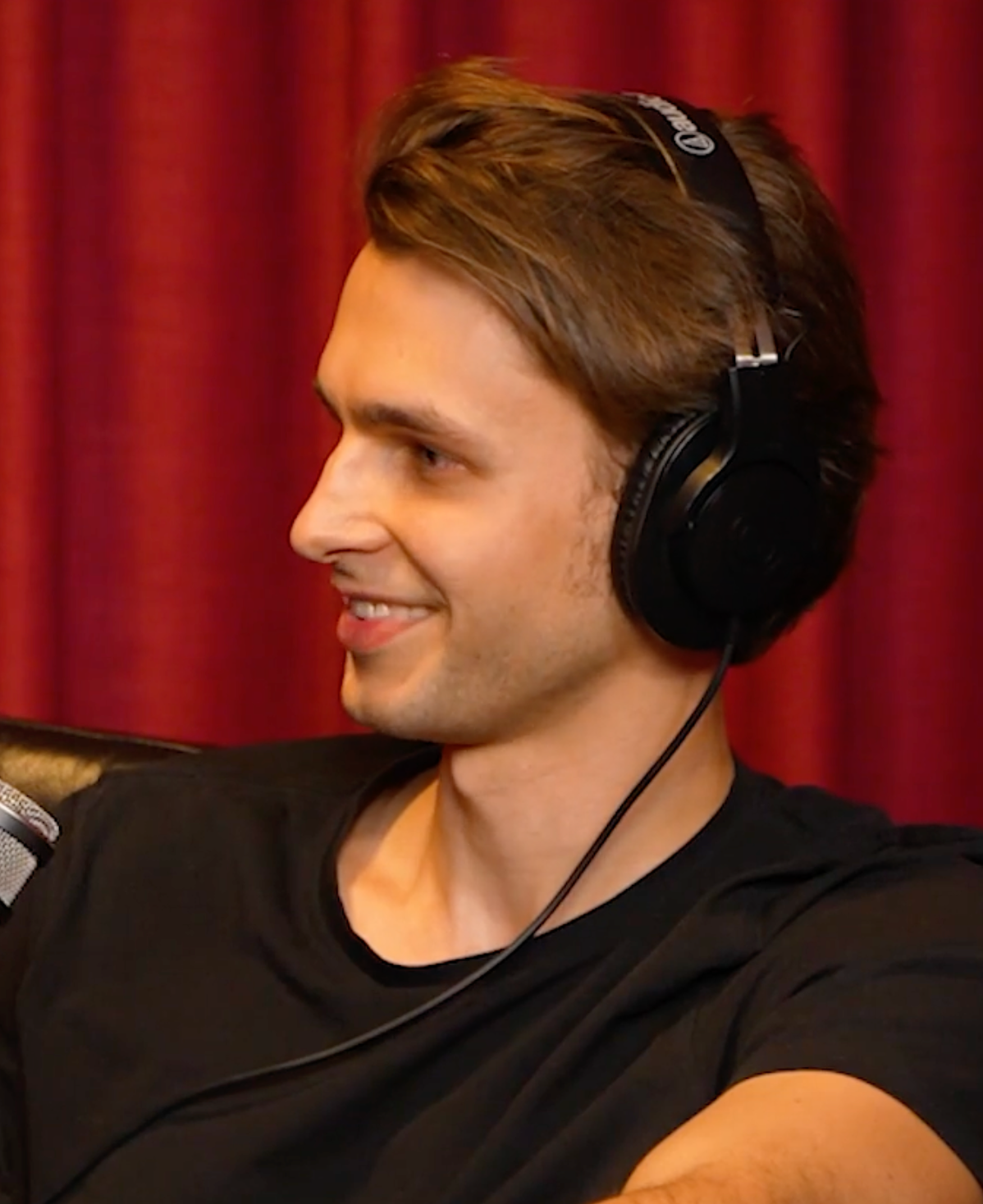
Episode 039
Rivendare: A Conversation with David Jonathon Clarke
Trent and Robyn talk with David Clarke of Rivendare about Death by Vanity and his approach to perfume materials and composition.
The episode includes a masterclass following the fragrance and a conversation about animalic materials, the Art and Olfaction Awards and working in Kununurra.
Find this fragrance
Death by Vanity by Rivendare is not stocked at Olfactive Melbourne Perfumery. Find it at the maker's own site.
About the guest
David describes Rivendare as based in Kununurra and says he released his first perfume at the end of 2024. He discusses becoming an Art and Olfaction Awards finalist in 2025.
He is introduced in this episode as the winner of the 2026 Golden Pear. The conversation explores the materials and ideas behind his perfumes and the two titles used for each fragrance.
From the episode
Editorial prompts below introduce unedited excerpts from the automated capture. Speaker turns and transcription accuracy are unconfirmed.
What does the name Death by Vanity refer to?
Yep, let's start with the story. And then we and then we can get into the notes and it makes a bit more sense rather than just, you know, dumbing it down to just the notes. Okay, so Death by Vanity. So that was a a term that was coined in reference to women, a particular young woman, I think it was Maria Coventry, in the Tudor period, so like 16th century onwards, um who passed away uh from poisonous makeup. So she was putting white powder, finishing powder on her face that was made of lead, and that was poisoning her, and she passed away, and that's where the name comes from. She wasn't the only one. Quite a few people, quite a few young, beautiful women and some well, not so, you know, not so young and maybe not so beautiful women lost their lives uh unfortunately um in the pursuit of just one moment of beauty, right? And uh so it's a bit of a kind of horrible histories um episode if you will. Um it's supposed to be kind of beautiful but tragic or uh beautiful but deadly.
Does a higher concentration make a perfume better?
Well, an important distinction is concentration. And this is something that I'm sure people who have been on your show in the past have already talked about. It's it's starting to enter the public psyche or the the in the artisanal space anyway is that concentration, it's not more is better. It's really not. It's part of the art. It's part of what you're trying to create. So for example with heliotrope um again, some people find that as a cloying chemically kind of smell but that's also concentration dependent. So if you look at and the same thing with most of the other powdery smells like your your orris for example, you look at orris butter, even the natural one um at high concentration, it smells waxy. It smells like lipstick is what people describe it as, right? But you lower that concentration right down and what do you get? You get powder.
Where does the name 1747 come from?
Okay, so 1747, that was the name is inspired by the year in which a famous cookbook was first published. It's the Art of Cookery by Hannah Glasse, who was a very famous celebrity chef for, you know, England in the 1700s. So very aristocratic, very historical. And in this cookbook, there's a recipe, well, there are a few pretty wacky recipes to be fair, but this one in particular is for hot chocolate with ambergris.
What's next for Rivendare?
Um well, I don't want to do what you just did and give away all my secrets. Um okay. How much should I let on here? Let's see. Well, we're sticking with Europe. We're sticking with history. We're sticking with aristocracy. We're going into the obsessive human nature of the people who lived in that time. Obsession with status, we'll say that much, through an unexpected medium.
Read the episode transcript
This transcript was made from the episode audio and checked for names and spellings. Timestamps are approximate, and any offers mentioned were current at the time of recording.
0:00 Speaker not confirmed: We're coming to you today from Melbourne, Australia and we would like to acknowledge the traditional custodians of the land on which we are recording, the Wurundjeri and Bunurong people of the Kulin Nation. We pay our respects to their elders past and present and extend that respect to all Aboriginal and Torres Strait Islander peoples listening to the recording today.
0:22 Speaker not confirmed: Before we get into today's show, a quick word about the Olfactive Melbourne perfumery. Brands featured on this show are available as a formal sample in our experience pack. Pick three fragrances and we'll send them to you with a QR code that links straight back to here. So you can sniff along with the episode. It's the first interactive perfume podcast experience. And the best way to discover Australian fragrance from anywhere in Australia. Fall in love with something? Your pack includes an exclusive discount on the full bottle. Visit olfactiveperfumery.com and build your pack today. Now let's get into it.
0:56 Trent (self-introduction; other turns unconfirmed): Hello and welcome to another episode of Olfactive Melbourne. I'm your host, Trent Stokes.
1:02 Robyn (self-introduction; other turns unconfirmed): And I'm Robyn Stokes. Today we're really happy and excited to have with us in the studio David Clarke from Rivendare and the winner of the 2026 Golden Pear Art and Olfaction Award. Welcome to the studio, David.
1:16 Speaker not confirmed: Thank you. It's lovely to be here.
1:18 Speaker not confirmed: Oh, we're so excited to have you with us and to be able to have this conversation with you.
1:24 Speaker not confirmed: Well, I don't know who's more excited out of us because this is my first time in the city doing anything like this, being a country boy. So I think the excitement's probably overwhelming at this stage.
1:36 Speaker not confirmed: Well, tell us, where is Rivendare based? That would be a great way to tell us.
1:42 Speaker not confirmed: Um so it's a little town about 1,000 km west of Darwin across the NTWA border. It's called Kununurra. Um which uh it's a very small rural town. Um I'm probably the only perfumer there. I think it's pretty safe to say. And um that was where I was born. Okay. That was where I was raised. I spent most of my life there. I spent a little bit of time in some other places. I was in Darwin for a little while, Perth as well just for a little while. Um and somehow ended up back there. And uh but the beauty of 2026 is that while I'm physically in a remote location, you can basically be connected with anyone anywhere in the world through the power of the internet.
2:24 Speaker not confirmed: So Very true. Yeah. That is quite remote though, I've got to say. Like in the Australian landscape where there's a lot of remote places, but that's like the remote of the remote there. So I don't think it can get much worse than that as a perfumer.
2:40 Speaker not confirmed: I mean, it's not exactly the land of opportunity. Like I think I'd probably be making a little bit more money if I was in Milan or somewhere like Paris or whatever. But at the end of the day, as you'll find out, it's not all about the finance at the end of the day. So it's um in some regards, it's probably a good thing. I like to try and uh use the environment that's around me as inspiration when I can. And it's definitely a unique environment. Not a lot of people can say that they've made a perfume based upon a location such as that.
3:12 Speaker not confirmed: So Absolutely. Yeah, most people haven't been to a location like that.
3:17 Speaker not confirmed: So No.
3:18 Speaker not confirmed: Including me. Exactly. Unless you're the only game in town, you're the only perfumer there. So that's quite nice.
3:26 Speaker not confirmed: Yeah. Well, me and the other few kangaroos and and yeah, you never know. The drop bears for our international listeners.
3:34 Speaker not confirmed: So Yeah. So tell us, how long have you been Rivendare and how long's it been around?
3:40 Speaker not confirmed: Um well uh publicly, well, I've been experimenting with perfume for I think about 3-4 years. Um I released my first perfume, technically speaking, at the end of 2024, around about Christmas, like very end of 2024. And um was able to because the way that the Art and Olfaction Awards work is, for example, if you've released a perfume in 2024, it gets charged and then awarded in 2025. So my first perfume was technically released in 2024, although it was a rush job and I just barely made it in time. And um sent that to the Art and Olfaction Awards and then was awarded a finalist top 10 in the world basically in the artisan category um in 2025. And then my next two perfumes which I worked on simultaneously were Death by Vanity and Tundra which were produced over 2025 and then awarded in 2026. And since then I've produced another two fragrances so far this year. One was a very long project, one was a very short project. And I'm hoping to get another one squeezed in just before the end of the year, but we'll see because I think it's going to be another long one.
4:54 Speaker not confirmed: So You've been quite productive given the relatively short timeframe that you've been around. So it's almost two years now.
5:02 Speaker not confirmed: Yeah, well since going public basically, yeah.
5:06 Speaker not confirmed: Fantastic. And just to close out the intro, I guess, if you could tell us a little bit about Rivendare, the identity of your brand as you see it.
5:16 Speaker not confirmed: Okay, um long version or short version?
5:18 Speaker not confirmed: Either will suit us.
5:20 Speaker not confirmed: Okay, so Rivendare, okay, so a little bit of context. Um in the artisan category, there are different types of artisans. Um there's sort of a prevailing style in Eastern perfumery and a prevailing style in Western perfumery and so on and so forth. Not everybody over here or over there follows exactly the same. So of course there's always exceptions and outliers, but the general theme that I see within the artisanal perfumes from the Middle East, for example, is that they focus a lot on high quality naturals and very expensive and luxurious materials, a lot of oud, animalics and things like that. And in the West, you tend to get things that are more artistic. It's more about the process of blending or things like that, more so than the handicraft of extraction and distillation and whatever. But the focus is more on fantasy accords, especially in the last 5-10 years. And so that's what I would call the Middle Eastern style, I would call the high quality natural artisan. And the Western style at the moment, I would call the artistic artisan.
6:28 Speaker not confirmed: Um and I like to think of Rivendare as kind of an intersection of both, trying to bridge the gap. And so all of my perfumes have, well, they don't all have natural animalics, most of them do, but they all have two titles. So for example, 1747 is the name of the perfume and then there's a subtext on the bottle, ambergris, whatever, Yemeni gold ambergris or whatever, Ethiopian civet mask with death by vanity. So it's kind of trying to hit both styles at once. Like for example, if it was a Middle Eastern perfume, you often see these perfumes like Arabian Jasmine or you know what I mean, the note, the hero note is on the bottle, right? And then in Western style, you've got the name which is evocative and it's like the Renaissance man or it's named after a city or something that takes you to a memory or a place. So I've got both basically.
7:28 Speaker not confirmed: So it's the best of both worlds really. It's the as you said, the intersection between those two worlds which is fantastic, right? Rather than being one camp or another, you can take the best aspects of both, combine them into something that's quite special. And no wonder you're a finalist.
7:48 Speaker not confirmed: I just want to reiterate that I'm in no way judgmental of anybody who goes to one side or the other because I absolutely adore both styles and I just couldn't choose.
7:58 Speaker not confirmed: Absolutely, you just wanted both. Yeah, exactly. And it's your own style. There's room for everybody, right? If you didn't have somebody in one style or another, you wouldn't have those styles in the first place. So but wanting to do both, great. Be greedy for it all, I say. Why not?
8:18 Speaker not confirmed: Fantastic. So David, as you know, the show that we do here on Olfactive Melbourne podcast is based on a masterclass. That masterclass unfolds in real time. So we spray out the fragrance, we go through the opening notes, then we let it dry down, we go through the heart notes and then onto the base notes. And we've selected one particular and very important fragrance today, haven't we?
8:42 Speaker not confirmed: So that is Death by Vanity which is that Art and Olfaction Golden Pear winner. Congratulations from both of us.
8:50 Speaker not confirmed: Thank you.
8:52 Speaker not confirmed: So what we're going to do, we want to get our nose on it now. Robyn is going to spray it out for us and then we're going to go through our notes. So Robyn's going to spray Death by Vanity onto blotters and onto our skin. And we always do this on the show for a very good reason. The first is on blotters, the smell is going to be consistent for us, isn't it? So what you smell is what I'm going to smell. Whereas when we
10:00 Speaker not confirmed: right onto our skin, we might see just a little bit of variation. As you know, because we were having a bit of a giggle about this before the show, I run pretty hot and uh we're sort of heating up the room for our our country boy here who was a little bit cold. So you're probably running a little bit colder than I am, uh which means that we might get to the dry down at different sort of stages uh throughout the course of the show.
10:30 Speaker not confirmed: Um so what we're going to smell is our opening notes first. Now, just before we do have a great big whiff of this um of this award winner, just for those people who might be a little bit new to perfumery, just to explain what opening notes are. On your screen right now, you have the uh perfume pyramid. Perfume pyramid consists of opening notes or top notes at the very, very top. In the middle, we have our heart notes, and at the very bottom, we have our base notes. Our opening notes are made up of the lightest and the most volatile of the um fragrance molecules. So all that means is those molecules are going to surface in the fragrance first, hence why they're top notes or opening notes, so we smell them first, but then they also dissipate the fastest, making way for the heart notes yet to come. The opening notes don't disappear altogether, they simply take a little bit of a backseat to the heart notes, which become a little bit more prominent in about 15 to 30 minutes just depending on the fragrance.
11:38 Speaker not confirmed: This episode of Olfactive Melbourne is proudly brought to you by TNT Group. For Australian fragrance founders, the standard 10,000 piece packaging minimum has long been a wall between the design you envisioned and the design you could actually launch with. TNT Group designs and manufactures luxury packaging for the world's leading fragrance houses. And until the end of season two, Olfactive Melbourne listeners can access TNT directly with the 10,000 piece minimum waived and 10% off unit pricing. Premium packaging at the scale Australian indie brands actually launch at. Visit tnt-group.com and mention Olfactive Melbourne when you reach out.
12:18 Speaker not confirmed: So let's have a smell on our blotters and on our skin and then we can go through our opening notes.
12:26 Speaker not confirmed: Oh. Yeah, really glad that I've got it on the skin here. It's quite prominent on the skin.
12:34 Speaker not confirmed: Definitely uh definitely projecting here. So David, what are we actually smelling here in the opening?
12:42 Speaker not confirmed: So where do I begin?
12:45 Speaker not confirmed: Um so we're basically I think you should start with the story.
12:47 Speaker not confirmed: Yep, let's start with the story. And then we and then we can get into the notes and it makes a bit more sense rather than just, you know, dumbing it down to just the notes. Okay, so Death by Vanity. So that was a a term that was coined in reference to women, a particular young woman, I think it was Maria Coventry, in the Tudor period, so like 16th century onwards, um who passed away uh from poisonous makeup. So she was putting white powder, finishing powder on her face that was made of lead, and that was poisoning her, and she passed away, and that's where the name comes from. She wasn't the only one. Quite a few people, quite a few young, beautiful women and some well, not so, you know, not so young and maybe not so beautiful women lost their lives uh unfortunately um in the pursuit of just one moment of beauty, right? And uh so it's a bit of a kind of horrible histories um episode if you will. Um it's supposed to be kind of beautiful but tragic or uh beautiful but deadly.
13:52 Speaker not confirmed: Oh, I like it. And that would have been obviously back then, they didn't know which specific elements within the makeup was
14:00 Speaker not confirmed: One point of correction, there were at least a few instances in which people were quite aware that what they were doing was killing them and they did it anyway. And so um in a way you could say like not much has changed really. I mean people still do some stuff nowadays that in a few years we're going to be looking back on and saying that was crazy, can't believe we did that. Um it could be anything from the microplastics in our water or the aluminium in our, you know, deodorant or whatever it is, but um anyway, so basically the the fragrance, getting back to the topic.
14:28 Speaker not confirmed: Um the fragrance is a white powder accord and so the uh the the makeup powder that they were using it was called ceruse, which uh again it's just a finishing powder and back in those days um pale skin, you know, was considered the beauty standard at the time and it still is in some places today. Um losing my train of thought.
14:50 Speaker not confirmed: Particularly in Asia as well, you know, that that sort of white skin, you know, and and you know, think about it now like people go to tanning salons or, you know, whatever and it's the same thing, you're getting skin cancer, you're potentially going to lose your life and yet we're doing it because we want to look good. I don't care if I die, I just want to be hot for like one day, you know. It's true, right? This is why we've got Ozempic, this is why we've got, you know, all of these things to to meet the beauty standard of the day, which obviously it changes, right? So back then it was that very white sort of look in a certain part of the world at least. I'm not sure what was happening in in Asia at the time or, you know, in in South America for instance, but certainly all the way through Europe. And we've seen that in all of our history shows, all of our history books, you know, that's what the the standard was.
15:40 Speaker not confirmed: Yeah, for like a thousand years the standard.
15:44 Speaker not confirmed: Yeah, absolutely. Uh and you see that in all of the the classic paintings that you see everywhere throughout Europe. All right, so people were putting this poisonous stuff on on their skin and obviously there's a bit of a link here because this is called Death by Vanity, so you've created a powdery sort of opening here.
16:02 Speaker not confirmed: Yeah, so this this powder was called ceruse as I said. Um the best quality one was from Venice, so it was a Venetian ceruse. So basically I used that as kind of a reference image when I was creating the fragrance, um thinking about uh an old vanity that you might find in like your grandma's grandma's house or, you know what I mean, and like just that very old-fashioned powder and you might open it up and it's like, oh, is this safe, you know. And so wanted to to create a really white powder fragrance and I've done that with a bit of heliotrope um and well, in the okay, so we'll start from the top. So heliotrope and rosewood. So when I say rosewood, um Brazilian rosewood, the one that was traditionally used in in chypre a long time ago, it's uh endangered and protected, so it's no longer able to be traded. You can however get a linalool isolate from natural rosewood. It's it's a legal way of trading it. So for people who for example already had that before it became endangered or whatever, they can then distill that or extract the linalool out of it and then trade that.
17:10 Speaker not confirmed: So anyway, so we've basically got a very fine linalool um which if you don't know linalool is one of the main constituents that gives bergamot its uh kind of floral note um and it's one of the main elements of a chypre fragrance. So a normal chypre fragrance would be bergamot, labdanum and oakmoss. Um and for those who don't know bergamot's obviously citrus, labdanum's an amber um from from a flower and oakmoss well it's pretty self-explanatory.
17:38 Speaker not confirmed: And anyway, so in this case I've and this is reflective of my approach to perfumery in general. I I like to have a one-by-one approach when selecting the ingredients. Um and so rather than just go oh I want a chypre so I'll do bergamot, labdanum, oakmoss whatever, I'd like to go through and select the best tool for that job. So instead of bergamot I've used linalool ex bois de rose which is again it's much finer, lighter, clearer and for a very ethereal and ghostly kind of fragrance as this was intended to be that was perfect for the job as opposed to bergamot which would have come across as citrusy and it would have just completely broken the illusion. And then instead of labdanum I've used uh coumarin and it's specifically it's not the typical sticky sweet uh tonka bean coumarin. It's coumarin ex cassia. So it's a little bit cinnamic, it's more dusty, more powdery and again more in the direction that I'm wanting to take the fragrance.
18:38 Speaker not confirmed: Yeah, just keep that image in your mind.
18:42 Speaker not confirmed: Yeah, and then in regards to oakmoss um oakmoss you know depending on what sort of concentration you're using and and how you're using it um it can actually just be quite an ethereal note already as it is um but in particular I find that the uh the unrectified non-IFRA green oakmoss is the most you know it's it's it's the real deal so that's what I've used in this fragrance. And so that gives you a basic structure and and the heliotrope is the powder on top of the vintage kind of feeling chypre.
19:10 Speaker not confirmed: And so basically that that heliotrope so again the reason why I used heliotrope to create the powder accord um when people think of a powdery perfume what do they think of? They think of violet or they think of orris. And in most cases in in violets it's usually ionones and in in orris it's usually irone or whatever. These are just synthetic chemicals and they're very strong chemicals and so it's not uncommon to see perfumers especially less experienced perfumers uh a little too heavy-handed with them. They tend to be cloying and
20:00 Speaker not confirmed: writing and that's why it's a such a divisive thing. And so when people hear, oh, powder fragrance, I don't know about that, then I usually have to say, well, give it a try first because it's not what you're expecting if you have experience with perfume. Because, you know, most most perfumes are like I said, most powdery perfumes are approaching in a different way. So the heliotrope that I've used is a natural heliotrope. And a lot of people associate heliotrope with things like almonds or or like phenolic smells like and anic smells like licorice or osmanthus and things like that, but um the natural one is again, much more light and ethereal than the synthetic one and less of that kind of medicinal chemical. And and it's quite uncommon to see natural heliotrope used in fragrances nowadays and I thought it was such a beautiful material, I just had to use it.
20:56 Speaker not confirmed: And and that's been paired with a couple of musks. So a nitro musk, like a musk ketone basically. Um certain nitro musks have gotten a bad rap over the years and a lot of people aren't aware that for example, musk ketone is still able to be used ethically because, you know, for example, musk xylene is explosive and and and there's contaminants and all these other things you have to worry about. So um most people have just discounted nitro musk completely. They think that musk means like ethylene brassylate or galaxolide or you know, but they've forgotten that these vintage fragrances, these from the from the '60s and '70s for example um they had a much more powdery musk to them and that's what I've used.
21:42 Speaker not confirmed: And and then I paired that again with a little bit of a natural animalic and and in this case, it's civet. It's an Ethiopian civet. And um in my opinion, out of well, out of the the the most commonly used it sounds ironic to say because no no natural animal musk is commonly used but but out of the most commonly used ones which is, you know, your deer musk, your ambergris, your civet, I'd say the civet is the most powdery and so that's what I've gone with.
22:10 Speaker not confirmed: Absolutely and this is not one of those fragrances that's, you know, absolutely slaps you in the face like a really heavy-handed violet sort of fragrance. It is, I think you've sort of nailed it there, it's an ethereal light certainly you can smell it. I'm not saying that it is not a fragrance that that hits you in the nose. It's just not a slap in the face type of fragrance. It's quite light, quite different to something that you might expect out of a department store.
22:40 Speaker not confirmed: Well, an important distinction is concentration. And this is something that I'm sure people who have been on your show in the past have already talked about. It's it's starting to enter the public psyche or the the in the artisanal space anyway is that concentration, it's not more is better. It's really not. It's part of the art. It's part of what you're trying to create. So for example with heliotrope um again, some people find that as a cloying chemically kind of smell but that's also concentration dependent. So if you look at and the same thing with most of the other powdery smells like your your orris for example, you look at orris butter, even the natural one um at high concentration, it smells waxy. It smells like lipstick is what people describe it as, right? But you lower that concentration right down and what do you get? You get powder.
23:28 Speaker not confirmed: Yeah.
23:30 Speaker not confirmed: So there's different names for it. I don't think there's any like term that everybody agrees upon but I've heard it described as concentration dependent odor character shift.
23:40 Speaker not confirmed: Concentration dependent odor character shift.
23:44 Speaker not confirmed: So and it's one of the most important things to learn as a as a perfumer starting out is that you know, you might make a fragrance that you're really enjoying at 10% and you go, oh, I'm going to up it to 20% and then it just ruins it because the illusion's broken. You have to work in the context in which the end product is going to be presented. So if you're going to present it at 10% in the final product, you have to work with it in 10% so that you actually know what you're making. If you change it later, you don't even know what you're making, you know?
24:14 Speaker not confirmed: Yeah. And this is certainly not something that that is sort of widely known with the general public either and I think that there's a bit of a maybe a bit of a misconception out there that oh, you know, an EDP is better than an EDT and elixir is better than an EDP and you know, the stronger it gets, the better it is but better is is a judgment call here, right? So it's not that you're getting more out of your fragrance. It's just it's a different output. It's a different style that you're getting. I've certainly had lots of people sort of tell me, oh, I bought the I bought the elixir version of this versus the EDT and it's going to be so much better and they spray it on and they feel like it doesn't project as much.
24:52 Speaker not confirmed: It's very surface level understanding and a lot of it stems from the fact that um price plays into people's perception of quality. So of course an extrait is going to cost more than an EDT because it's got more oil in it, right? But that doesn't mean that it's better, right? Because you know, so for example, if you can buy a fragrance that's 10% for $100 or you can buy a fragrance that's 20% for $200, buy the cheaper fragrance and spray it twice. You know, or you buy the more expensive fragrance and spray it once. So when you when you look at it like that, which one should you buy? The one that you prefer. That's what you should buy. And which one you prefer comes down to well, assuming the formula was the same, it comes down to which one was closer to the artist's vision provided that the artist did a good job to begin with. And I mean even if they didn't do a good job, at the end of the day um you want to evaluate the artist's work, you should evaluate it the way that they intended for you to evaluate it.
25:56 Speaker not confirmed: It's a bit like for example if you went to the Louvre and you wanted to see the Mona Lisa but you didn't want to pay the entrance fee, so you stood outside and looked at it through the glass window. It's like you've you've lost the intimacy and the nuance because the person who painted it, in this case Leonardo da Vinci wanted you to stand in front of the painting and look at it to be able to see the brush strokes and the fine hairs on the woman's face and everything, you know? And if you're standing outside or you're standing too far away or the lighting's too dim or whatever, the context is wrong and you miss the nuance.
26:32 Speaker not confirmed: And so it's the same thing with with perfume concentration and and even with application. So for example, I mostly work off the strip. So if you smell my perfume off the strip, you're going to get what I was smelling when I was in the lab for about a thousand hours what I got sick and tired of smelling over and over again. Um rather than, you know, if if you're in a busy market or something and there's there's like a food van over there cooking and you know, it just disturbs the experience because I worked on this in a lab in where I had ventilation and it was a very controlled environment. So in order for you to see the picture that I painted the way I painted it, you have to be in that quiet context where you're you're intimate with the fragrance, you're smelling it from the strip or you know, obviously I tested on skin as well but I'm myself I'm actually not a big perfume wearer so um yeah, I mostly work at the table, you know, like on on paper.
27:24 Speaker not confirmed: Yeah, exactly. And I think this is just this is the difference between the mass marketing machine that you get from designer fragrances versus where we're getting to with our niche and even niches sort of in that almost getting into that designer category these days but certainly at that artisanal end, we're starting to see perfumers, so the actual artist behind the perfume being named on the bottle so we actually understand who it was and what their vision was. You don't necessarily get that from your mass market perfumes and of course it's in the best interests of the big we'll call them the big four, right? That own the vast majority of the world's perfume brands to say, hey we need something new for this season, here's a stronger variety and it's better. It's better. So go out and spend more money on this better version of it. True or not true, it's just marketing guff, right? But once you get to this end of the perfumery where it is small batch artisanal, it's actually quite important to understand the artist's vision so that you really get the perfume which is why we've got you here today, right? So we can actually understand your vision, you can communicate that directly to the audience which is a rare sort of privilege.
28:44 Speaker not confirmed: Yeah, absolutely and I just wanted to say that I feel like you were talking directly to me because before, you know, I kind of embarked on my education around perfume and have had the privilege of, you know, spending a lot of time talking to perfumers and getting to understand the art um I was one of those people. You know, I did think that, you know, yeah, I can only afford an Eau de Toilette but I really like the Eau de Parfum or whatever. There is no guilt in it because that's where we all start out and you know, we're all susceptible to the mind tricks and stuff that are at play but on the plus side, those tricks are what is the magic of perfumery at the end of the day. Like for example, the bottles, the presentation, the packaging and and you know, the the marketing around it, all that is also part of the art, right? And that plays into your perception of the fragrance. So you know, if I told you that this was 20 bucks you probably wouldn't have thought it was as good as it is, you know?
29:32 Speaker not confirmed: So it does it does but like you can as a perfumer and
30:00 Speaker not confirmed: It depends. What's good or bad is how you intend to use that. Do you intend to use people's perception? People's, you know, do you intend to use these psychological tricks to enrich the consumer's experience or to make more money? That's what it comes down to. So being tricked, it's not like fool you, shame on you, you know what I mean? So it, you know, being fooled is the magic of perfumery. Being taken in, like you smell this, this is just a bunch of oil in alcohol, but the trick is that it transports you. It's an artistic escape. It's atmospheric. You feel like you're not here. You feel like you're somewhere else. You're in the 1700s or 1600s and you're applying makeup on your face. You know, like it's transporting. And if psychology, if psychology didn't exist, if human psychology was absolutely perfect and infallible, we wouldn't be able to do that because you'd pick it up and you'd go, smells like heliotrope and civet.
30:56 Speaker not confirmed: It's important to tell the story and to talk about the feeling. And so while we sort of spend a bit of time breaking down the individual notes on the show, the story is really important, right? It takes us to where we're going. Describing things in terms of how it makes you feel is probably a bit more of an accurate way to work your way through the actual perfume rather than talk about the individual notes. But also good to understand the individual notes.
31:24 Speaker not confirmed: But you're very right. So my son, or our son, I should say, is 17 years old, almost 18. He's in year 12 and he wants to go to university and do psychology. So I've actually spent a fair bit of time at universities going through these psychology courses. And both of us walked in with the same impression. Psychology is all about helping people work through their mental issues. And then we're both sitting there during this presentation having a look at all of the different areas in which you can apply psychology. And a massive area of it is in business, right? In corporate environments where it's designed to be able to manipulate you to spend more money and it's all about extracting more money out of your wallet.
32:06 Speaker not confirmed: Absolutely. So what matters at the end of the day is the intention behind it. So psychology, it's for example, the degree of psychology, the study of psychology isn't inherently good or evil. It's how you use it. Just with massive corporations, nine times out of ten, it's for evil rather than for good.
32:22 Speaker not confirmed: Which is why we love spending our time with Australian perfumery, right? Because Australian perfumery is usually small batch, artisanal, handcrafted.
32:30 Speaker not confirmed: It's art.
32:32 Speaker not confirmed: It's art. And there is a vision and there is a story that goes along with it.
32:38 Speaker not confirmed: Well, you mentioned that Australian perfumery tends to be that way and I agree. And I have a couple of ideas as to why that might be. Probably the most significant one is isolation. So because, well, in my case, for example, because I'm kind of an extreme case of isolation. So what makes my perfume a bit different to everybody else's is the fact that I had no experience with perfume going into it. I didn't even wear perfume really, aside from your Nordic Voyage or whatever, like $20, $30 chemist warehouse or things that you get as a birthday gift. Until I was maybe 26, 27 years old, a few years ago, then I actually started to learn about it and things took off from there.
33:22 Speaker not confirmed: But not having experience with perfume, like if you've grown up with perfume, you've been introduced with perfume, you have already internalized an idea of what perfume should smell like. You know, you might smell something and go, oh, it smells too artisanal, too rustic. It's not commercial enough. It's not marketable enough. It's not viable. Whereas I never had that because I had nothing to compare to. I had nothing to copy. I was just working on my own and did whatever I thought smelled good. And you know, I'd ask my family members sometimes, what's better out of this and this? And they go, well, I guess I'm on my own here. And that's why I think they've turned out to be pretty much unlike anybody else's work. And that's applicable to everyone in Australia to varying degrees. Obviously, people in the city have a bit more access. And I wished when I was first starting this brand that I was somewhere more central and I could take advantage of the opportunities like in-person events and stuff like what we're doing right now. But in retrospect, then I wouldn't be who I am and I wouldn't have produced what I've produced. I'd be somebody else and I'd have made something else.
34:26 Speaker not confirmed: Yeah, it's really interesting because we have heard this before, not exactly in terms of remoteness, but we've kind of considered the idea about what are the things that make Australian fragrance so unique. And it is quite different. And it's a melting pot of cultures. We're drawing from lots of different experiences, backgrounds, and so on. But then there's also this factor of the remoteness and the, you know, and then like yourself, there are other perfumers we've spoken to who, yeah, they make a deliberate choice not to engage with too many other brands so that your creativity is your own. And I think that's great.
35:02 Speaker not confirmed: Yeah, yeah, yeah. And I think we're massively overrepresented in artisanal work. I think the fact that you look at by population, by population, India and China should be winning every single artisanal award. But here we are. And there's so many, like at the Geelong Fragrance Fair today, there were so many people present who had been in the finals this year or previous years. And proud to say I'm the only artisan there who had a pair on his table. Independent, yes, but artisan, you know. Forgive me, I'm a bit egotistical, but you deserve it, mate.
35:32 Speaker not confirmed: You won an award.
35:36 Speaker not confirmed: But I think to be genuine, I still have a bit of imposter syndrome in regards to the awards. It doesn't feel real. And the response from people and everybody who smells it says, no, you deserve to win. And I'm like, really? I still can't believe it. So it's a great honor and I'll never take it for granted. And hopefully I can get another one. But even if I don't, I'm so happy and over the moon that I was able to receive it.
36:04 Speaker not confirmed: It's brilliant. And in smelling this fragrance, I can see absolutely that you deserve it. And it is one of those things, right? That I think having interviewed, I've lost count now of how many people we've interviewed on this show. The vast majority of our independent artisanal Australian perfumers are self-taught. And as a result, it seems to be innate within nearly all of them that they have a bit of this imposter syndrome. So they think, oh, well, you can't call yourself a perfumer unless you've trained in Grasse and you've had this many years of training. But I guess my attitude to this, and I think we had a discussion with somebody else only recently about this, is before there was a Grasse Institute of perfumery where you could go and train, how did we learn perfumery? We just put some flowers in a pot of wax and there you go, enfleurage. And you learned how to do it yourself, right? Because this is how it's been done for thousands and thousands and thousands of years. And they didn't see themselves as imposters.
37:06 Speaker not confirmed: So I think that we're just talking about two different types of perfumers. You go to perfumery school, I would say that 99% of the people who are in perfumery school right now are desperately hoping to secure a role with one of the major perfume houses so that they can deliver a perfume to a specific brief. That's a different type of perfumer to the type of perfumer that you are and the other independent perfumers around the country are that want to bring their own vision of what they create independently to the market. And that might be a broad and sweeping statement and it's probably not right all of the time, but that's sort of what my thing is with this. And I don't think anybody should feel like imposters, but you'll never shake that. We feel like imposters right now interviewing you because we're not professional podcasters. I'm not a journalist. What right do I have to sit here and ask you about what you're doing?
38:04 Speaker not confirmed: If you ask me, that's why I would watch your show and not some major well-established podcast, you know what I mean? Because that's how you get authenticity.
38:14 Speaker not confirmed: Absolutely. And that's really important, right? That's what people want. They want authenticity. If you want fake, you can get that. There's mounds of it. There's plenty out there. It's actually the authenticity that's a little bit rarer. I think you and I were also having a chat at the Geelong Fragrance Festival only yesterday. We were talking about why do Australians punch well above their weight? And it's actually beyond perfumery, isn't it? So when we have a look at Hollywood for instance, yeah, there's more Aussie actors than any other sort of population out there. And I'm sure that if we actually picked a whole variety of different industries, we'd probably find that as well.
38:54 Speaker not confirmed: I think you've nailed it, right? It's probably that isolation. Like who do we benchmark ourselves against? If you don't have anybody to benchmark yourself against, you work like a demon, you benchmark against your own internal expectations and the
40:00 Speaker not confirmed: The patience of the average Aussie, it's pretty high. Right? We work like demons here. Everyone I encounter works their asses off and so we that's probably why we punch above our weight.
40:14 Speaker not confirmed: Well, I think it's analogous to the benefits of decentralization in general. You know, if we were if Australia was an island off the coast of Europe, I don't think you'd be saying what you're saying because we would be so heavily influenced by what's going on there.
40:30 Speaker not confirmed: Agreed. Um so, you know, it's a it's a it's a great thing and it's to be cherished, but at the same time, you do sometimes feel like the challenges can outweigh. Like I mean, for example, with with regards to just logistics and and access and, you know, amenities and especially being in somewhere like and uh and growing up without um well, we didn't grow up rich, you know what I mean? I won't I won't go too much into that, but that's part of also why, you know, why I mentioned like imposter syndrome is that because uh the idea that a person from my background would be doing this now and, you know, all the struggles and trials and tribulations and things I've been through to get here, um if you told me I'd be sitting here like even 3 years ago, never would have believed you.
41:10 Speaker not confirmed: Yeah. Yeah, absolutely. And it is desperately difficult here, especially in the perfumery world. Every uh every one of the brands that we talk to uh find it quite difficult due to the isolation. Even we've experienced this, so we uh obviously we run a perfumery to support Australian brands as well, uh but we've got an international audience and they say, "Hey, can you send us, you know, this particular fragrance over to the US or, you know, to Singapore or wherever they might be listening?" And we have to say no because it is so expensive to try and get a single perfume out of this country into somebody's hands in another country. It's nigh on impossible.
41:52 Speaker not confirmed: Um so, I also want to say um since I've mentioned what I have just mentioned, uh I'm reminded of a quote, I don't know by who, but um Ratatouille.
42:02 Speaker not confirmed: Ah, yes. There you go. I love that cartoon. Or that movie, I should say. Yeah. Movie, yeah.
42:08 Speaker not confirmed: Um great movie. And there was a quote in that movie, um not anyone can be a great artist, but a great artist can come from anywhere. And I firmly believe that. I mean, after seeing what I myself was able to achieve and and breaking my own expectations on the international scale despite being from one of the most oppressive places that you can possibly be from. I mean, in a first world country, I I don't want to downplay people who've had it worse than I have, but um it's uh I just wanted to like speak to anyone anyone who's out there listening or watching and say don't doubt yourself because you never know, it could be you in this seat next time.
42:48 Speaker not confirmed: Couldn't agree more. And what a beautiful sentiment. Oh, absolutely. And, you know, it just makes what you have achieved even more incredible. Um really, well done.
42:58 Speaker not confirmed: Thank you.
43:00 Speaker not confirmed: Absolutely. And I think that's a beautiful little segue into talking about where you have actually come from. So, we've we've sort of we've spoken about it a bit. We know that you um have grown up in a pretty isolated uh area of Australia, um but I'd like to go back and sort of have a chat to you about where perfume really started. So, you know, when did you really get sort of interested in perfume from, you know, moving beyond that um I think you mentioned and, you know, you sort of chemist warehouse sort of phase. What moment happened there where you went, "Oh, I'm actually quite interested in this?" It uh didn't flick like a switch, that's for sure.
43:32 Speaker not confirmed: And in fact, uh I'd say I'm probably unique in that aspect because okay, I'm making an assumption here, but I'd wager that probably most people who've been on your show when you've asked them how how they started, they probably said they've loved perfume since they were a child or their mum introduced them or their grandmother introduced them or they grew up around perfume. For me, none of that is relatable in the slightest. Um who am I going to wear perfume for? For for for I mean, the bush, you know, like half the time we didn't even have shoes. In fact, I don't even wear shoes now. Like I bought these shoes to come here to go to GFF. My shirts have holes in them, you know what I mean? Like my socks are all stained. Anyway, um it's a different life, you know. The the idea of of especially like a being a man, right? It's another layer on top of that where it's like what what the hell do you have what business do you have doing perfume, you know?
44:28 Speaker not confirmed: Um but um basically, it's been a slow burn. So, uh to go a little bit into how um how that shift occurred, um I think I'm a I'm a competitive person in general. So, um as much as I I hate being an asshole to other people about about their work face-to-face especially, you know, but um at the same time, like when when I started to learn perfumery and I picked up the ability to detect notes and and to and to uh analyze and disseminate things, I started to get a kick out of like smelling somebody's work and going, "Oh, that's basic. I can make that." You know what I mean? So, it it's super egotistical, but in a way that actually was what helped me improve. Just, you know, um being critical of of of other people as well as my own. And I apply that to my own work and that's why I was able to improve. And and I think I'm actually a bit too harsh, especially in regards to my own work.
45:16 Speaker not confirmed: Um for example, um uh for example, Death by Vanity, which you've just smelled, um the original version of that I wasn't satisfied with. And in and actually, if you ask me now, I'm still not satisfied with it. I still think it could be better. Um and so, there was original version, which we call that batch one, and I submitted that to the Art and Olfaction Awards and we come back with the victory in the Golden Pear and all this high praise and everything and I'm going, "Yeah, but I could have made it better." You know? And then when I got a hold of a slightly better material, in this case, it was um a slightly better civet, um uh uh let's say a tincture of much more significant age, and and and with age, these tinctures they tend to become more mellow and and softer and less fecal. Um and I decided, well, that's what I've been looking for. This is what I wanted when I was working on batch one, you know?
46:06 Speaker not confirmed: And so, and and and so people might go, "Oh, well, now now you're you're making flankers because you got batch one and batch two." No, it's not a flanker. It's the same brief. I've just improved as a perfumer, whether it's an improvement in my palette of materials or my skills, and I'm trying to improve upon my own work, right? It's the same brief, it's the same fragrance. And if you hold them side by side, you probably couldn't guess which one is which, but I would because it's my work.
46:34 Speaker not confirmed: Um and and anyway, so I I introduced this new new civet material into that formula and then I obviously had to rework it because it's now a different fragrance, you know? Um so, I had to bring everything back in and I actually increased the concentration as well because uh the way that new material was behaving wasn't wasn't what what I was intending.
46:54 Speaker not confirmed: Um so, I'll tell you a secret. Well, it's not going to be a secret now because we're putting it in public. The uh and this goes back to the concentration conversation we had. The original formula for Death by Vanity, which won the Golden Pear, I'd take a guess, you tell take a smell and tell me what what percentage you think that is. If you had to guess.
47:16 Speaker not confirmed: If I had to guess?
47:18 Speaker not confirmed: Don't overthink.
47:20 Speaker not confirmed: Uh I I would say 10%.
47:22 Speaker not confirmed: That is 5%. Right? And the original one, 2.5%. So, it's an eau fraiche if you want to use the French terminology. I tend to stay away from the well, I'm not French, so this is just probably a weird quirk of my personality. I know it's industry standard and everything, but I'm like, you know, it's it's a bit like, for example, if I had have named my brand Rivendare Parfums, they're not parfums, they're perfumes. I'm English speaking, you know? I just want I want to own who I am, you know what I mean? So, I try not to use French when I can avoid it, but no hate to the French, you know?
48:04 Speaker not confirmed: Anyway, so um 2.5% and that was award-winning. So, and and and the first fragrance I submitted to Art and Olfaction, which was top 10, still a great achievement, but it's there's there's a big gap between top 10 and the best, you know? And uh and that was a 20%. And when I was formulating that, I was thinking about the context in which the the judges are going to be evaluating it and thinking, well, it's going to have to be strong because they're going to be evaluating like 200, 300 fragrances, whatever. So, if it's not strong, they're not even going to notice it. They're just going to brush right over it. How wrong I was. Cuz with Death by Vanity, I I just put all of the ideas about, you know, uh things like that aside and just made what I what I thought was the most beautiful product and it had to be 2.5%. And it's also a safety thing because again, it's natural oakmoss, which at high concentration can cause issues with some some people. And with it being a very
50:00 Speaker not confirmed: vintage feeling and and traditional style fragrance relative like in concentration we say so in the concentration it's it's a very high amount of oakmoss so dilute it you know keep that in in a safe level and uh and
50:12 Speaker not confirmed: speaking of safety um I think I've come a long way in that respect as well as much as I'm openly strongly opinionated about regulation and and and you know oppressive big corporations telling artists what they can and can't do um I I do think safety is important I have uh experience with um bad safety practices in my own lab so um yeah I've I've uh ripped what I've sown in that regard and I've you know everyone makes mistakes and it's just a question what do you do after that so um I do have some fragrance allergies and funnily enough again we talking about like being isolated in Australia and how that boosts your creativity similar thing so by having these fragrance allergies that I have now as a result of malpractice with perfume um that just in a way gives me another reason to be different from everybody else if everybody else is using patchouli and I'm allergic to patchouli I'll use something else and then my fragrance will be more unique for it you know rather than viewing it as like oh no I can never make fragrance again and
51:14 Speaker not confirmed: I was actually in a mental state at one point where um having developed these allergies and I was like well this was what I was ready to pull my heart and soul into and now it's all fallen apart and I I can never be a perfumer again and uh uh a friend of mine actually is a big fan of my work um if he's out there listening he'll know who he is uh he said he he actually called me the Beethoven of perfume because you know Beethoven was deaf but he was into music and like and I have fragrance allergies but I'm a perfumer and I was like actually that's kind of cool you know I could make that work
51:48 Speaker not confirmed: yeah so so and Beethoven like come on like that's that's high praise you know
51:53 Speaker not confirmed: yeah so um so and again just trying to spin it in a positive way um so yeah
51:58 Speaker not confirmed: anyway going back to the concentration conversation I know I'm just kind of rambling a bit um I hope so I feel like I'm just yapping but anyway um so if if if you need any more proof that high concentration doesn't equal better there it is and and and and again I didn't change it to 5% because I wanted to increase the price or because um yeah I wanted to again use the psychological tricks or whatever it is that wasn't the goal the reason why it's 5% when it used to be 2.5% is because it had to be when I changed the materials um obviously the the the like I wanted to put more of that civet because there's a better and a smoother civet but you put more civet in something and civet's a strong fixative it flattens it you know what I mean and then you got to you got to play around with it and so the overall concentration's not it's not just the concentration's increased I actually reformulated it at 5% so that it was more like it was more uh volatile and again it's supposed to be a very light fragrance and it still is a very light fragrance
52:50 Speaker not confirmed: which is why I said I thought it was 10% right I thought I was sort of erring on the the lighter side as in 10% and and actually when it
52:56 Speaker not confirmed: when it comes to O'Fresh it's a style of perfume that people haven't done for like well like 70 80 years it's been out of fashion since forever and again it's because of that psychological like you think about how hard it is to sell a fragrance for like $400 $500 and tell people straight to their face that's 2% oil they're going to say get the f out of here okay like so it that's why but then once I've explained to you why it costs what it costs and explained to you with my margin I have the receipts to prove what I pay for everything right and and the labor that's gone into it and that's not counting the hours in the lab and the hours out of the lab you know sourcing the materials and and extracting everything and whatever um can I
53:38 Speaker not confirmed: can I address that one just just quickly um because I I hear this a fair bit there's a lot of controversy over how much we charge for particular perfumes and and we feel like that maybe they should be related to how much perfume oil is in there but would you ever for a moment say to a a painter for instance that I'm not paying $100,000 for your painting because there's only five bucks worth of paint on the canvas of course you wouldn't right that's not what you're paying for is it you're not paying for the the individual components you're paying for the brain and the artistry that went into that in the first place so I actually think that the amount of perfume oil is completely unrelated to the price that you are paying
54:18 Speaker not confirmed: that's a really good perspective you know I uh hadn't thought about it in like that's a really concise way of putting it so um bravo
54:26 Speaker not confirmed: it's only because I see perfumery as artistry and I think that this sort of screams its way out of you right now because you've already sort of said that you could have made your perfume better right and this is the curse of the artist isn't it it will never be perfect you'll never produce anything that you feel is 100% perfect and I haven't met an artist whether it's someone who paints someone who writes books someone who composes music who doesn't feel like it couldn't have been just a little bit better before they released it but because perfection is the enemy of progress right at some point you need to put it down to move to the next thing
55:04 Speaker not confirmed: right and challenging and so for example with 1747 which is my first fragrance um that was a perfect example of that because that fragrance wasn't ready you take a look at that bottle there on the table and if you like cameraman can bring this up later or whatever yeah um so it's cloudy you look at that liquid and it it looks and it's so we haven't got onto this yet but that's a hot chocolate inspired fragrance and it looks like hot chocolate and that wasn't intentional actually it wasn't meant to be cloudy it was meant to be clear and what the reason for this um was it was rushed um and yes I did spend you know 100 hours or something on that frag like not not anything compared to Death by Vanity which I've spent like a thousand plus hours on but I've spent quite a bit of time on it but not enough so
55:52 Speaker not confirmed: what happened was I knew it was getting there I wasn't confident that it was ready yet but uh I I again I started to question myself am I just being a perfectionist here so and the deadline for the Art and Olfaction Awards was coming up in like a month and and then this is the deadline for it to physically be there and being in Kanonara it takes a month just to leave the country sometimes you know what I mean because even Express and you know and uh and so I said well I'm just going to bottle it and send it I literally didn't have the physical time to freeze and filter that fragrance and make it clear so and this was I literally rushed and I I had to be somewhere I was I was flying away Sunday so I rushed to the post office and to the airport and just got it all done and I was like well if I win I win you know if I don't I'm just going to go back and fix that fragrance later but then I got it it came back with the results I'm in the I'm in the top 10 you know and there'll always be that part of me wondering like well if I had have spent that extra bit of time and just finished it maybe it would have got or top 10 like I can't complain and maybe if I did that it wouldn't have got the top 10 so you never know but
57:00 Speaker not confirmed: absolutely but if you hadn't if you hadn't pushed it through and again you know perfection being the the enemy of progress it wouldn't have got in there in the first place to be a judge in the first place so you got to do what you've got to do
57:14 Speaker not confirmed: now we've got a lot of fragrances sort of sitting here that we're going to explore and I think we we should get to
57:22 Speaker not confirmed: yeah we should get to those so
57:25 Speaker not confirmed: what we'll do is how about we transition to our heart because we've had probably enough time now for our opening to dry down so Rob do you want to take us maybe through some uh through the uh heart notes
57:36 Speaker not confirmed: yeah sure so if we go back to the perfume pyramid just for a moment and we look at the center of perfume pyramid or the heart of the fragrance this is where the true essence or the personality of the fragrance really comes into its own and it's normally um things like florals aromatic herbs and spices that make up the heart of a fragrance traditionally it is the um smooth transition between the top notes which are lighter and more volatile and the deeper denser base notes that are yet to come and um the heart notes tend to linger and last and be kind of what you experience as the essence of the fragrance
58:16 Speaker not confirmed: this edition of Olfactive Melbourne is proudly sponsored by Silver Australia Silver Australia design and shape their jewelry in their studio in Melbourne and they're pleased to offer Olfactive Melbourne customers 20% off when you use the code MASA20
58:34 Speaker not confirmed: so David tell us a little bit about the heart notes of Death by Vanity
58:40 Speaker not confirmed: yeah okay let's have a little smell first okay that's on my skin and then the blotter well it's always tricky with artistic perfume in general because we're not trying to give you individual notes we're trying to give you a complete coherent illusionary picture right um but okay so if we had to get so you're probably getting coumarin um
60:00 Speaker not confirmed: Yeah. Quite Quite prominent in the in the heart there.
60:06 Speaker not confirmed: Be very right. I mean, the way we um because we are an educational uh podcast, we'd like to sort of break down the the perfume pyramid, right? And we'd say, hey, there's the opening notes net, then there's the heart notes, then the base notes. But we were having a little bit of a chat just before the show, and what we were sort of saying is that actually none of the notes are important at all. They don't matter. Um what matters is what's the story that you're telling? How are you how are you trying to make people feel wearing the fragrance? What should they experience as they're going through the experience of the fragrance? So once we get to the heart, probably a more accurate question for you is where are we in our story and how are you wanting the wearer to feel?
60:52 Speaker not confirmed: Yeah, and there's another thing I want to add to that as well, which is something that's not talked about enough in the consumer side um among perfumers sometimes sure, but even then actually uh I mentioned this to um Trung from Grimoire Parfums, great guy. Thank you so much by the way, saved my life. Um and and it seemed like he he actually hadn't been thinking about fragrance this way despite being a perfumer. So what I'm talking about here, enough monologuing, but uh is texture. So we talk so much about notes on the consumer side of the industry. Everybody's talking about notes, notes, notes, notes, notes. Nobody talks about texture. And to me, texture is perfumery. That is perfumery. And the notes are like sprinkles on top of the kind of ethereal skeleton, the structure that you're creating, especially with synthetics. That is the texture, right? And the texture also has a top, mid, and a base. So so you you smell that and you tell me what texture you get.
62:00 Speaker not confirmed: Could I say pillowy?
62:02 Speaker not confirmed: Yeah. There's no wrong answer.
62:06 Speaker not confirmed: When I've in the very top notes, I is immediately transported to my mother's vanity, the hairspray, the scent of a specific sort of hairspray, but that dissipated very quickly. And um I feel like you've really truly captured that um sort of vintage makeup feel that I have like memories of.
62:24 Speaker not confirmed: In terms of texture, what do you get?
62:28 Speaker not confirmed: Well, I I can't escape the story and the imagery that we've got, right? So I've got somebody who's actually sitting in front of a vanity, looking at themselves in the mirror, who's already applied the the um the powder to their face, right? So during that opening, I was getting that sort of effervescent sort of light powdery, but now it's settled on the skin.
62:48 Speaker not confirmed: So it's starting to stick.
62:50 Speaker not confirmed: It's starting to stick. And so that's the sort of texture that I'm getting at this point, is that thickness of what's settling on the skin.
62:58 Speaker not confirmed: There you go. That's your middle. Yep. And that's I guess that's yet so that's the more accurate description rather than just saying, hey, it's smelling coumarin.
63:08 Speaker not confirmed: And you mentioned in the opening here that there's civet in there as well um sort of sitting in the I think in the in the heart or the base somewhere.
63:16 Speaker not confirmed: Yeah, again, this is the problem. So it's the civet is there in the first second, you know, like especially because well in in like batch two onwards with with uh Death of a Vanity in particular, there is a lot of civet. A lot. Like it's one of the most prominent things in there. And actually uh a good time to segue into some of the natural materials that I've brought.
63:36 Speaker not confirmed: I'd love to give them a try. And at this point now that you've had a chance to smell that and you know, maybe maybe you couldn't pick it because again, it's part of an accord and it's working together. And once you once you smell the actual natural civet on its own, and this is the exact tincture um which is quite a significantly aged tincture.
63:56 Speaker not confirmed: Fantastic. Let's have a smell because I'd love to see what this is actually bringing to the to the fragrance here.
64:04 Speaker not confirmed: So um Robyn, do you want to maybe grab the uh the raw materials for for David there? And um we can start going through this because what I'm I'm intrigued is, you know, what is the note bringing to the composition itself? So is there when you bring sort of something that's a little bit animalistic uh or animalic to a fragrance, you you sort of starting to communicate through, you know, how it sits on the human skin.
64:26 Speaker not confirmed: So with with okay, so this is a thing with Rivendare perfume um people who again, this is especially true with people coming from Middle East and perfumery or people who are used to that side of the industry. They come in and they're expecting animalic notes because they're animalic fragrances, right? They have literally the name of the animalic ingredient on the bottle. So you you're expecting it's going to be fecal or it's going to be like this like crazy like statement thing. But I'm also an artistic brand and and I'm very historically inspired and not just in the themes and and the briefs, but also in the workmanship, the the blending and the techniques, right? The actual perfume itself. Um and with that, what I like to try and expose is the fact that people have been using natural animalic perfume for hundreds of years, in some cases maybe even thousands of years.
65:18 Speaker not confirmed: And yeah, that's about as I remember.
65:22 Speaker not confirmed: And uh that is just so um people at at home who are listening and watching, it's you can possibly see from the reactions on our on our face.
65:28 Speaker not confirmed: It's not unpleasant, right?
65:31 Speaker not confirmed: It's not unpleasant. So this is what I'm trying, this is what I'm trying, this is a 12% tincture, so it is very strong.
65:33 Speaker not confirmed: If you dilute that down to 1% or 0.1%, it's very powdery and ethereal and pleasant. But um what I'm trying to lead into with with what I was saying, so people have been using these things for hundreds or thousands of years, nobles, royals, aristocrats, very, you know, great people, right? Um in society have been walking around wearing civet tincture on their skin. Do you think they were walking around smelling like poo? No. No. These people were adept at using these ingredients. This is what they trained to do. This is what perfumery was. It was the ability to take something that you think is disgusting like fecal whatever and turn it into something really beautiful, whether it's by aging or and you know, the techniques have just gone crazy with the with with technology, right? Nowadays there's people using UV and things like heat and stuff like all these different techniques to to age things more rapidly, whatever. But um the point is that we've lost the sensibility that they had, which was the idea that just because an animalic ingredient is used in a fragrance doesn't mean it's supposed to smell like an animal. It's supposed to smell beautiful, right?
66:44 Speaker not confirmed: Um It's mysterious, I think, in a way when it's in a fragrance because you get compliments when you're wearing these these things. Um however, you don't you're not sure what it is about them that makes it so. So to me, the civet uh on the on the blotter, it smells barnyardy. And what I mean by barnyardy is it doesn't smell like poo, right? But it does have a bit of a manureness and manure and human waste of very different uh things for especially for a country boy here, you know what I'm talking about.
67:14 Speaker not confirmed: I grew up in the country as well. But it's more than that. It's the other smells in that environment that are coming through here and it's almost got a sort of sweetness at at the edge of it. It's not unpleasant at all.
67:26 Speaker not confirmed: Have you smelled civet paste?
67:28 Speaker not confirmed: I haven't.
67:30 Speaker not confirmed: Have you smelled synthetic civet? What what have you smelled?
67:34 Speaker not confirmed: I've smelled uh somebody else brought synthetic civet in, I'm pretty sure on the show, but not civet paste.
67:42 Speaker not confirmed: So I've A far cry from this, 100%. And um this is also just as far from the raw civet paste, right? Uh this like I said, it's quite an old tincture and they tend to become more mellow and and smoother and and and more pleasant over time. And this is highly pleasant for for what it is. And again, it's concentration dependent.
68:00 Speaker not confirmed: I was going to say, do you know what? It's the more I smell it, the more it smells a little bit like behind the reticulation system in a beer when you're pulling beer in a pub.
68:10 Speaker not confirmed: Oh yeah, so you're getting that yeasty sort of yeasty coffee kind of smell. Okay, sorry, sorry, but she's she's more accurate than you are in this case. So um basically if you smell civet paste, it's not barnyardy, it's butyric. It smells like vomit. Okay. I mean, yeah, there's skatole in there. It does have a fecal element, but predominantly it's and people who haven't smelled the real thing wouldn't know this. It's it's more like rancid butter or yeasty kind of butyric note.
68:44 Speaker not confirmed: So it's one of the terms, I mean, I'm sure you've heard this, one of the terms that we use in perfumery side of things. Yeah.
68:50 Speaker not confirmed: Well, it's um you are on the money. There you go, Robyn. You nailed it.
68:56 Speaker not confirmed: It's interesting because do you remember, I think it was Anomalous who said he had the civet sort of thing. He didn't bring it in but because he said when he opened it um in his wherever he in his home, his pregnant wife was in another room on the other side of the of the dwelling and she started to dry retch. It was so strong and um she couldn't stomach that.
69:18 Speaker not confirmed: Right. Well, it's it's kind of meant to be strong. It's a communication
70:00 Speaker not confirmed: made in between wild animals. So they're meant to smell each other from the other side of the river or the forest or wherever it is they are. In this case, they're in Africa. Well, this one's from Ethiopia.
70:14 Speaker not confirmed: And yeah, by the way, while we're on the topic of like animalics and stuff, so there is a conversation to be had about humane, well, not well, sure, humane, but I mean ethical is the word I'm looking for, sourcing of these materials. So, and a lot of people just think animal ingredients in a perfume? Hell no. They think it's like it's equivalent to like animal testing of lab products or something. It's not. If you're not a vegan, like what's like I'm wearing leather shoes, are you going to like have my head cut off for this leather belt? You know what I mean? So it's just another animal product. There's no difference between using an animal product for food or an animal product for clothing or for perfume. And the way you go about it is what matters. So and I always try to source things ethically. I've I always source I absolutely always source things legally.
71:02 Speaker not confirmed: And I keep getting asked the question, how the hell do you get that in the country? Isn't it illegal? It was in my head.
71:11 Speaker not confirmed: If it was, you wouldn't be So you look, there's I'm not going to give out all my trade secrets of how I get things, but generally speaking, you got to like a lot of these things to even harvest them, you have to have the right permits. And I try to work with people who are like real people, not just big companies that are, you know, have animals in cages and they're turning them out and you know what I mean?
71:30 Speaker not confirmed: So And it's got to be ethical, it's got to be sustainable, and you're very right, we're all wearing leather, this and that, we're eating burgers. It's no different, but you do need to be quite conscientious of where it's coming from because there are some very strange practices that happen out in the world where we actually torture animals and some of those chemicals that they release during that distress can change how something smells for instance.
71:56 Speaker not confirmed: And that definitely not down with. We should not be doing that as humans. Absolutely. So this is why certain things should be banned because, you know, we've evolved as human beings to not do that anymore. But yeah, absolutely you should be able to use animal products as long as we're not torturing animals. It's sustainable. And it's just like I have no intention of being a ambassador or anything on one side of this moral argument or another. It's not I'm not making a statement. I'm not standing on a hill and saying let's kill animals. My opinion is just like why are you coming to me? Like I have had negativity in regards to that in the past as well. And it's not just that, it's other things people ask you like do your perfumes have phalates or things like that. It's at the end of the day, people who are interrogating you about these things have been politically charged, right? They're not really speaking their own mind, they're speaking what they've been told by somebody else and they've been indoctrinated or you know what I mean? But we probably should just leave that at that. And like I said, I don't want to that's not the conversation that I'm trying to have in the broad sense, you know? I'm just a perfumer, I'm just a guy. Just like for example, you're not going to go and try and stop every restaurant on this street from doing what they do just because they have animal products. Same thing, you know? Pick your battles, do it somewhere else. If you're really a vegan and you really want to push that agenda, you do that wherever that's most high ROI, that gives you the best outcome.
73:12 Speaker not confirmed: That's definitely not I'm not doing this concern. And we've had many, many conversations on this show already about, you know, naturals versus synthetics, about sustainable practices, about ifra compliance. And that conversation's been had. And there's a whole debate, right? We could have a whole show dedicated to just is clean marketing guff or is it something that's real? But really what we're wanting to talk about today is, yeah, we want to talk about the perfume, right? And what these individual notes bring. And what I can say here is that to me, what the civet now smelling that raw material on this blotter is it's just bringing the for me, sort of the human skin body chemical aspect to the the makeup in my mind. So that's what for me, right or wrong, that's what it's bringing to me in the heart here. So that's my interpretation of it. But what was the intent?
74:00 Speaker not confirmed: Well, the intent, so again, it's part of the accord, the white powder accord. Musky tone being extremely powdery. So is civetone. Civetone is the aroma chemical that's in civet. And again, I could have used synthetic, but it's a question of trials, right? I've done I don't even know how many trials to get to this point. And obviously I've determined whatever the reason was at the time that that was better than the synthetic alternative. And part of it is also novelty. So again, you know, we're talking about the horrible histories and the story about, you know, oh my god, I can't believe people used to eat ambergris and things like that, you know? And it's not to stir up controversy, it's just the spectacle of it, it's the absurdity of it that really attracts me. That's kind of where I come up with my themes. It's like you hear like for example how Alexander the Great was bathing in perfume and it's like oh my god, they're like that has to I have to make something out of that, you know? And it feels very old world when you hear ingredients like civet and when you hear ambergris, you hear these types of ingredients. It takes you back to the era in which you're communicating, you know, this fragrance which is set in a very particular period of time.
75:14 Speaker not confirmed: So fantastic. All right, so let's let the fragrance dry down a little bit further, right? Let's explore some of the other fragrances within the range. So you brought a couple more with you. Which one would you like to start with first, David?
75:28 Speaker not confirmed: Why don't we Well, why don't you choose, Robyn? We'll leave it up to Robyn today.
75:34 Speaker not confirmed: I've got this one in my hand now, so let's start with 1747.
75:40 Speaker not confirmed: Okay, fantastic. All right, so why don't you spray it out on some blotters for us so we can have a bit of a smell. And while you're doing that, take us through what's the actual story behind this fragrance?
75:52 Speaker not confirmed: Okay, so 1747, that was the name is inspired by the year in which a famous cookbook was first published. It's the Art of Cookery by Hannah Glasse, who was a very famous celebrity chef for, you know, England in the 1700s. So very aristocratic, very historical. And in this cookbook, there's a recipe, well, there are a few pretty wacky recipes to be fair, but this one in particular is for hot chocolate with ambergris.
76:22 Speaker not confirmed: Hot chocolate with ambergris?
76:25 Speaker not confirmed: Ambergris, the whale stone, the vomit that everyone, you know. So just to clarify for anyone who doesn't know about ambergris, it's it depends how you find it, I guess you'd say. By some definition it might be whale vomit, but we don't actually know how it gets secreted out of the whale. We've never seen it happen. Well, what it is is when a whale consumes some hard matter like a squid beak or something like that, it can lacerate the inside of its gut and then it produces kind of a stone like as a healing mechanism. And then whether the whale dies and that's floating out of the body naturally or whether it excretes it or whatever, we don't know. But what we do know is we've cut whales open and we've seen it in them and we've also just found it on the beach. And I highly recommend that you don't go cutting a whale in order to get some ambergris. So that is what used to happen, so it wasn't always sourced ethically, but nowadays that's not very common, thank god.
77:26 Speaker not confirmed: And so basically, because, you know, whales are endangered, a lot of types of whales are endangered and everything, and it's a big controversy, but most of it that we have nowadays, like 99% of it is found on a beach. It's just washed up. And that's the stuff you want anyway. That tends to be better because it's been excreted by the whale, it's floated around in the ocean for hundreds of years presumably, who knows how long. It's been bleached by the sun, it's been, you know, chemically altered by the salt and it picks up the smell of the ocean and then it washes up on the shore, we grab it, we grate it with a microplane, put it in some alcohol, shake it every once in a while for two, three years and then we have a perfume. So that's what ambergris is and that's what they used to consume. And they thought it was some sort of an aphrodisiac. I can't personally attest to that, but I've tried, you know.
80:00 Speaker not confirmed: This must be the most experience um expensive hot chocolate in the world though.
80:04 Speaker not confirmed: It would be nowadays but you know back then it it was expensive probably not as expensive as it is now because all the beaches have been obviously combed and everybody who thought they were going to get rich has already done so.
80:18 Speaker not confirmed: Yeah, absolutely. And it is that very expensive material isn't it? If you find a lump of ambergris on the beach It is.
80:26 Speaker not confirmed: You're probably buying a house or you know retiring early uh just depending on how big this uh this lump of ambergris is.
80:34 Speaker not confirmed: Um it's extraordinary.
80:36 Speaker not confirmed: Yeah, absolutely. I I do have a small chunk of it. That one in particular is a is a white ambergris and so there are different grades of ambergris like with most natural materials at least the expensive ones they tend to have grading systems uh within them and um and well that one's a white. The one that's in this particular fragrance is a gold one which is um something that just occasionally happens uh on the transition between brown and white. So it's kind of a medium grade uh but slightly different to your your kind of typical gray what we call like so you got brown and then gray and then white. So your middle grade's usually gray but sometimes you get a bit of gold basically. Anyway we don't know why it happens but it's it's it's it's from Yemen so um there's a bit of again Middle Eastern but the story is European firmly um and you know read into that however you will about European people taking stuff from all over the world and that's what perfumery is. That's what it's always been you know.
81:32 Speaker not confirmed: That's what the Silk Road was all about wasn't it? Transporting things from certain areas into others.
81:38 Speaker not confirmed: Yeah, whether they wanted them to be transported or not.
81:42 Speaker not confirmed: Yeah, exactly. That's why all roads lead to Rome don't they? So that's what it was sort of uh all about at the time.
81:52 Speaker not confirmed: So smells quite chocolaty. It's quite delicate. It it actually it it smells like a hot chocolate.
82:00 Speaker not confirmed: It does. So it's not just a chocolate note. It smells just like a hot chocolate with a little bit of a twist. So with that sort of slightly oceanic ambergris piece but it's certainly not dominant at all in there. It's quite balanced.
82:16 Speaker not confirmed: Well you won't be getting much of the ambergris just yet because again chocolate is a very strong top note and um and and and and there's natural cocoa absolute in there um as well as you know obviously I've added a lot of other things to to get it to have the right character and you know for those those who don't know there's a lot of materials that have chocolate aspects to them everything from patchouli to orris to tobacco to a whole bunch of other things. Um in fact chocolate is one of those notes that can really be constructed of pretty much anything um if you know how to. Yeah.
82:48 Speaker not confirmed: Yeah. I've got to say it smells delicious. So it's obviously um well at least from the opening it smells like a gourmand. Is the intent for this to be classified as a gourmand?
83:00 Speaker not confirmed: Well yeah absolutely.
83:04 Speaker not confirmed: I mean it's it's it's a it's a drink you know so um So if we were to go through and you've already sort of alluded to it here you know going through the dry down we're going to get a bit more of the ambergris um sort of character coming out further down out through the dry down. Now we don't have time to go all the way through the dry down today. So if we did go all the way through um through the dry down here what would we be experiencing?
83:26 Speaker not confirmed: Okay well Well okay we'll go from the top again. So the top notes you got your your your chocolate note obviously. Um you've also got elderflower CO2 which is kind of like again makes it uh smell like a drink. You know people are familiar with elderflower cordial and stuff but while it has that aspect it's it's more like in the liqueur category. Um if uh oh sorry it's elderflower CO2 and then there's obviously elderflower absolutes and other things like that but um the CO2 in particular is the one that I have experienced with but that one really has a liqueur aspect to it. So you get chocolate liqueur and and that's why people smell it and they go I'm so sick of cocoa powder fragrances and this one smells like something you can actually drink and it smells hot like you know not not just like raw cocoa powder but it's like it's been cooked and so that's why.
84:14 Speaker not confirmed: So you got the elderflower in there and then as you come into the middle you got some of the spices and again we're basing this on a recipe uh that had a lot of different things in it um spices like saffron and so on and so forth and uh that increases the ambriness as well and then as you get into the dry down again you're mainly getting that uh ambergris note um and ambergris uh natural ambergris is basically made up of two main aroma chemicals. The one everybody knows is ambroxan which we have a synthetic option for nowadays and that's what you mostly smell in mainstream and commercial perfumery. Um and yeah so if you're familiar with with ambroxan you'd be able to pick that up straight away and of course I've used synthetics as well in this uh boosted that a little bit and you know tried to play that aspect a bit more and um pretty familiar with that note.
85:02 Speaker not confirmed: Yep. The old sauvage cross with hot chocolate.
85:08 Speaker not confirmed: Um yes so and then you've got um the other aroma chemical that's uh one of the main constituents of of ambergris is embrinol which smells like bad breath at high concentration anyway um and again so it's you know one of those notes where we might call it but um when it's dilute especially it's uh very fuzzy and fruity. You know and it's used sometimes in fruit chords and things like that. A whole bunch of uses really but um that's not the whole picture. Again we have a synthetic embrinol as well. We could just use those two and get like a pretty close representation of ambergris and if it's in a complete fragrance and everything's blended you probably wouldn't know that it wasn't real ambergris especially if you're not trained. Um but you know there's something about the real one that sets it apart. If it wasn't we wouldn't be doing it right?
85:56 Speaker not confirmed: Um and there's there's kind of been a shift and this is in artisanal perfumery specifically back towards doing things the hard way and you know then we've kind of realized doing it the traditional way actually is is not just harder for the sake of being harder. It's actually a little bit different. So you've got a lot of things in there as well like insoluble waxes and things that change the way that it behaves aside from just the embrinol and the ambroxan. So yeah it's well if you don't know what you're smelling it's kind of hard to understand what's happening but um in general you just don't want to use too much of it because it's a very strong fixative. In fact we've got some of the natural ambergris here in a tincture and you can smell that too if you'd like.
86:40 Speaker not confirmed: I think I'd like to smell that.
86:43 Speaker not confirmed: Fantastic. So we'll let we'll let grab that. So there's a brown and a white and uh the brown is a few years old. The white is about two and a half years old. That's my own tincture.
86:52 Speaker not confirmed: Um Beautiful. All right so Robyn's just spraying out the two different uh versions of the ambergris. Is that the white one now?
87:00 Speaker not confirmed: Oh that's the brown.
87:02 Speaker not confirmed: Yeah okay. So we got our brown one now. I'll hold on to this and wait until Robyn's uh ready there and just just on your point about um sort of artisanal perfumers that are bringing back the the old ways or the harder ways. I love this because you get a very very different result. I think um one of the the techniques that we've seen from a previous guest on our show um she uses the uh older sort of technique of on on but that is not something that can be scaled up at a commercial level. If you tried to do that at a commercial level it would make perfume so prohibitively expensive that you just you just couldn't produce it at that level.
87:40 Speaker not confirmed: And now you understand why perfumes couple hundred years ago were literally for like royals and nobles and people like us we would just would have just probably been peasants and we would never have smelled a perfume in our life and so if if anything the the best thing we would have is you know maybe if if you knew someone who made white spirit or moonshine or whatever you might throw some flowers in there. There you go floral tincture. That might be as good as it gets but the vast majority of people you know just like you had celebrity chefs and um you know all these other celebrity artists and stuff you also had celebrity perfumers and that that goes back through 2,000 3,000 years they've had names of people making these fragrances for Cleopatra and you know what I mean? Um so yeah and and and that's why because they were they were making these things specifically for the the upper echelons of society the most wealthy people um and now it's kind of been democratized. We all have access to it and but the reason why we all have access to it is because of the advent of these things that make it easier to produce synthetics and other technologies right? Um so there's there's no reason to be like upset that you're getting synthetic ambergris in a fragrance instead of natural ambergris when you paid 50 bucks for the fragrance. You're not kind of get natural ambergris for 50 bucks.
88:52 Speaker not confirmed: Exactly and and so it still is in a lot of ways prohibitively expensive. I mean I still am in a position in life for example where I would struggle to pay 500 bucks for a fragrance even though my fragrances generally cost around that much.
89:08 Speaker not confirmed: Um so but at the same time I try to make it uh justifiable you know so there's no uh there's no there's no gouging and I mean you you touched on this a little bit before and one of the one of the ways to go about uh
90:00 Speaker not confirmed: and showing it on a surprise is cutting out the middleman and the salesman and the suits and the you know the business just direct so.
90:08 Speaker not confirmed: Yeah direct to consumer and I think that's a that's a great way to go about it because as soon as you pass this on to somebody else they need to get their cut out of it don't they and um when you think about you know there's some fragrances out there you know when I think about the commercial sort of fragrances that are out there that are worth you know a few dollars in terms of juice just a few bucks and you're still paying 50 60 100 200 but it's because it's got to go through this process and you've got to pay for the real retailer who has to keep the lights on has to pay the staff you have to pay for the shipping you need to pay for the handler the person who then sends it to a distribution center and then sends it on to somebody else and it starts to mark things up and if you can go directly from that sort of farm to table type of idea which I I quite like um cut out the middleman and then you can get sort of bring that off price.
91:00 Speaker not confirmed: But even still they're not cheap and I know they're not cheap you know I'm myself like I alluded to earlier I don't come from a background where I would justify you know these are they're firm like they're premium they're very premium um and in a way that's you know they should be used in that way as well like to to think about somebody buying my fragrance and putting seven sprays of it on and going to a gym or a club or something you know it was like what are you doing like because I'm not in a position where I would justify that expense so I expect the people who do consider themselves fans of my work to cherish them in the same way that I cherished them when I was creating them you know which is that like solemn and contemplative evaluation especially off a strip or you know at home in a quiet place and and like making every drop count because it is it is an expensive product and I'm aware that it's an expensive product.
91:55 Speaker not confirmed: Yeah treat it with a bit of reverence with a little bit of reverence. Yeah. I mean if you pay for a perfume you want at the end of the day like it's you know I'm not going to start making people sign a contract oh I swear their fragrance do whatever makes you happy but um well just from a consumption perspective like I I'm very openly anti consumption anti like consumer mentality in general and um this is kind of why I why I wanted to steer away from mainstream and commercial fragrance and into the artisanal space in the first place because you know I said and this is this is all you see on Instagram nowadays or other platforms um people with collections worth a hundred thousand dollars two hundred thousand dollars you know hundreds of bottles on a shelf flexing on each other or you know I've got this and you can't have it and I hate it.
92:36 Speaker not confirmed: It's that is sort of the influencer thing at the moment. And of course that's what gets popularity because you know nothing spreads like bad news so and and negativity and that's the same thing with the news and the media so
92:50 Speaker not confirmed: in general I'm not a very big social media user in fact this is the first time I've really put my own face out in public behind my brand which I mean inevitably it was going to happen but I've been kind of trying to secretly avoid it for as long as I possibly could.
93:06 Speaker not confirmed: Oh we had to tease you out from from it did take a bit of persuasion but you know we're very glad that you have sort of come out and put your face in front of your brand because I think it what's really important is yes your artistry speaks for itself it does um but for those people who are going to be able to discover a brand like yours they want to get to know you because you're in the fragrance as well as much as you're as much as it's about those those materials that you're putting in the story that you're painting some of you is in that well of all of you is in each one of those fragrances and so if people want to buy it they want to understand you a little bit more which is why it's important that you do step out and have a bit of a chat and we've set the studio up and we've removed all of the bottles of perfume from behind you so that we don't have any of that.
93:56 Speaker not confirmed: There's nothing behind the curtain so.
93:58 Speaker not confirmed: Make a few TikTok reels.
94:01 Speaker not confirmed: Yeah hey I do want to say this is the white one and that is the brown and I felt you know I didn't want to spray more than one little spray on there because I was thinking exactly what you were saying you know that this is a very precious material um but wow they both smell incredibly different from each other don't they.
94:18 Speaker not confirmed: Yeah they're very different yeah.
94:20 Speaker not confirmed: I agree. Yeah it's um it's actually quite they're quite dramatic in how different they are to my nose.
94:26 Speaker not confirmed: Yeah so it's a very obviously a very interesting fascinating material to work with which is why you but if you keep smelling that for another couple of minutes you'll smell nothing. Couple of reasons well first of all your nose is blind but also even if you stop smelling it now give it five minutes and then try to smell it you'll smell nothing and that's not because your nose is blind that's because it's a very strong fixative and so once that alcohol has evaporated off all you've got left on that strip is just very large and heavy molecules low vapor pressure and so on its own you can barely smell it after the first five minutes it's gone but if you were to put something else in there with it and mix it so for example a bit of rose then after the first five minutes you would not just smell rose you smell rose and ambergris because that those smaller molecules that are in the rose they're underneath the larger heavier molecules they have that high vapor pressure they're pushing off the off the strip or off the skin and they're lifting those bigger molecules up and kicking them off the skin so and of course vice versa the heavier molecules are trapping the rose which is why it makes the rose last longer so that's what it is it's it's purely mechanical there's no there's no chemical reaction or anything going on it's literally the the size and shape of the molecules um affecting the vapor pressure of the perfume.
95:44 Speaker not confirmed: Hence why you find ambergris often located in base notes for that reason they made up of those heavier denser molecules. Well I love I've got to say I love this I love it I love a gourmand this is a beautiful sort of almost photorealistic um hot chocolate there so 1747 absolute winner um I think that we should move on to our next fragrance here so I think we've got another one so what's what's this one called?
96:12 Speaker not confirmed: So this is SHAHANSHAH. SHAHANSHAH.
96:15 Speaker not confirmed: SHAHANSHAH.
96:17 Speaker not confirmed: Yes.
96:19 Speaker not confirmed: All right help me what does it that mean?
96:22 Speaker not confirmed: So it's a Persian word it means king of kings um and it was a title that Alexander the Great adopted if you will from the from the Ottoman Empire when he conquered the East basically and to be clear this is not like pro-imperialism or anything like that it's just this is part of the history of perfume so you know we can talk about it right and Alexander the Great was himself an avid perfume user and renowned lover of perfume and incense and and in those times of course like we were discussing perfume was a extremely premium and luxury good and it was used for diplomatic gifts and all kinds of things like that which he obviously partook in and as he went along and conquered the East he well that obviously led to the establishment of trade routes flowing back to Europe and all the you know perfumes especially roses and and few animal ingredients and stuff that are from the Middle East flowed back to Europe and that's kind of why we have such a strong culture of these materials in European perfumery and throughout history so you know rose is Middle Eastern and yet it's like rose is like the note of French perfumery right that's why that's why it's even in Europe
97:32 Speaker not confirmed: so basically the the fragrance itself is a blend of roses basically taken from along the path where Alexander the Great traveled if you will and it's like well okay we'll run through them so you start off with an Isparta white rose otto so otto meaning they're distilled rather than solvent extracted but again so the word otto Ottoman you know what I mean so there's the history there for you in the etymology so um that opens with a very lemony citrusy and again it's just rose there is no citrus in this fragrance and you might be surprised to hear that when I tell you because it does have quite a yellow lemony kind of and that's from that and
98:12 Speaker not confirmed: then you go to the Turkish the the typical you're sure you're familiar with the Turkish absolute um which gives you that kind of sweet and like Turkish delights rose water and you buy in Coles for you know 10 bucks whatever and that's that's basically the sweet aspect of the rose that you're smelling in that fragrance and then you know going all way down to Northern India we've got rose bourbon and it gives it a very kind of purpley greeny dusky musty plum skin no sweetness at all um very deep and very complex and so you've got those blend of roses and then you've got a bit of castoreum also again taken from in situ so it's a it's a Kazakhstani castoreum which is much smoother less less smoky than than for example the Canadian or whatever other castoreums that you might come across um so it's very ethereal very light which I just thought you know I was just taking it
100:00 Speaker not confirmed: ingredients from the location because it's the theme of the fragrance but I thought you know actually that's kind of worked out you know because it works so well to have a light light leather note with roses so it doesn't add too much like smoke or anything and it just gives you kind of a waxiness to the roses so it's kind of like rose petals rather than um you know like a a complete like fresh rose or like it's kind of a dried sort of sort of waxy rose smell you know what I mean so you got that and then you got a little bit of oud in there as well because of course you know Middle East oud you got to have it you can't you can't not have oud.
100:44 Speaker not confirmed: I love this story at um obviously we're at the Geelong Fragrance Festival yesterday and you weren't able to attend this because you were manning his stand but we were able to go and see um Michael Nordstrum do a talk and his talk was on the history of perfume through time right which is what a difficult thing to try and squeeze into an hour taking you all the way through thousands of years worth of perfumery but something that featured very heavily through that was the trade routes and the silk road and and how um you find you know things like patchouli from Southeast Asia in you know tunes in um you know sort of Egypt and and in um Greece that are thousands and thousands of years old and just how long that these um raw materials have been traveling all over the globe for such a long period of time because they were so in demand and it really shows just how long perfume has been around.
101:34 Speaker not confirmed: And I took was some Indiana Jones wannabe to come and bust the tomb open and steal all the goodies.
101:40 Speaker not confirmed: Absolutely absolutely and it's just one of those things where perfume is it's not a modern phenomenon at all it's been around since the very dawn of time we have wanted it to adorn ourselves with smell um and even if there was a period of time during maybe the Middle Ages where um you know it was only for aristocracy that had access to you know sort of those high-end materials as you mentioned to yourself it's very likely that peasants were infusing water or oil with um with herbs to make themselves smell better because they weren't taking a shower every day.
102:10 Speaker not confirmed: Look look um perfume it's it's just cooking but not for here for here. Yeah. People were like some of the some of the soul food the low-class food is some of the best food you can have you're eating like if you're eating like fine dining every night French you know haute cuisine you get sick of it. Oh yeah. You want some fried chicken you want a cheeseburger you know. Yeah yeah. They were aware of how to how to mix ingredients together and how to how to process ingredients how to cook them to make a good meal of course they're going to do the same thing for their nose you know and like we don't give enough credit to ancient peoples for how intelligent they were they were just like you and me right um they just were resourceful they just didn't have the technologies and stuff that we have so they had the same level of intelligence they just hadn't discovered as many things as we have discovered today that that sort of level of technology right and a lot of the
103:00 Speaker not confirmed: a lot of perfumery and again full credit here to to uh to Michael Nordstrum who took us through this this talk was um there wasn't always a defined hey perfume this is just about the perfume and the smell this was the local Shaman who was using perfume not just to make you smell good but maybe to cure a disease or um you know to invoke a certain mindset um to you know bring you closer to God.
103:26 Speaker not confirmed: Yeah it's a mind-altering um like it's you can think of it almost like a drug really and we're all just addicts.
103:34 Speaker not confirmed: Yeah absolutely for us it's yeah it's next level for sure. Absolutely because it does alter your mental state and like it's the same thing with uh with aromatherapy and you know while I'm a pretty like well sounds like I'm bragging but like my perfumes and stuff are pretty complex and then aromatherapy is often relatively simple it doesn't have to be ultimately end of the day all aromatherapy is is just people observing that smelling something alters your your your your mood basically that's all it is and you know same thing with it's the same thing as listening to music you know it can make you excited it can make you sleepy same exact thing. Yeah.
104:06 Speaker not confirmed: We actually had a guest not that long ago come on and her fragrances were very much about mood enhancement but it's not a new idea that she's discovered she's just rediscovering a very old idea that's been around for a very long time that as exactly as you said certain fragrances alter our mood in a certain way um because we've got a natural either a memory that's that's tied to it or it just invokes a particular reaction commonly.
104:34 Speaker not confirmed: What I do find a little bit um this is this is why I'm not an aromatherapist because there is a certain element of like it's the spiritual side of it you know it's it's them saying we have some kind of innate like biology where we smell this ingredient and it and it transform like it has some physiological effect on the body where I mean some things do but it's very like it's not for example with certain types of animals which have um like a a specific sensor in their in their vomeronasal cavity whatever and it's picking up a musk from another like from a potential mate or something where for example a pig smells another pig in heat and it gets aroused so for example if I show you this perfume it's not going to have a like your physiology isn't going to be massively altered maybe a tiny bit but really what's happening is you're smelling it and it's affecting up here you're using your brain and we're sophisticated creatures it doesn't need to be magic and this is this is kind of one thing where yeah
105:24 Speaker not confirmed: I'm not saying this is everybody but in the um aromatherapy space in particular there is a bit of griftiness where they're trying to tell you um you know just this this oil is going to make you more virile or something again it's the same thing with the ambergris and the and the and the aphrodisiac effects or the way in in China how they've hunted tigers to extinction because they wanted to consume their testicles to get it you know what I mean. These are these things you know you have to be aware of what's going on here they're trying to make money right so that does exist in the aromatherapy space unfortunately and it exists in mainstream perfumery as well but you know for example with Hedyone people had the longest conversation the longest like most tiresome never-ending conversation about Hedyone and how it's supposed to trick women into falling in love with you it's some love potion it just smells good and of course women are going to be attracted to you if you smell good you know what I mean. It's not altering their body it's it's up here you know.
106:18 Speaker not confirmed: You might have a physiological reaction to rose because your grandmother wore rose and you've got that comforting sort of feeling um it's more of a memory thing rather than magic it's not necessarily magic yeah.
106:31 Speaker not confirmed: 100% so on that that note sorry I am struggling with it um is a very rosy lovely fragrance I love the story that's attached to it I love the fact that it collects a whole range of different styles of rose through those different trade routes and it brings so many different facets to the way this rose smells it doesn't smell like a like a grandma type rose it's got that those yellowy sort of facets to it it's a really really lovely fragrance.
106:58 Speaker not confirmed: Yeah. Now there's one thing I want to say about this fragrance um I said this to a couple of people who were who were kind of picking my brain about it at GFF earlier today mother nature is complex so sometimes you can just leave it to her and that's what I've done here so simplicity is the hardest thing to do and again quoting Michael Nordstrum he told me this he said simplicity is hard to do right and especially like John Claude Elena was a big proponent of this remove everything that's not essential right and this is where a lot of beginners I feel like make a mistake because they think they're just going to add more and it's going to make it better the best fragrances they're the ones that don't have anything unnecessary in them and that's so
107:40 Speaker not confirmed: for example 1747 the formula is about 26 27 lines something like that um death by vanity twice that much um five lines five six lines well depending on because there's kind of a blend of oud so it depends on how you want to count the ouds but anyway notes wise it's like just it's just a couple of things thrown in there and you know death by vanity like I said I've spent a massive amount of time it was so laborious you have no idea how sick I was of smelling that fragrance to get it to the point where it is whereas was a weekend project.
108:16 Speaker not confirmed: Wow.
108:17 Speaker not confirmed: Just oh yeah that's pretty good ship it you know and sometimes that's what it takes because you know for example um with so my second and third well I developed them both at the same time but you could say my second fragrance was death by vanity my third was tundra and I was sure that tundra was going to have a better chance of winning an award than death by vanity because again low concentration and you know whereas tundra was very loud and obnoxious um and I was wrong so and it's the same thing where where you know when I was making I was thinking back and I was like this isn't even really a perfume this is just a blend like anyone could do this but for example a person who I admire massively Michael
110:00 Speaker not confirmed: come in and smell them today and he was drawn to Shahanshah more so than the other one. So, you never know. Like, sometimes something that you just whipped up could completely outperform something that you spent a massive amount of time. You just got to vary your strategy as much as you possibly can, you know, rather than trying to keep forcing it to work and forcing it to work. Just experiment. Try a different way, a different method. And uh I think this is probably why I haven't done any like independent work or anything like that yet because I imagine I'm not very easy to work with. My methods are pretty chaotic and that's an example of that.
110:44 Speaker not confirmed: Yeah, and I think that's uh you know, sometimes it does come from as a bolt from above, but really uh and I heard a a um a graphic designer talk about this uh a while ago when he was talking to a corporation and he they asked him to put together a logo for them and um he banged out the logo in like 15 minutes and they're like, "Oh, well, you know, you're charging us $15,000 for this." But I was like Yeah.
111:04 Speaker not confirmed: Also, should I have taken longer to do the same thing?
111:08 Speaker not confirmed: Yeah. Yeah, absolutely. And it's like you're not paying for the amount of time that it takes me to do it. You're taking you're paying me for the knowledge that I've got to be able to do it in the first place. That's what you're actually paying for. So, it's not about the time. Yeah.
111:22 Speaker not confirmed: Well, yeah, put it like this. Okay, so it took me a weekend to put Shahanshah together. It did not take me a weekend to acquire the skills to know how to put that together in a weekend. It took me a long time. So, that's why those two things are quite they're quite different, aren't they?
111:38 Speaker not confirmed: You you hard-earned that knowledge to be able to do that in the first place and construct it in that way.
111:44 Speaker not confirmed: I've got to say these these uh fragrances are beautiful. It's probably worth at this stage probably calling out that um so if you're if you're racing to the website to to go and order these uh fragrances, not all of them are in stock um and that's just the nature of small batch artisanal perfume, isn't it?
112:02 Speaker not confirmed: In fact, all of them are pretty much not in stock.
112:06 Speaker not confirmed: Yeah, absolutely. Now, does that mean that they won't ever be in stock? No, it doesn't, but it just means that there will be some time that you'll need to wait and so, you know, it's worth being a little bit patient and waiting for you to to come to the point where you're ready to to sort of make some more.
112:24 Speaker not confirmed: It's just a different style of perfumery and um you know, what do they say? Absence makes the heart grow fonder.
112:30 Speaker not confirmed: Um Right. And And to speak to that um Excuse me.
112:33 Speaker not confirmed: So, quite a few people have asked me if I would make more of a certain fragrance. I don't know what to say like other than at the moment I'm working and I'm always working on something, but at the moment I'm working very hard on releasing a new one. Uh hopefully by the end of the year, but you never know. Um it is going to be a big long project kind of like Death by Vanity was um and I want to give that priority because as as an artist, you know, rather than just making the same thing over and over again. I know people want to experience it and I want to give them that experience, but at the end of the day, I just want to have fun and and make what what I enjoy. So, that's what I'm giving priority to. Once that fragrance is out, maybe we can revisit these um but it's hard to make any promises because just the nature of the beast, some of these materials you just cannot get and and sometimes, you know, for example, if I run out of Yemeni gold ambergris, I might make the fragrance again with a white ambergris, Scottish one or whatever um but then that again, it's it's not as simple as I'll just take this one out, put that one in. It's going to require another month or two of work to get the formula to smell right with that new ingredient.
113:42 Speaker not confirmed: In fact, every time I make a batch, even with the same ingredients, I have to rework it every time because you're trying because natural ingredients have variation, right? Depending on where they're grown, the terroir, terroir, whatever you call it. Um again, I'm not French, but um so Of course, like for example, if you if you smell the lemon from last year and the lemon from this year and the lemon this year is not as sweet as the one was last year, you have to sweeten it because the one that you used last year, that was part of the vision. Like if your vision was perfect, any deviation from that is going to upset it, you know? So, every time I make a batch, there's work involved. It's not as simple as I'll just buy the same ingredients, put it back in the bottle. Doesn't work like that.
114:28 Speaker not confirmed: Unfortunately, I wish it did, but if it was pure synthetic, it would.
114:31 Speaker not confirmed: Yeah. It will actually, even then that's not 100% true. Some some synthetic manufacturers have a different process and the result is, but for the most part, yes, synthetics you can do that. Naturals, nah.
114:44 Speaker not confirmed: Yes, we've heard that time and time again, haven't we? Yeah, we have and it's yeah, that's that it's just it's art, right? It's art form and you know, I think we're talking about Van Gogh um either earlier in this conversation or possibly over the weekend. It's all sort of blurring into one as I'm sure it is for you now after uh the uh the uh GFF or Geelong Fragrance Festival, but um you know, Van Gogh didn't sit there just pumping out Starry Night after Starry Night, right? So, he had to move on to the next project to keep the inspiration and the love going. Now, he can return to it and you can return to it, but you've got to keep that level of inspiration up so that you can maintain your artistry. 100%.
115:24 Speaker not confirmed: Yeah.
115:26 Speaker not confirmed: And And do you think your your customers expect it to be the exact same formula each batch?
115:32 Speaker not confirmed: No, actually. So, this is part of the way that I've chosen to present myself. If you have a look on my website and you go through the pages for each fragrance, you'll notice there are batch notes uh on the on the product page there um denoting and yeah, this it's pretty limited information. It might say this one's, you know, 2% more civet than that one or whatever, but um that's just the the the quick and nasty. In reality, there's a lot more behind each batch. There's tons of differences, so I can't Yeah. And if I tell you everything, I'd just be telling you my formula, you know what I mean? So, anyway, so um so the batch notes are there and they're they're publicized. Yeah. Yeah. Yeah.
116:04 Speaker not confirmed: Yeah. And why have I chosen to do that?
116:07 Speaker not confirmed: Because it's a feature. It's not a flaw. I saw what was happening in the mainstream fragrance industry. People obsessing over, oh, you got the one from 1979 or that's so much better than the one from 1981, you know, and just reading the little numbers on the bottom of the bottle. It's obsessive and I in a way, I I appreciate people are nerdy and you know, sometimes, okay, not sometimes, a large percentage of the time, reformulations happen for all the wrong reasons. They've taken something out to meet meet the new restrictions or they've cheapened their product while keeping the price the same, you know? I wanted to tell people, yes, my work has batches, but that's not the reason. Those batches If you're a very discerning individual, maybe you collect batch one and batch two and you notice the differences, but generally speaking, the idea is to make each one as good as possible with what I have available at that time. And like I said, everything varies year to year and and my skills improve year to year. So, um I decided to, you know, rather than trying to hide it and say like, you know, don't don't look at how I'm cheapening my product, rather than that, I decided to just own it and uh and make it an extra bit of fun for the person who has a very uh nuanced uh like ability to detect notes and stuff in perfume and you know, for the average person, just forget about it. Just just enjoy it, you know what I mean? If you're a perfumer, maybe we can have this conversation, well, this one had this civet and that one had that civet, but um for example, until you've actually smelled that civet on that ship, you you probably wouldn't have known the difference. Yeah.
117:36 Speaker not confirmed: No, absolutely. Absolutely. And I love that um you know, over time, people who follow you and follow your brand can see your evolution as a perfumer rather than just seeing the generic machine that is pumped out from um our more designer brands and not that they I'm not banging designer brands, right? Not at all. This is how we all head out. Some really great designer fragrances out there, but generally speaking, the best designer fragrances are the ones where the artist was given free rein. So, you know, the brief was open or whatever.
118:08 Speaker not confirmed: That's Yeah, that's where you get it. That's where you get not creativity, not a brief given to you by the, you know, the corporation is there. Hit all of these cost factors here. Um yeah. Oh, we want a masculine scent. This is too feminine. What the hell is that, you know? I just want to make something that's beautiful. Like, you're evaluating it as art. It's not like it's not like clothing. It's like you're supposed to appreciate it like you appreciate a wine and you know, this is a conversation that happens between um artists and salesmen that I just don't want to be a part of at all and uh hence why I'm trying to pivot away from that going into the future, trying to establish a long-term connection with um my fans, if you can call them that, my my my customers, my customers, not my consumers because Yeah, and there's definitely a difference between those two.
118:50 Speaker not confirmed: A really important distinction to make there. So, fantastic. All right. So, we've explored some of the the broader range. I think uh now we should return to um our main fragrance here, which is Death by Vanity, and go through our base notes, but of course, before we do, let's return to the perfume pyramid one last time. So, up on your screen, you've got the perfume pyramid. Right down the very bottom of that perfume pyramid uh our base notes, which is what we're about to smell here. So, uh I mentioned earlier that our opening notes are made up of those really light, really volatile uh fragrance molecules. Our base notes are almost the polar opposite, so that's made up of the denser, heavy
120:00 Speaker not confirmed: larger molecules sitting there in the base and that's what provides the longevity to the fragrance. Now, that is a rather simple explanation of um base notes, but it gives us a base to work with, pun intended.
120:16 Speaker not confirmed: This show is proudly sponsored by Watch Vault, Australia's premier destination for luxury and vintage timepieces. Every watch is trusted, verified, and ready for its next chapter. Visit watchvault.com.au to discover your next timeless investment.
120:30 Speaker not confirmed: So, with that uh explained, let's have a little smell of um Death by Vanity and we'll go through what we're smelling here in the base. All right, so that's our uh that's our blotter and our skin. So, evolved a fair bit on my skin here. What about yourself, Robyn?
120:46 Speaker not confirmed: It's it's softer, I feel.
120:49 Speaker not confirmed: Yep, softer? Yeah. Okay. All right, so uh obviously, you know, the importance here when we're we're smelling this particular fragrance is the story, right? Where are we at with the story? So, let's start there rather than start with the notes. So, where are we at in our story?
121:06 Speaker not confirmed: Well, that's for you to decide.
121:09 Speaker not confirmed: All right. So, I actually feel um that where I'm at in my story now because I've got a very I've got a visual in my mind. So, I have a lady, as I said, sitting in front of her dresser, looking at herself in the mirror, and she's firstly applied the makeup, and then the makeup's been there and it's been sitting there for a while. We're now at the end of the day where we're removing that makeup. That's what I'm feeling. So, I'm feeling that it's a little bit lighter and I can, like you mentioned before, the texture is quite important. It feels like the makeup's coming off. I'm getting that texture of it coming away from the skin. That's what I'm feeling.
121:48 Speaker not confirmed: Are you getting some of that yeasty, stale kind of note from the civet coming through? That's the question.
121:56 Speaker not confirmed: I think I don't think I have it.
121:59 Speaker not confirmed: If you smell it on my skin here because I am um I am running quite hot, um it that does smell a bit yeasty, doesn't it? That has that sort of beer note that you were Yeah.
122:08 Speaker not confirmed: Yeah, you're not quite quite there yet, I think. Just from my from my nose. It's maybe a little bit now that I'm now that you've told me that, maybe just a slight bit.
122:18 Speaker not confirmed: Well, what's the main thing for you?
122:21 Speaker not confirmed: I'm still feeling maybe that I I I'm in the heart. Yeah. Okay. But still feeling a bit more light and a little bit more powdery effect. I feel like I can smell the cumin.
122:32 Speaker not confirmed: Well, the transition does take quite a while with it being a natural animalic and like I said, it's Yeah. Yeah, so that's It's very fixative, so. Yeah.
122:40 Speaker not confirmed: A bit more sweet, maybe?
122:43 Speaker not confirmed: Yeah, there is vanillin in there. Again, vanillin very powdery um and can be isolated from a lot of different sources.
122:52 Speaker not confirmed: I feel that it's quite soothing. It's a little bit skin-like, like musky in the base for me.
123:00 Speaker not confirmed: Yeah. I feel that coming through. Yeah.
123:03 Speaker not confirmed: All right, so what what are we actually smelling?
123:06 Speaker not confirmed: Well, vanillin and oakmoss.
123:09 Speaker not confirmed: And oakmoss, yeah.
123:11 Speaker not confirmed: Oakmoss pretty much the longest lasting note in perfumery. Uh uh well, traditionally anyway. I'm sure we've got longer lasting synthetics now. There's still so much that I have yet to learn about, things I haven't explored. But um yeah, oakmoss is extremely long lasting, so probably by the time you go home and take a shower and then wake up the next morning, you might be smelling it.
123:34 Speaker not confirmed: Yeah. Yeah, and this is why oakmoss is um It's beautiful.
123:37 Speaker not confirmed: I love what I'm smelling. I I do have to say that.
123:42 Speaker not confirmed: Oakmoss is very much considered a um a very not precious, but um sort of sacred ingredient in perfumery for that reason because of the the sort of longevity you can get out of it. And unfortunately, it it has been um I guess there's been an assault on on on um oakmoss. It's um not being allowed to be used in um certain concentrations anymore.
124:02 Speaker not confirmed: Very, very restricted, yeah. It's just uh it's sensitizing. Um people have skin reactions to it for the most part. I myself don't have any problem with it. I think 99.9% of people don't. Um I have huge problems with lilial and lyral, which have also been not just restricted but completely banned by IFRA. So, what I mean, banned is an interesting word because they can't technically ban anything if IFRA's not a regulating body like legally anyway. But so you can still buy fragrances with lilial, but um it's one instance where I'm actually glad that IFRA stepped in because uh if they didn't, I probably wouldn't be able to go out in public without a respirator. So, yeah, because I have a very, very bad reaction to lilial. Oakmoss totally fine. So, it's just individual. Every person has some sensitivity. It's just a matter of what the concentration is um and discovering it. And when you find it, don't push your luck because it only gets worse. It never gets better. So, the more you expose yourself, the worse it's going to get.
125:04 Speaker not confirmed: Yeah. Okay, and that's why you can't build up a tolerance to it.
125:09 Speaker not confirmed: You know, the opposite.
125:11 Speaker not confirmed: Okay, okay. Because you you sort of think that that'd be your natural reaction is if I just expose myself to it more that I'll build up a bit of a tolerance to it and I won't be affected by it anymore, but it's actually the opposite is true.
125:24 Speaker not confirmed: Okay. So, you have to be very careful because you make a mistake, you can't take it back and you'll be living the rest of your life in a bubble when you go in public.
125:34 Speaker not confirmed: It's that serious?
125:36 Speaker not confirmed: Yeah, it is. Wow. Especially with like with skin, you know, it's just it's not a big deal. Just wear long sleeves, whatever, and you know, but lungs, what are you going to do? You're going to walk around with a face mask on for the rest of your life? So, it's serious. Yeah.
125:48 Speaker not confirmed: That sounds horrendous.
125:54 Speaker not confirmed: Yeah, so So, I guess good on IFRA then uh for Yeah, well, that's why they exist and I'm not upset that they exist, but there is a lot of Well, look, with any large association, you're going to have collusion, you're going to have corruption, you're going to have all sorts of like for example, this company which has an alternative to lilial, they have mahonial, but it's a captive. They're the only ones that have it, so they lobby IFRA to ban lilial so that they're the only ones who can make a fragrance that smells this way. You know what I mean? There's there's so like it's it's a it's cutthroat. Perfumery is a cutthroat industry in in in both sides, consumer and and producer.
126:30 Speaker not confirmed: Yeah, I um my day job is not in perfumery, all right? So, um I wish it was, but it's not.
126:37 Speaker not confirmed: Oh well, there's nothing stopping you.
126:40 Speaker not confirmed: Uh well, you know, one day, one day. We're we're working we're working hard towards it.
126:45 Speaker not confirmed: Sounds awesome.
126:47 Speaker not confirmed: Now, I actually work in um I work in industrial solutions, very unglamorous um sort of industry there, but uh I've worked across a variety of different industries. Robyn and I met in the alcohol uh industry, so we worked for a beer company, which is why Robyn's nose is particularly attuned to uh to beer, but um we've worked across wine, we've worked across uh you know, fast moving consumer goods, and that type of fuckery exists in every single industry, right? So, you you can't escape it.
127:16 Speaker not confirmed: Oh, it's it's just a um a symptom of society.
127:20 Speaker not confirmed: Absolutely. It's great. What's the best beer fragrance?
127:25 Speaker not confirmed: Best best beer fragrance? Do you have one?
127:28 Speaker not confirmed: No. Oh.
127:30 Speaker not confirmed: There are very special beer fragrances out there.
127:33 Speaker not confirmed: Are there?
127:36 Speaker not confirmed: Yeah, I don't I mean, we come across one that has hops in um from Tasmania, the Minus. Yeah. Um but other than that, I I don't really know. There was a very interesting note that I feel like we should see more of. This is just kind of getting sidetracked, but anyway, cognac. We don't see enough of it.
127:54 Speaker not confirmed: Yeah, I agree. I agree. Cognac is a beautiful note um and I can just see sort of cognac and and uh tobacco going very well uh together in a in a fragrance. So, um that that sort of speaks to me. I I I love the idea of that type of fragrance.
128:10 Speaker not confirmed: Yeah. There you go. That'll be your first project.
128:14 Speaker not confirmed: Uh fantastic. Well, we'll give it a crack.
128:17 Speaker not confirmed: I think uh you know, one day I'd like to. Robyn and I have done a couple of um different perfumery courses and you know, started to experiment and blend, but more from so that we understand the process a little bit more rather than a um a vision to create a fragrance. I think we'd probably always want to go to um someone far more talented at like than ourselves, like yourself, uh to come and produce it.
128:40 Speaker not confirmed: I'm only here for the weekend, but you know, took a weekend, so.
128:46 Speaker not confirmed: Fantastic. We know where to find you, though. We know where to find you. Fantastic. So, yeah, so while we um you know, we do know where to find you to to sort of reach out if we uh if we ever want to engage your skills in terms of a perfumer. In in all seriousness, Robyn and I have spoken to about this a number of times. You know, we we started this podcast really to um educate ourselves. So, um we sort of we got into perfume, we did a couple of classes. We wanted to go further than just understanding fragrance families and understanding the um the perfume pyramid. We went out into I guess YouTube land to try and find that content and honestly, we couldn't find it. Now, what we found was a lot of fragrance influencing, I guess, a lot of top 10 this and top 10 that um and there's a place for that, I sure.
129:32 Speaker not confirmed: It's not just not Yeah. Just not what we were looking for.
129:37 Speaker not confirmed: Yeah, it's it's Like I said, I'm not a social media guy. Um I don't try I look, if I have to be on social media, I want to be on there productively, not just consuming, consuming, consuming. But unfortunately, people have realized how
130:00 Speaker not confirmed: to turn us into mindless consumers and so that's what the state of the internet looks like.
130:06 Speaker not confirmed: Yeah. It's taken a real downturn in recent years. I know that sounds quite negative, but with people like yourself doing what you're doing, it gives us a bit of a reprieve, so thank you.
130:16 Speaker not confirmed: Uh right, it's it's our pleasure.
130:19 Speaker not confirmed: Honestly, it's uh it is a um it's a privilege for us, right? So how often do you get to in your everyday life, and probably for the people who are listening and and watching now, they don't get to sit down with a perfumer and go through a guided uh masterclass, which is exactly why we said, you know what? Let's film it, let's record it so that everybody gets to share what we get to do with no more desire than just to share uh share the knowledge.
130:42 Speaker not confirmed: But what we sort of said was there's going to come a point in the future where we've learned so much that we're not amateurs anymore, um that we've got a a depth of knowledge, and that we can then maybe take that knowledge and turn it into something like a perfume that takes every bit of our learning from all of our various different guests and all of our experiences. And you never know, one day we might uh be knocking on your door saying, hey, listen, this is what we're wanting to do, help us um you know just Well, look, I would wager you're probably closer to that point than you realize.
131:10 Speaker not confirmed: Because uh you know you you've you're obviously able to have a good conversation about the intricacies of perfume. That's all it takes. And you have a unique sensibility. Every single person has a unique sensibility depending on their life experience, where they've grown up and everything. And uh and you've got the unique sensibility that you've been a podcast host for perfume, so you've got a perspective from that seat where I've got a perspective from this seat. So you and I would create two different perfumes. So even if you think you don't have the skills or the talent or whatever, just that alone should be motivational for you, that you know whatever you created would be different to what I've created, and therefore that deserves to be out there in the world and existing. Doesn't it? Like doesn't it haunt you to think what if you were to, you know, meet your maker before you had put your mark into the world? Like come on man, like you have to.
132:04 Speaker not confirmed: I agree with you. I agree with you, and I think that's um that is certainly something that we can we can carry forward. In fact, again, Robyn and I have had this conversation conversation before. I'm actually I'm writing a book for exactly the same uh reason, is that I don't want to meet my maker without having expressed um myself. In fact, I've got a bit of a I've got a bit of a I'm going to have to pull it up now because I've got a quote uh sort of on my uh on my phone here that um sort of reminds me every single day that I need to need to actually do this. And of course my phone's going to um play around with me now, isn't it?
132:34 Speaker not confirmed: So um I've got I know it's a it's a heavy load to bear, that feeling that time's ticking, and if you're going to do this thing You got to do it now.
132:43 Speaker not confirmed: You got to do it. Yeah, 'cause it sucks. I know what it's like to feel pressure. Like I'm stressed all the time. I'm stressed right now, you know, just thinking about when I get back, all the things that I'm going to have to do to to work on this new fragrance. But there's good stress and bad stress. There's stress that makes life better, and there's stress that makes life worse. So rather than letting that stress make you negative, let let that stress make you positive, let it be productive, right?
133:06 Speaker not confirmed: I agree. And just to just sort of close out your thought before, so I've got my phone finally working in front of me now. I just had to switch itself back on. But my quote that you can see sort of here on my screen here is and I wake up to this every day and I read it. Uh it's by Henry David Thoreau, and uh it is most men lead lead lives of quiet desperation and go to the grave with the song with the song still in them. I wish I was a bit more articulate and I could say that with a little bit more poetry there, but um I it's something that I sort of live by, is that you you don't want to meet your maker without getting that song out of you. Um and so it may maybe something uh particularly as a result of uh doing this interview with David, that's um maybe we do um take that a little bit more seriously and carry that into uh the next season, and maybe it's something that we can share with our audience what that journey uh might look like. Um you know maybe from the raw unfiltered perspective rather than the final uh product that you you see on the shelf. Uh 'cause people don't often get to see the process in the back end of how these things get built from from scratch.
134:12 Speaker not confirmed: If you're going to do it, do it for yourself. You know, that's what I've done, and that's the only way that I had any success with this. If if I was doing this for financial reasons, it would have gone under already. So focus on what you actually want to do and what what inspires you, and then it'll it'll just figure itself out. That's my opinion.
134:30 Speaker not confirmed: Fantastic. All right, well um I am going to take that forward. There's a there's one particular note I've been wanting to actually uh play around with a bit, and I don't know how I'll ever be able to do it. It's a honey note actually. And there's a honey that's only made in uh one specific region of WA called Ningucca.
134:52 Speaker not confirmed: And it's a honey called Ningucca honey, and it is Is this like manuka but Yeah, it's it's like manuka.
134:55 Speaker not confirmed: It's the Australian manuka. So a lot of people think manuka honey is Australian. It's actually from Yeah, it's NZ.
135:05 Speaker not confirmed: Um but this is a more potent uh version of um of manuka. But uh manuka doesn't actually taste all that great. I guess it's the honey that you would have on toast or anything like that. Ningucca has both aspects, the medicinal aspects as well as the the the great taste and the great aromatics there. It's only made in a very limited amount. It's controlled by well not controlled by but um fostered by the Ningucca people, the Aboriginal tribe. And I thought what a great material to somehow find a way to work with.
135:36 Speaker not confirmed: Um Well, look, if if you want my advice, if you do want to make a fragrance out of that, one thing that I think a lot of people do wrong when they what not do wrong, but this is something I would like to see. Um honey is a note that we've been seeing more and more of, and beeswax. But they tend to be ambery like again, going back to texture, they tend to be like a smooth wax, sticky, sweet. Honey tastes uh like how would you describe the taste of honey? Not the not the smell, the taste.
136:04 Speaker not confirmed: Yeah, the taste is In two words.
136:08 Speaker not confirmed: In two words um sweet and sticky.
136:11 Speaker not confirmed: Oh really? Okay. Well, I would describe honey as fizzy.
136:16 Speaker not confirmed: Fizzy? That's an interesting Yeah.
136:19 Speaker not confirmed: So next time keep this in your mind when you taste honey next time. It's yeah, it's like yellow golden ambery flavor, the sweet flavor, sweet sticky flavor. But there's also a fizz. On on the palate it has a top note, right? Maybe this is just me, maybe I'm just weird.
136:32 Speaker not confirmed: No, I'm I'm going home and tasting some honey.
136:35 Speaker not confirmed: No, it's like it's not just sugar. It's like honey is like 99% sugar, but it's not just sugar. It has something else there. What is that? That's what you should focus on rather than what a lot of people do, which is your ethyl maltol or your maltol or whatever, and then they're pushing that sweet and ambery aspect of it. I would like to see someone push that fizzy um tingly tongue numbing sensation of honey. You know the one I'm talking about. Yeah, I do.
137:04 Speaker not confirmed: Yeah, I do. I certainly want to do that. I want to bring out some of those um you know so that those native um floras that build the honey in the first place as well and make that honey uh quite unique. So um maybe it's a little bit of an experiment for for season three. We'll we'll see how we go.
137:20 Speaker not confirmed: Okay. If you don't do it, I will.
137:23 Speaker not confirmed: Oh fantastic. I've got to hide that Ningucca. Uh you know what? It's uh I I love the fact that we can share uh these things, and you know maybe someone will go and tincture Ningucca honey and make that a little bit more accessible for people like me to be able to play with in the future. So that's that's great to share.
137:42 Speaker not confirmed: So David, honestly that that masterclass was amazing. Um you know going through all of those individual notes, but not so much focusing just on notes, but focusing on story, focusing on place, focusing on your artistic technique, just an absolutely amazing masterclass. So I guess to to finish us out, and I think you've given us a couple of clues 'cause you've got some projects on the go, but what's next for Rivendare?
138:08 Speaker not confirmed: Um well, I don't want to do what you just did and give away all my secrets. Um okay. How much should I let on here? Let's see. Well, we're sticking with Europe. We're sticking with history. We're sticking with aristocracy. We're going into the obsessive human nature of the people who lived in that time. Obsession with status, we'll say that much, through an unexpected medium.
138:34 Speaker not confirmed: Wow. That is tantalizing enough to keep us all interested, but not enough to give away that we know what you're working on. I think that's a perfect balance there. I like it.
138:46 Speaker not confirmed: I think um You don't want to give too much away because what what happens when you do? Uh you're the people who are listening to this podcast and your your uh your customers, we've been very specific about this, your your your customers um will ask, and then pressure pulls on and pressure and artistry don't necessarily go together terribly well.
139:04 Speaker not confirmed: So that's let's leave that there. I think there's enough mystery in there for us to want to find out what the next chapter of Rivendare is. Fantastic. So thank you so much, David. Tell us uh for people
140:00 Speaker not confirmed: we want to find Riviere, uh what is the actual website address?
140:04 Speaker not confirmed: Riviere perfume, r i v e n d a r e, rivendareperfume.com.
140:12 Speaker not confirmed: Fantastic. So for those of you who are watching, that website's rolling across the bottom of your screen right now. Those people who are listening uh via Spotify or via Apple Podcasts, we'll embed the website straight into uh the description so it's nice and easy to find. And of course, we always do a profile on our guests on our website. So popping up on your screen right now is a QR code. Simply pull out your phone, scan that QR code, that will take you to our website, which is olfactive.com.au um and that will take you to the profile where we'll also have that website embedded there. So multiple ways to find uh Riviere moving forward.
140:48 Speaker not confirmed: David, thank you so much.
140:51 Speaker not confirmed: Thank you.
140:53 Speaker not confirmed: Yeah, David, I just wanted to also just say thank you so much. Can't say how much I've enjoyed it. It's also been really good to just get to know not just your fragrances, but a little bit about you too. And I think that's what I've I've loved even more.
141:04 Speaker not confirmed: Oh, thank you. Um it's been wonderful and I've been really moved. So thank you.
141:09 Speaker not confirmed: I feel very educated as well by all the amazing um new raw materials that I've learned about.
141:14 Speaker not confirmed: Oh, well, there's a couple you haven't tried yet. We'll do that off camera.
141:19 Speaker not confirmed: Yeah, that sounds good.
141:21 Speaker not confirmed: Um so listeners, thank you for joining us. We hope you've enjoyed this episode. Join us again next time for another episode of Olfactive Melbourne for more stories around fragrance and the makers of the fragrance. Until then, thank you and goodbye.
141:34 Speaker not confirmed: Thank you.
141:36 Speaker not confirmed: Bye-bye.