
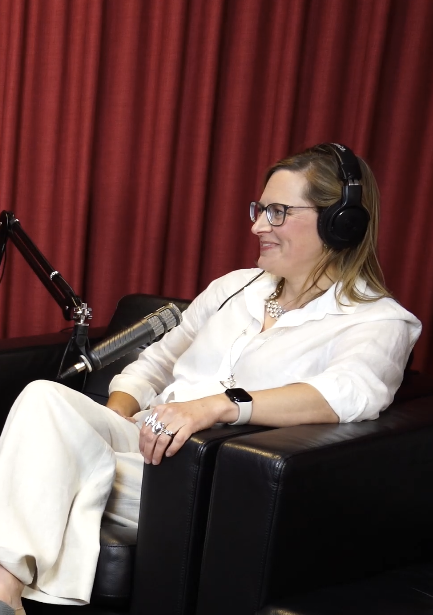
Episode 024
Liminus: A Conversation with Hilary Schofield
Trent and Robyn speak with Hilary Schofield of Liminus about botanical perfume and the landscapes of Tasmania.
The masterclass follows Thamnic. Hilary describes a connection to childhood memories of Tasmanian rainforest and the materials that help express it.
The conversation explores natural ingredients, ecology and the points of transition that informed the name Liminus.
Find this fragrance
Explore the fragrance at the maker's site. Store product checks are currently unavailable; no store range claim is made here.
About the guest
Hilary Schofield makes botanical perfumes by hand in small batches in Tasmania under the name Liminus.
Her work connects scent with place and memory, using Tasmanian botanical materials.
From the episode
Editorial prompts introduce unedited excerpts from the automated capture. Speaker turns and transcription accuracy are unconfirmed.
How do ecology and transition connect to Liminus?
Um I have a background in in botany and natural sciences and those points of transition in ecology, the the liminal places between salt water and fresh water or between the forest and the button grass plains, that's where you get a lot of um biodiversity. They're highly highly complex, really interesting parts of the ecosystem. So I love that connection to kind of interesting things in ecology and also that idea that perfume operates on the subliminal level and um and also it connects to the fact that for me, starting this perfume brand was a huge moment of transition in my life, so a bit of a doorway to something completely different for me.
Why did you choose this perfume for the masterclass?
She's a London based fragrance journalist, so she said some lovely things about it. Um I've had people choose it as a wedding scent, which is a huge compliment. Um I've won a couple of um sustainability awards for it. Um but probably the biggest reason is it's the most Tasmanian of all of my perfumes. It's really connected to my scent memories as a child of walking in Tassie rainforest and the materials that are in it are also incredibly Tasmanian. So for all of those, again, multi-layered, all of those reasons, it was it was themnic as the choice.
What is coming through in the opening?
More specifically, we're getting we're getting through some of the petitgrain um that I've used in in the formula and and I suppose an overall impression of of green which when I list my notes, I talk about huon pine um and you are getting that piney freshness. Mm absolutely. That's the first thing that punches through for me. And I find on my skin at about the six minute mark, strangely, I get a a really strong um the lavender comes through for me.
Read the episode transcript
This transcript was made from the episode audio and checked for names and spellings. Timestamps are approximate, and any offers mentioned were current at the time of recording.
0:00 Speaker not confirmed: We're coming to you today from Melbourne, Australia, and we would like to acknowledge the traditional custodians of the land on which we are recording, the Wurundjeri and Bunurong people of the Kulin Nation. We pay our respects to their elders past and present and extend that respect to all Aboriginal and Torres Strait Islander peoples listening to the recording today. Hello and welcome to the Olfactive Melbourne podcast. Our show is all about elevating Australian perfumery through conversations with Australian perfume houses who take us on a guided masterclass through a fragrance that best represents their brand.
0:34 Trent and Robyn (self-introductions; other turns unconfirmed): Hello and welcome to another episode of Olfactive Melbourne. I'm your co-host Trent Stokes. And I'm Robyn Stokes. Tonight, we're really happy to have with us in the studio Hilary Schofield, who's the founder and perfumer at Liminus Perfumes. Hilary, welcome to the show. Thanks so much for having me here. It's going to be fun. Oh, we've been looking forward to it so much. So just to start off with, it would be fabulous if you could tell us a little bit about Liminus.
1:04 Speaker not confirmed: So where are you based and how long have you been around? Sure. So Liminus is very much a Tasmanian perfume house. I grew up in Tassie, did the classic move away, come back. Um but yeah, all of my perfume making has been in Tasmania and that's where Liminus is, uh pretty deeply rooted to place. And I've been I suppose in its in its complete form, Liminus has been around since um well, it was International Perfume Day, so March 21st, 2024 when my website went live, so not quite two years.
1:37 Speaker not confirmed: Almost two years. Almost two years, yeah. Fabulous. And tell us, I've been really curious, what does the name stand for? What's the identity of Liminus? Yeah, it's a it's a it's a good question. I quite like the names of things. I'm interested in um you know, Latin names of plants and and you know, interesting words and I've always enjoyed the word liminal, um that idea of subliminal or um you know, liminality. Um it comes from a Roman root of of transition and doorway.
2:08 Speaker not confirmed: Um I have a background in in botany and natural sciences and those points of transition in ecology, the the liminal places between salt water and fresh water or between the forest and the button grass plains, that's where you get a lot of um biodiversity. They're highly highly complex, really interesting parts of the ecosystem. So I love that connection to kind of interesting things in ecology and also that idea that perfume operates on the subliminal level and um and also it connects to the fact that for me, starting this perfume brand was a huge moment of transition in my life, so a bit of a doorway to something completely different for me.
2:49 Speaker not confirmed: Wow, that's a really interesting observation. For me, I didn't really actually understand that at all. Don't you think that's amazing? Yeah, it's a really multifaceted uh meaning, isn't it? I love that that multi layers of meaning there. So Hilary, you've brought in a number of uh fragrances today, but we've got one that we've selected as our masterclass fragrance. So which fragrance have you decided to uh take us on a guided tour of? Um well, it was a pretty clear choice for me to choose Thamnic because it's well, partly because it's the one that I've had some pretty rave reviews about um including, I don't know if you've come across the writing of Susie Nightingale.
3:31 Speaker not confirmed: She's a London based fragrance journalist, so she said some lovely things about it. Um I've had people choose it as a wedding scent, which is a huge compliment. Um I've won a couple of um sustainability awards for it. Um but probably the biggest reason is it's the most Tasmanian of all of my perfumes. It's really connected to my scent memories as a child of walking in Tassie rainforest and the materials that are in it are also incredibly Tasmanian. So for all of those, again, multi-layered, all of those reasons, it was it was Thamnic as the choice.
4:06 Speaker not confirmed: Fantastic. Well, we can't wait to get our nose on the fragrance. So um what we'll do is we'll spread it out uh as we always do on the show. Uh we like to spray it onto blotters but also onto our skin. Uh the blotters allow us all to have the same experience of the fragrance. Um it is relatively, you know, uh stable, I guess on the um on the blotters, but on the skin, sometimes we can have a slightly different experience of the fragrance.
4:37 Speaker not confirmed: There's a few different reasons behind that. Um sometimes it's to do with the temperature of your skin, sometimes it's to do with the microbiome of your skin. Uh there's a whole range of factors in which we can experience the fragrance slightly differently. Oh wow, it's already coming through. Fantastic. All right, so what we're going to be uh going through in a moment is we're going to be experiencing our opening notes. Um but just before uh Hilary, I get you to describe those opening notes, we are an educational podcast.
5:10 Speaker not confirmed: I'll just explain what opening notes are. So um if we think about a fragrance in the context of a perfume pyramid, and you'll have a pyramid pop up on your screen now, our opening notes sit at the very top of that pyramid. The notes inside of uh our opening notes are made up of the lightest and the most volatile of the fragrance molecules. And that just simply means that those notes will surface in the fragrance first, but they'll also dissipate the fastest and then make way for the heart notes to come.
5:44 Speaker not confirmed: That allows us to get a real introduction to the fragrance, which we're about to do now. This show is proudly sponsored by Watch Vault, Australia's premier destination for luxury and vintage timepieces. Every watch is trusted, verified and ready for its next chapter. Visit watchvault.com.au to discover your next timeless investment. So let's have a little bit of a sniff and then Hilary, if you can take us through the notes that we're experiencing. Sure. So if we sort of think big picture to start with, we're getting a green and a citrus opening.
6:17 Speaker not confirmed: More specifically, we're getting we're getting through some of the petitgrain um that I've used in in the formula and and I suppose an overall impression of of green which when I list my notes, I talk about huon pine um and you are getting that piney freshness. Mm absolutely. That's the first thing that punches through for me. And I find on my skin at about the six minute mark, strangely, I get a a really strong um the lavender comes through for me.
6:47 Speaker not confirmed: But different people I've noticed smell that at different points in the fragrance. Yeah. You're starting to get some of that herbal herbal freshness coming through. Yeah, definitely a nice piney blast to start with. I am getting on my skin, I'm starting to get some of the lavender coming through. Not so much on the the blotter yet, but Yeah. Yeah, it needs the heat to really sort of push it forward. But it sort of comes in waves. It it does and and you know, whilst we're going through the really traditional um pyramid structure, I mean, I'm already getting some of those sort of spicy middle notes are starting to come through for me as well quite quickly.
7:29 Speaker not confirmed: But yeah, primarily primarily citrus and fresh green top note. Absolutely. Now um it's a it's a good call out there. Each time on the show we explain uh the perfume pyramid um and it when I explain it, it does sound like you experience opening notes and then you they go away completely and then you experience heart notes and then they go away completely and then you experience the base notes. And that's not actually the way things work. Um the opening notes, we experience them first, but the um middle notes quite often you will smell close to straight away or within a couple of minutes.
8:08 Speaker not confirmed: Um you can even sometimes have a have the base notes starting to punch through as well. Um so it's not quite that linear unfolding uh of of um the perfume pyramid, but it just gives us an idea of how the how the perfume is structured. Definitely. And especially with natural perfumes. Especially with naturals. Um I actually did a perfume workshop on the weekend and everyone was making custom perfumes and I was explaining that not only do you have this difference with different skin, but you also have the relativities within the fragrance that you make.
8:43 Speaker not confirmed: So depending on the materials you use, you might find that lavender is a top note in one fragrance, but it could be a middle note in another fragrance. So it just it really depends on so many factors. So you mentioned um you know, huon pine is the the opening notes. So um and you also mentioned uh in the opening. I've brought some with me. I'll pass it across. Oh yeah. Let's let's get it going. So this is a Tasmanian ingredient. It is.
9:13 Speaker not confirmed: Look, it's a it's an iconic Tasmanian timber. So what you're smelling here is the um the shavings from a a professional wood car. It's a it's a beautiful scent on its own. Um but then my memories that I'm trying to communicate in this fragrance are huon pine in in the temperate rainforest. So so not the dry sawn timber but but the living plant. Um so obviously that's a that's an artistic creation rather than rather than a reflection. But but that really kind of iconic huon pine smell.
9:45 Speaker not confirmed: So there's a lot of people use huon pine in boat building or in fine furniture or sculpture or you know, making beautiful knife handles. Um it's it's a really evocative smell. Like you would be hard pressed to find anyone who works
10:00 Speaker not confirmed: timber that would be like that's the smell of Huon Pine. Yeah. Right. Yeah. And Huon is a place, isn't it, in Tasmania? There's a river? Yep. Huon River, the Huon Valley. Yep. Yeah. Yeah, I mean while the um the raw material smells quite different obviously to this complex fragrance here, it does actually help you pull the the note out a little bit, I think. Yeah. Yeah. Yeah, it's quite a unique um quite a unique smell. Thank you for bringing that in.
10:29 Speaker not confirmed: It's really lovely to experience. It's fantastic to put in your sock drawer. If you can imagine, actually, yeah. Yeah. Fantastic. So we also had um was it petitgrain that was in the Yeah, that's right. There's there's also bergamot in there as well and you're getting a a balance between those. So I I don't think you can really pick out those two notes very distinctly. Um they're they're creating an accord together that's giving you, you know, the whole is greater than the sum of the parts.
11:00 Speaker not confirmed: And just for for those people who might not know what that particular ingredient is, my understanding is that um bergamot and petitgrain come from the same tree, the same plant. Is that right? Not not quite. Not quite. So they're both citrus, but bergamot comes from um it's Citrus bergamia and that plant is I think originally was a hybrid between a lemon and a bitter orange. And the bitter orange is Citrus amara. I think I've got that right. And the um petitgrain is the um leaf and stem tips of the bitter orange.
11:33 Speaker not confirmed: So they're two different botanical species and two different parts of the plant. The bergamot oil is expressed from the skin of the fruit. Okay, and the petitgrain is the the branches that it's on. Yes, the leaf and stem. Exactly. Exactly. So different species, different parts of the plant. And if you were to try and describe petitgrain? Mm. It's quite multifaceted. It You definitely get the citrus. You also get a slight floral to it. Um the the neroli that you're getting from the flowers, there's the slightest hint of that when you're smelling petitgrain neat.
12:07 Speaker not confirmed: Um it's a very good blending material and but it does just have a really lovely green characteristic to it that I like. Mm. That's why I've used it in this particular formula. Yeah. And of course, you know, bergamot's a pretty classic uh ingredient. It's um probably one that that most people could identify inside of a fragrance, but it's just beautiful. Adds that lovely freshness to to the opening there. Yes. Yeah. Beautiful combination. So I'm always interested uh with a fragrance um as to the story behind it or the place.
12:40 Speaker not confirmed: Um I think storytelling is such an important part of perfumery, whether it's we're using a fragrance to describe a particular moment, a particular memory, a particular place, or a story. What are we trying to do um here with this fragrance? Well, it is it is that memory of my memory of being a small child in the rainforest. Um if you've if you've visited Tasmania before, and probably most people might get to Mount Field National Park, um you're walking up towards Russell Falls.
13:10 Speaker not confirmed: You're a small person in a vast 60 million year old rainforest, the canopies reaching above you. Um life is all around you. There's these tiny little microcosms in the in the moss and the the crystal clear waters are trickling past and everything's everything's alive and beautiful to look at and there are so many shades of green and the sun is filtering through and yeah, it's a beautiful place to be. It sounds amazing. I I wish I I feel transported there just listening to that um and of course smelling it.
13:42 Speaker not confirmed: Mm. Yeah, we've tried to get to Tasmania a few times, haven't we, over the last uh five or six years? We had a beautiful trip booked for the middle of 2020, but I think we know what happened in the middle of 2020. And then we uh rebooked it again in 2021 and again we got locked down again. So um but we'll be making trips to Tasmania, hopefully. Yeah, later this year, I believe. So um we'll have to pop in and say hello.
14:12 Speaker not confirmed: Definitely. I'll send you to some temperate rainforest. Fantastic. So is that the the meaning of thamnic? Thamnic means rainforest? Yeah. Yeah, so Tasmania's temperate rainforest is is rightly um very well known for being um I suppose a Gondwanan remnant rainforest um and within its within the category of Tasmanian temperate rainforest there are a number of subtypes which all have specific names. And um thamnic is the subtype where you get a lot of ferns in the understory and you have some of the the Huon pine growing and, you know, there's a very kind of clear definition behind what a thamnic rainforest is, but um I think it's quite a beautiful word and it it was the place that the scent memory is is centered around.
14:57 Speaker not confirmed: Fantastic. Special, yeah. Mm. So um we've got listeners not just from Australia who would be aware of what Gondwana is or was, um but for those people who might be overseas and listening to the show, what what is Gondwana? What when we reference a Gondwana I'm going to I'm going to start this up. Yes. You're picking on my picking on your knowledge a little bit. That's uh So so Gondwana is going back to, oh gosh, supercontinents that that used to be connected before um I don't know how many hundred million years ago, but but before um I suppose Africa and Australia when they were all one.
15:35 Speaker not confirmed: And so if you look across the botany in New Zealand, the botany in Tasmania, the botany in in South Africa, you can see that there's connections in in the plant species and in some of the form of the plants. And when people talk about, you know, Gondwanan remnant rainforest, it's easy to track that history back to 60 million years ago, which is mind-blowing. Absolutely. Yeah. Must be incredible to walk through there and just be immersed in it. There are beautiful places.
16:05 Speaker not confirmed: Yeah. Beautiful. Well, I feel like I have been transported to the um to the Tasmanian rainforest through this fragrance. Honestly, it's very beautiful. It's uh very very Yes, we'll have to know about that. Yeah. Uh absolutely. Yeah, we're absolutely planning a trip there. We uh we have children that haven't been to Tasmania before, so we want them to have that experience as well and they're old enough to actually remember it, which is uh which is quite nice. And I think it's definitely worthwhile having a beautiful trip there.
16:36 Speaker not confirmed: All right, so um we do have some time now uh in terms of of dry down. Um so we're going to let our opening notes start to dissipate and make way for those uh those heart notes. And it gives us a bit of time to dive into you. And we're quite interested to find out about your background. So um I guess my first question for you is where did the love of perfume start? Mm. It's an interesting one because I'd say that as a kid I was always really fascinated with um it's English grandparents who would they'd come back, you know, trips away and they'd have these tiny little miniatures of perfume in their luggage, you know, and they'd been collecting them on, you know, at hotels and on the plane.
17:24 Speaker not confirmed: And it was utterly fascinating to me to play with them. Um but truthfully, my kind of deep dive into the world of scent came came much later. I've always been really interested in flavor and fragrance sort of through food and wine. That's a consistent theme in my life. Um but it was probably about eight years ago we had um an opportunity to have a family holiday in France and we were visiting some relatives um in England. But the time we spent in France I bought some artisan perfume, which until then I didn't really know that there was perfume made outside the the major perfume houses.
18:02 Speaker not confirmed: I'd been buying the odd bottle of perfume in duty free and but had never really really become obsessed with it. And um I bought back as I wore that artisan perfume like during the holiday, it did something to the scent memory of that holiday. It etched it in my mind permanently. And then when I came back to um Australia, I've never had such vivid holiday memories of just being in that, you know, beautiful warm French countryside and and having the river flowing past.
18:32 Speaker not confirmed: And it was amazing and I thought, how nice is it that you can kind of have the best souvenir ever, a scented souvenir that then concretes these memories in place. And I just thought how nice it would be for somebody to have that experience in Tasmania and what could I buy that was Tasmanian? And I looked around and I I couldn't really find anything that was that was similar. Um and that was the point when my curious brain just started to go, and how do you make perfume anyway?
19:04 Speaker not confirmed: And, you know, that was that was a long time ago and eventually I figured it out. Yeah. Yeah, I just got a little bit obsessed with the idea of if, you know, maybe maybe Tasmania could have its own perfume and maybe maybe I could have a go at making it. Amazing. You know, I when you were talking about going into a different part of the world and experiencing a holiday, um it sort of occurred to me that that's something I haven't done.
19:34 Speaker not confirmed: I haven't gone somewhere and purchased something from that place and then worn it the entire time. I highly recommend it. Yeah, it's a great thing to do. And I've I've since sort of um heard that a lot of people do that for their wedding perfumes as well. They'll they'll choose something that they wear they've not worn before. They wear it on the day and then they're really cementing that special memory for them.
20:00 Speaker not confirmed: Yeah, beautiful idea. Yeah, nothing transports you back into a memory like uh like a fragrance, you know. Um I was actually going to say the same thing around the the wedding fragrance, but when you think about your life and some of those fragrances that take you back, whether it's an actual perfume or just the scent of something, like that baby smell. Like you as soon as you smell that baby smell, it takes us all the way back to, you know, when our babies were were born.
20:31 Speaker not confirmed: Um and there's lots of those type of special memories and and scents that are associated with it, whether it's, you know, on a holiday or anything else in life. And that's sort of what makes um perfume quite special, I think. So, I know I was watching a show not so long ago. They're actually um using scent now to help people combat um age-related decline in uh their in their memory. So, Alzheimer's and things like that. Um yeah, and they can use scent to sort of at least slow that decline, if not um start to to recover it um because of its power with uh with memory.
21:10 Speaker not confirmed: Yeah, there's also some really interesting research um fairly fairly new where people have done um scent training and they've also been looking at cognitive results. So, people that have done memory tests, just visual memory tests, they've got better at the visual memory task. Where they've done um a scent memory training, they've got better at scent memory, but they've also got better at visual memory and other cognitive tasks. So, that that idea of training your brain with scent has widespread benefits, which is really intriguing.
21:41 Speaker not confirmed: I have to give that a go myself. So, I'm uh my day job is a trainer. So, um I train people in in sales and in product uh product training. And what I've never tried to do before is I mean I I do have a lot of fragrances. Like trying to wear a fragrance for a particular set of training and then seeing whether next time I walk in the room with the same fragrance, whether their recall is any better. But um I might might give it a go.
22:13 Speaker not confirmed: Yeah, I know um there's a couple of actors that will they'll either commission a new scent and then use that to get into character. Um Helena Bonham Carter, she she does that for I think each new role that she's in. Um if there are any actors out there, I'd love to make you a scent. Fantastic. Get onto it for sure. I mean this is something that that I do unconsciously at work. So, if I am going to present in front of a lot of people or I need to make a pitch to senior management and I'm feeling a little bit nervous, I will wear a fragrance that gives me a certain level of confidence.
22:55 Speaker not confirmed: Yeah, something something there you go. This is this is my grounding fragrance. I just I find it very centering. And partly, well, when we're talking base notes, some of the materials there are really really useful for just feeling centered. Calming and grounding. Yeah, and it it works. It genuinely works. I mean this is why you've got, you know, your date night fragrances as well. They make you feel, you know, warm and lovely and sexy and all of the other things that you can do as well.
23:26 Speaker not confirmed: So, this is just part of a part of fragrance. So, I want to go back to see if you just find it like you had the idea or I guess you had the you acknowledged that you had the special memories from the holiday and you connected it to up Tassie. But then you went the next step of going totally bonkers, hey? Tell us all. Okay, so I I before making perfume, I have a have had a long career in um environmental policy, protected area management, um managing Commonwealth marine parks.
23:59 Speaker not confirmed: So, it doesn't like, you know, it's not necessarily the next career step to start um a perfume brand. But um look, I was really interested in doing something that was creative, more creative than than working in government. Um and yeah, it it became an itch that I just really wanted to scratch. And and that that whole question about if I if not now, then when? Yeah, to to step out and try and try. So, tell us how did you go about learning the practicality?
24:29 Speaker not confirmed: Yes. Yeah, um so there were I mean gosh, that's a very long conversation. But um fragrance is becoming I suppose more democratized. It's much easier to get information on on the technicalities of making perfume than it's ever been. There are some really fantastic um organizations out there now that are really putting some great education into the world. Um the Institute for Art and Olfaction um in LA is one of them. There are a number of excellent trainers. You can access some really good quality um material online.
25:01 Speaker not confirmed: There are there are lots of fantastic publications, um books if you if you ferret away for long enough, um read deeply enough, and experiment. And I suppose having a scientific training from way back when at uni, that gave me the confidence about I suppose experimental methodology and use of lab equipment that I was I was comfortable in that space or to some extent. Um I've always been quite creative, but then haven really had the chance to uh stretch that muscle as much in the work context.
25:33 Speaker not confirmed: So, yeah, it was it was funny. I had a conversation before I kind of really hit the go button, I had a conversation with a colleague um and I was sort of sharing the idea with her for the first time. And I was really expecting her to say, "Hilary, that's bonkers. You know, stay the course." And she was like, "Oh, yeah, no, that makes sense." She, yeah, she could see how it was bringing together different threads of of what I'd done in the past and I suppose things that I'm good at and things I enjoy.
26:08 Speaker not confirmed: So, yeah. She helped to confirm that you were on the right pathway. Yeah, it was a really nice You know how sometimes you have the right conversation at the right time? It was one of those. It was a sign. It was a sign. Fantastic. So, I guess um you know, you're in the niche artisanal space, but when we talk niche artisanal, you you are actually quite niche in that you do natural perfumery. And please correct me if I'm getting any of the the terminology wrong here because um you know, a lot of brands will say that they they're natural, but they're not.
26:45 Speaker not confirmed: The definition of natural can sort of change a little bit, whether it's whole botanical versus isolates. And there's there's a there's a whole thing with this. But um I guess before we go down that rabbit hole, is or or we could not. Is there a reason why you chose to go with natural perfumery? Um look, at at the time, I didn't really I didn't go, "Will I be natural? Will I be synthetic? Or will I work with mixed media?" I think I was drawn to the materials first and foremost.
27:18 Speaker not confirmed: And part of it was when I had that first idea about gosh, could could this happen in Tasmania? Could somebody do this? Um it was part of that learning was understanding that we actually have quite a a decent sized essential oil industry in Tasmania and that we produce a lot of very beautiful products that are raw materials for perfumery in Tasmania and they are all naturals. And so I think that was probably the starting point. And then it just made sense that if I really wanted to incorporate those Tasmanian botanicals, then I would work with botanicals to start with.
27:54 Speaker not confirmed: Yeah, I think I think that's really how it how it built for me. Um and I think there is something particularly beautiful about working purely with with naturals. And I you know, I wouldn't rule out working with synthetics at some point if there was a particular thing that I was seeking to achieve because working with naturals also limits the types of perfumes that you can make. It's very I suppose connected to the the early heritage and history of perfume making. And I like that as well.
28:25 Speaker not confirmed: Um that kind of connecting to the past through techniques and through material choice. Um there are some really interesting biotech natural materials that are that are becoming more accessible. Some of them are really sustainable. They're picking up on waste streams of of of other products. So, I you know, that's something that I will explore over time because I'm always looking for um I suppose the more sustainable option where I can find it. Yeah. Yeah, yeah, it's really interesting. We we learned about the upcycled rose and things like that.
28:58 Speaker not confirmed: Yeah, yep, yep. There's some of those very precious materials, yeah, upcycling the the waste. Hopefully, it's not a waste product if you can do something with it. Yeah. Just a different scent, I guess. Yeah, different different facets. Yeah. Um what's a biotech? Is that what is it a biotech natural? Yeah, so look, and I'm I'm not really the person to to um explain it because I'm not using any at the moment, but I I understand that there are some um fermentation products that are giving um some natural fermentation to give you an aroma molecule that you um could use as a perfume material.
29:36 Speaker not confirmed: So, it's come from a natural feedstock and then through a fermentation process, you're getting an isolate. All right. Well, that sounds quite sustainable in terms of okay. And that would be one of the reasons why you would use a use a product like that. Fantastic. All right. So, you're not um I guess necessarily pigeonholing yourself into only naturals. It's just this is where you're at with your
30:00 Speaker not confirmed: expression of what you're trying to communicate. Yeah. Yeah, look and oh gosh, I I never like to put myself in a corner. Uh like everything I make at the moment is and sell is is 100% natural and it is right down the the kind of purest end of naturals. Um whole ingredients and you know, some of the things are wild harvested or I've tinctured them myself. Um but I did do an an art collaboration last year and because I was trying to achieve some really specific effects, I used and that were non-wearable scents that were for an art exhibition.
30:38 Speaker not confirmed: It was like not perfume at all, but playing with scent in a different way for a different purpose. I I used some aromachemicals then and I suppose it's a little bit like it's nice to wear cotton or linen, but I'll wear a Gore-Tex jacket if I'm out in the rain, you know? Like you use different materials for different purposes. Oh, there you go. Now, you have um you you sort of just there was a bit of a throw throwaway line at the opening here, but you've, you know, won some awards.
31:13 Speaker not confirmed: This particular fragrance has uh recently um won an award. What award did you win? Well, I think you might be talking about the Asian Perfume Foundation. I was a finalist, I didn't didn't win, um but I was I was really honoured to be in in the finals of the um Asia Perfume Foundation Emerging Perfumer Award. That was that was pretty special, a lovely stage to be on and um sharing that with perfumers from around Asia and the Pacific. Um and we also all the finalists had their their perfumes featured at um Cosmoprof, Cosmotech, anyway, in in Singapore, um one of the big industry forums.
31:53 Speaker not confirmed: So yeah, that was a nice moment. That's huge. Congratulations. That is huge for, you know, I guess for a brand that has only been around now for uh what did you say it was 2022? Uh 2024. Not not quite two years. Two years, right, two years. My my memory is uh is is really tonight. I I certainly am. All right, so it's only been around for a couple of years and already, um you know, you're a finalist. I'm going to call that a win.
32:25 Speaker not confirmed: Um so congratulations and I can see why because it is absolutely beautifully formulated fragrance. It's absolutely lovely. All right, so I guess we've had probably about 15 minutes, I would guess, although I'm not actually watching the time. I'm just sort of guessing here. Uh I've been smelling as we've gone along and I can tell that the fragrance is really starting to develop here. So I think we're almost ready to uh to visit our heart notes. Yep. Sure, let's do it. So let's just focus back on the perfume pyramid just for a moment and the heart notes form the center of the perfume pyramid.
33:05 Speaker not confirmed: They are normally where the true character and the essence of the perfume really come into their own and heart notes do tend to come out after those top notes have started to fade away and they are normally characterized by florals or spices or some aromatic herbs, but really just bring out the character and they make it um the transition or the bridge between the top notes and the base notes smoother and they do tend to linger and last, which is really beautiful.
33:37 Speaker not confirmed: This edition of Olfactive Melbourne is proudly sponsored by Silver Australia. Silver Australia design and shape their jewelry in their studio in Melbourne and they're pleased to offer Olfactive Melbourne customers 20% off when you use the code MASA20. So with that said, let's talk about the heart notes in in Thylac. I'm really curious to know what you're both smelling on your skin at this point. So you mentioned uh when we were discussing the the opening notes that um you know, a few minutes in that you're starting to get the lavender.
34:11 Speaker not confirmed: This is really developed a lot more to me now and the lavender is really um becoming a lot more dominant on my on my skin. Yeah, you're getting getting with herbal. Yeah, I definitely get that beautiful like herbal like the lavender. There might be some something else, but I can't pick it out. Yeah. I can't pick it out, but it's um I could maybe even say that I can smell a bit of this of sandalwood. Yes. Yeah, I I definitely get the sandalwood already starting to come through.
34:45 Speaker not confirmed: Um on my skin the nutmeg is quite strong. I get quite a lot of spice coming through. Um there's a there's a tiny bit of cardamom in here, but it doesn't really come through as a a distinct note in its own right. It's more more the whole and I suppose for me the middle is about the the the undergrowth of the rainforest. You're starting to get that kind of really woody complexity. It's it's moved slightly from that freshness of the opening into something that's um the word that Suzy Nightingale used that I like was nuzzly.
35:21 Speaker not confirmed: You know, it's kind of you sort of you sort of down down in amongst the the ferns and you're getting that sense of being surrounded by growth. It's like mossy. Yeah. Yeah, like you've gone deeper into the into the forest. Yeah, that's the sort of definitely definitely deeper in the forest. It's really interesting because even though we're talking about like the, you know, the moss and the undergrowth, it's also very clean smelling. Yeah. Yep. I'm really finding now that um we're for me I'm diverting quite a lot from what's happening on on the blotter here.
35:58 Speaker not confirmed: My it's really developed on my skin. Um Yeah. You're quite right. It's much much warmer and and more complex on the skin. Stayed quite in the top notes on the blotter. Yeah, this is definitely one that you need to wear on the skin to to really appreciate it. All right, so that's our our guesswork on what's here. So what are we actually experiencing uh in Well, that is what you are actually experiencing. Oh, fantastic. We've we've got it right. Fantastic. So we've got some mossy, ferny notes here.
36:32 Speaker not confirmed: But we are curious because you mentioned nutmeg and um it'd be nice to have an idea of what those spices are. Yeah, so the the nutmeg in there is giving you it's a really lovely bridging material, so it's helping take you from from the top mid to base. Um it's giving you some of that warmth. There's cardamom in there that's giving you a little bit more of that complexity and Australian blue cypress as well carrying through that green foresty um freshness.
37:03 Speaker not confirmed: Mm, that's where that clean, you know, clean smell sort of coming from, I think. It's a very gorgeous scent. I I'm really really enjoying it. You might I'm not I'm starting to get the vetiver coming through as well. That smoky, woody I'm definitely getting that green, deep, mossy, ferny walking through the depths of the forest type of of smell coming through on my skin. Yeah. Woody, yeah. Absolutely. Absolutely lovely, quite unique. Beautiful. So this will take now a little bit of time to develop further before we get through to our base notes um and that actually gives us a bit of time to explore some of the other fragrances that you've brought in with you today.
37:48 Speaker not confirmed: Fantastic. So uh we will always leave it to our guests to choose where we would like to start. So where do you think we should start today? I think we should have a smell of Alba next. Alba. Alba, okay. Fantastic. All right, so Robyn will grab Alba and um I'd like to actually spray Alba on some spare skin that I've got on my other hand here. Now, usually we only stick to the blotters when we explore a wider range, but um I've been very keen to get my nose on um on Alba, so we're going to do both today.
38:26 Speaker not confirmed: While Robyn's doing that, the name Alba, where does that come from? Well, I think you've figured out that my names always have stories. Absolutely. So Alba is named after Correa alba, which is one of the materials that I've used. Thanks, Robyn. Um one of the materials I've used in the formulation. So that is a a plant that grows along the shores of the Derwent River, um very close to where I live. It's quite an unassuming looking plant if you were just wandering past it.
38:58 Speaker not confirmed: You see it in parks and gardens because it grows very well in a range of conditions and it's hard to kill. Um but if you look at it a little bit closer, it flowers in winter. It has a really beautiful small star-shaped white flower. Um the flower itself has a slight lemon scent, but it's the leaves that I've used in this and when Europeans first came to Tasmania and they ran out of everything, they were looking for a tea substitute. This was one of the species that was used um in making tea, but it has a a really lovely green freshness to it.
39:38 Speaker not confirmed: Um and because I was making a floral scent with a lot of richness, I wanted to balance that that rich floral um composition with some green and um that was the one of the materials I chose to use to achieve that. But also Alba is a little bit about resilient women and Alba the plant is it's unkillable and
40:00 Speaker not confirmed: it has this beautiful flower that you can easily miss. Um you know, the wind will buffer it, the the salt air will come at it and it will thrive. So, I just like the symbolism as well. Yeah, me too. I found out afterwards um which was pretty cool that Alba is also I think Portuguese for dawn and it's Gaelic for Scotland. So, the Kingdom of Albas and I have some very good Scottish friends. So, that was a lovely thing to find out afterwards too.
40:32 Speaker not confirmed: Also uh pretty unkillable people, aren't they? The Scots. Very resilient. Very resilient. Very resilient. I think you need to be in that uh part of the world. So, this is a um a floral fragrance. So, I guess what was the what was the driver behind wanting to create a uh a floral fragrance? Uh when I was first diving into the world of scent and thinking about, you know, perhaps could I learn how to make perfume? Uh one of the early things I read was it's the hardest thing to make with naturals is a floral perfume.
41:08 Speaker not confirmed: Okay. So, I thought I'd better have a bit of do that. Sounds like a challenge. Yeah, that's right. I was up for a challenge. But um also that's one reason. Also we um we produce Boronia in Tasmania and um the Boronia absolute a lot of that is exported to fine fragrance houses in in France. Um you know, Dior, Chanel will be using some Tasmanian Boronia. Probably not as much as I'm putting in my bottle proportionally speaking. But it's it's a glorious material.
41:40 Speaker not confirmed: Like it it really is very special. So, I I did want to have a perfume at the outset of the brand that had Boronia in it. And also another uh beautiful Tasmanian ingredient. So, I guess we don't um when we we get to this section of the show and we start experiencing our other fragrances uh within the range, we don't have the opportunity to go all the way through the dry down. So, for the for the sake of the listener and and the viewer, what will we be experiencing in the opening, the heart, and the base of this?
42:17 Speaker not confirmed: Sure. Opening of this is um Bergamot is quite prominent. Um so, getting a citrus freshness. Um then then it's moving into rose and Boronia, the the kind of cornerstone if you can have corners in your middle um in in the heart notes and and then in the base it's a beautiful sandalwood base, Western Australian sandalwood. What are the prominent notes that are coming through for you with this one? I'd say initially I felt like I smelled something that was almost minty, like kind of freshness like that.
42:50 Speaker not confirmed: Yeah, and I think there is some of that freshness coming from the Correa alba. Um this also has um pink grapefruit in it, which is giving a bit of that sparkle and freshness beyond just the use of the Bergamot. But now it's definitely Well, I can recognize rose. Yes, so can I. Yeah. Yeah, the rose is is it's not the dominant um note that's coming through, but I definitely smell it here in the Boronia really getting the opening uh here and I can really smell that.
43:23 Speaker not confirmed: What what particular type of rose are you using? Um this one is I think this one is Rosa centifolia. It's really beautiful and well balanced and uh whenever um you know, whenever I'm going to smell a floral fragrance, there's always for me the um the preconception that it might be swinging a little bit more feminine than it does masculine here. Uh and I'm not sure what the intent is and you can tell me uh sort of in a moment, but from my perspective, this feels very unisex.
43:56 Speaker not confirmed: It's very wearable for me. In fact, both fragrances are. Um this is very very sort of wearable for both male and for female. Was that the intent or were you That was the intent. I'm I'm glad you're picking that. How is it wearing on your skin? Uh this is just absolutely beautiful. It's I the rose really um projects off my skin here rather than off the 100% on the blotter. And I think part of the reason for that projection of the rose is the use of the Boronia.
44:29 Speaker not confirmed: It it just amplifies the other materials in there. It's singing off my skin. I I would pass my hand over, but I'm going to knock this um I can't wait for you to smell the neat Boronia because it's yeah, it's a it's a cool material. Fantastic. I say why wait? Let's uh let's smell the neat Boronia. Well, I I haven't uh I well, I can't recall smelling it um neat. No. Um I may have before, but I think if you'd smelled it before, you would remember.
45:02 Speaker not confirmed: Okay. Let's um let's say. Let's see if I've got a scent memory of this somewhere. The last time I actually went to Tasmania, I'm ashamed to admit it, but last time I went there, I was like three. It's been a long time. So, if I've got a three-year-old scent memory of Boronia, I'll be I'll be amazed. You may have smelled Boronia um in a bunch, you know, like picked picked Boronia. Um and it I mean some flowers when you've got the material, it's very different to the fresh bloom.
45:36 Speaker not confirmed: Boronia is to my nose um quite quite true to the I think you're 100% right there, Hilary. I yeah, if I had smelled that neat before, I definitely would remember it. That is quite unique. It's stunning, isn't it? It's um I just don't want to It's wild, doesn't it? There's something quite herbal and You can see why it's in demand uh for for perfumery, you know, quite broadly. Uh I've got my own one. Fantastic. It's quite um it's got a fruitiness to it as well as the floral sea.
46:10 Speaker not confirmed: It's very complex. So, this Boronia, so you mentioned that um you know, perfume houses um you know, French perfume houses use this. This has actually been in use in perfumery for quite a long time. Um so, if you go back to some of the um how do I refer to it? The older fragrances, the more classic fragrances from the early part of the the last century that you would find Boronia and some of those those fragrances as well. Yeah, I look I'm not an expert of when it was first extracted, but it has been in production in Tasmania for quite some time.
46:48 Speaker not confirmed: Yeah, and there's been a um I suppose some study into optimizing its production through the University of Tasmania. It's originally a Western Australian species, but it's yeah, it's in commercial production in Tasmania. So, you mentioned there's there's quite a lot of um raw perfume materials that are grown in Tasmania. What is it about Tasmania that is, you know, such a good spot for growing Boronia and lavender and these types of materials that are so in demand within the perfume industry? That's a really good question.
47:21 Speaker not confirmed: You probably need to ask an agronomist. Um look, I suppose there's there's a there's a lot of farming expertise. There's some beautiful land that's um highly productive. There's a long history of the expertise needed to to grow. There's a lot of innovation um early on in sort of I think probably the 1950s maybe people were experimenting with different strains of peppermint. So, the peppermint that's grown in Tasmania is a very particular cultivar of peppermint um and it's very highly regarded for its scent profile.
47:53 Speaker not confirmed: Um likewise with lavender. I think it's like a lot of Tasmanian raw materials, they're very high quality and that's probably the reason. Yeah, I think we've had a guest previously who told us um that the Tasmanian lavender isn't you know, French lavender. It's its own species of of lavender. It's it's Tasmanian lavender. It's happened over quite a long period of time and it's become its own subspecies of lavender. Potentially um yeah, in terms of its its Latin species name, it's the same species that is grown in France.
48:26 Speaker not confirmed: Um it's quite possible that it's it's been um taken in a different direction. I mean it's one of the really interesting things about working with naturals is that the way your crop produces this year is going to be different to next year. So, we'll have a slightly different scent profile. Or if if you grow the same species at a different altitude, we'll have a different scent profile. Or if it's um you know, the extraction is run a slightly different way, we'll have a slightly different scent profile.
48:59 Speaker not confirmed: So, there are always areas where where it can be it can be refined or it can be, you know, there's some different aspect that comes out. So, I yes, I mean I've smelled. I have in my in my palette of materials I have French lavender. It is very different to Tasmanian lavender. There you go. I guess, you know, we're big fans of um natural perfumery and I think one of the the things that we love about it is exactly what you've just spoken about there, that slight variation that you do get from, you know, sort of season to season because it's something that's sort of out of out of the control of the the perfumer.
49:43 Speaker not confirmed: Yeah, beautiful. Uh terroir, if you want to steal a wine term, it's that what does the place bring to the material and how does that give an effect to the finished perfume? It's it's a beautiful thing. Absolutely. It really is. And and it's sort of
50:00 Speaker not confirmed: to why um you know the big perfume houses use synthetics because that's where you can have that consistency across every bottle, season after season, year after year. Um but I just love the idea of having that that slight difference in the the fragrance each time and you get a slightly Yep. Yep. you know you've got the same profile but a slightly new experience each time. It's it's beautiful. Yeah. Yeah. I enjoy that too. Awesome. All right. So what else are we going to be experiencing today?
50:30 Speaker not confirmed: Okay. Well, it was tempting to bring a lot of things but I've limited myself. The um the second material I bought is um Tasmanian mountain pepper berry. Um Tasmania lanceolata is the scientific name. I'll get some on a scent strip for you. Fantastic. Thank you. So did you say pepper berry? Oh. All right. So we have um we have experienced it in a fragrance before. Yeah. We've been told about it but we've never had we've never had the opportunity to actually smell the raw material before.
51:01 Speaker not confirmed: It's fantastic you actually said you'd never smelled the raw material. Yeah. Yeah. And I've been dying to actually smell this. So this is a little bit of a treat for us, Hilary. Thank you for bringing it in. I will try not to question you too much about the Thank you. the history of this particular uh plant unless you'd like to volunteer up the uh the information but No. Um not at all. But I would recommend to you if you get the chance to have some cheese with Tasmanian mountain pepper berry in, you should definitely eat some.
51:35 Speaker not confirmed: Um it also makes fantastic ice cream. I've tasted it in liqueurs. It's a it's a great material. Um Yeah. It's it's sort of familiar. You know what? I I recall who told me about this. So this was um Richard from Hart + Hedi. I think. And he described it as um both a berry and pepper. You get both. And he's bang on. You you actually get the berry and the pepper all rolled into one. It's quite You're getting there's there's heat like with if you you can compare it with black pepper and you can get that same kind of pepper through line but there's a there's a fruitiness to it for sure.
52:15 Speaker not confirmed: A fruity It's just exactly as the name describes. It's the perfect name for this particular raw material. And also like if you're walking in in the forest mountain Mount Wellington, kunanyi around Hobart, nipaluna, you will you could grab a a leaf off the pepper berry and chew on it and get that kind of peppery hit. If you knew it. If you knew. If you could identify it. Yeah. Don't just Yeah. I wouldn't be grabbing random things off trees and chewing on them.
52:44 Speaker not confirmed: They um could kill you. So It's very It's quite an intense smell. Yeah. it is, isn't it? It is quite intense. Um interestingly with both of these materials um these are solvent extracted. They're quite powerful. I've brought them along at a 5% and a 1% dilution respectively. So if they were at a high dilution, you you just really wouldn't be able to pick up all of those different angles of the scent. It's definitely in my mind this is connected to food.
53:12 Speaker not confirmed: I can just tell that It's used yeah quite quite extensively in in flavour. I like it. So much which um fragrances have you used this material? This is in Thamnic. This is in Thamnic. So yeah you don't you don't smell it as an individual note because it's part of a whole composition but it is giving you some of that um that spicy aliveness in in the middle notes. And this is a Tasmanian ingredient as well. So it's Tasmanian pepper berry. Correct.
53:41 Speaker not confirmed: So another unique um Yeah. Yeah. It's a Tasmanian species and this one um I believe is wild harvested and rather than farmed and then processed in Tasmania. So with Liminus is it's a do you think it'll always be a theme for you to hero Tasmanian ingredients in each one of your scents? Is that that going to be a core theme of yours all the way through? Yes. Yeah. Yeah. That's the that's the mission is to hero the hero Tasmanian ingredients. There are so many good ones.
54:11 Speaker not confirmed: There are. Yeah. You've got a fairly big palette to to sort of play with there. That's right. Beautiful. Wow. What a pleasure to actually get to smell this. I've been dying to do this ever since um yeah we spoke to spoke to Richard. Oh. Lovely. Fantastic. We're having an absolute smell experience. We don't often get the chance to smell uh the raw ingredients on the show. Usually um you know we sort of stick to the stick to the fragrances and the the broader range and for us because this is an educational based um you know uh podcast, it is great for us to be able to pull those raw ingredients out, have a smell, try our best to describe what we're smelling uh to the viewer because it makes it much easier to identify those notes within the fragrance and if you can identify the notes within the fragrance, you can appreciate it even more than you already do.
55:07 Speaker not confirmed: I also think it's just it's a really pleasurable thing to do like smelling all of these component parts and smelling the materials. It's it yeah it's a it's a it's a lovely experience. Absolutely. And I mean I think we're both as far away from being a perfumer as it's possible to be but it just helps us to better understand how you sort of work backwards from the raw material to how you actually blend and match and complement those um those notes to bring together your opening, your heart and the base and why you do you bring certain things together.
55:42 Speaker not confirmed: It's a little bit deconstructing the process I think to smell some of the individual parts. Absolutely. Who knows? One day we might uh we might start you know having a little play. We have actually had we've done a number of perfume um classes before and and tried our best very best to build a beautiful fragrance. We haven't we haven't achieved it achieved it yet. We're getting close. They're wearable. They're wearable. Um but yeah we're certainly not And sometimes it's overwhelming because there's so many things to that you're smelling at the same time that it can become a little bit maybe too much.
56:18 Speaker not confirmed: Whereas when you just have a couple and you're connecting it to the fragrance, it's another experience. It's different experience. Absolutely. I mean if you get the chance to um to do a perfumery course and build your own perfume, it really is it's a it's a beautiful just thing to do. It's a great experience. Um you know it's it's just one of those things that you should try but it is awfully difficult to not want to put everything in because you go oh that's beautiful and that's beautiful and that's beautiful and that's beautiful.
56:51 Speaker not confirmed: I want to pour it all in and hopefully what comes out is beautiful. You've just described what I was doing last week. So I've run a few of these workshops now and I've realized that the very best way to start is by um I've got quite a quite a clear process that I take people through to to get a really good result at the end. Um but everyone wants to fight against the process and put in more and extra and they'll smell what their neighbor is making and they're like oh that smells incredible and I want I want some of that in mine.
57:28 Speaker not confirmed: You don't you don't want to make the perfume equivalent of brown by just adding too many things, things that are all beautiful in their own right. They might not they might not work together or they might compete with each other. Um but yeah it's such a fun thing to do. Absolutely. Less is more um I think a lot of the time with with perfume. Although having said that we have actually smelled some really beautiful um fragrances that have had Over 50 Over 50 different notes in them but I think you have to be a very skilled um perfumer to get the balance of that right because they're not just pouring lots and lots of that stuff in.
58:09 Speaker not confirmed: It's just They're probably working on it for 6 months. You know it's not something you do on a day at a workshop. Absolutely not. Fantastic. All right. So have we got anything else that we would like to smell before we move on to our base notes? Well, I'll leave this with you for timing. I do have one more raw material um which is actually one of the base notes in Thamnic. So I thought that could be quite fun to experience. And then I did also bring along my um the two oil-based perfumes that I that I have out at the moment.
58:45 Speaker not confirmed: Um I have a a four seasons range which is um I hadn't initially planned to make any oil-based perfumes but I had some friends who convinced me that that's what they would like to wear and I should. Um and that became quite popular. So so now I have an oil-based perfume range as well. Beautiful. Well, we would like to smell it all. We actually don't have a time restriction on this show. We can we can explore as much as we like.
59:13 Speaker not confirmed: So maybe let's start with our raw material and then we'll move on to our broader range. Perfect. So this is tonka bean. Have you smelled raw tonka bean on the show at all? I don't recall. I was tempted just to hand it over and have you guess. I should have done that because you will smell some very um familiar scent profiles. I would guess though. Probably not. It's familiar but I don't think I would have said it was tonka bean. I feel like it's Do you smell marzipan?
59:44 Speaker not confirmed: Yes. That was the word I was looking for. Yeah. Yeah. You're right. It's definitely got that marzipan. It's a little marzipan, a little bit of vanilla, a bit of caramel. It's a lovely rich scent. Yeah. I think I often get confused when I I
60:00 Speaker not confirmed: read the word tonka bean, I confuse it with vanilla that I'm I'm I I can expect to smell vanilla and tonka bean, but this is actually I'm getting a bit of vanilla, but it's not vanilla. It's quite different. Yeah. Yeah. Mm, absolutely lovely that, isn't it? It is, isn't it? Yeah. And we've got um Thank you. we've also got tonka bean in Thamnic, don't we? Yeah, um and it does give the base beautiful rounded warmth. It's it's um the tonka bean with the vetiver and the sandalwood.
60:31 Speaker not confirmed: It's just it's lovely. Fantastic. All right. Well, we'll uh we'll explore that a little bit deeper once we get to our our base notes. Fantastic. Thank you for bringing these raw materials in. It is an absolute pleasure for us and uh it helps us broaden our education. Yeah. And it's such a treat. Thank you. All right. So now we're going to be looking at the um the four seasons range that you've got. And we've got a couple here. We we have two here today, so cool.
61:01 Speaker not confirmed: I'll try them. Yeah. Great. So Robyn will uh Robyn will grab one. We'll um Summer. Yes. All right. Let's start with some that that sort of makes sense. So Hilary And the only thing with an oil-based perfume is you won't get much projection off a scent strip. So if you have a if you have a spare patch of skin, that would be I'll find somebody. Now, I'm I'm getting so much projection from um Thamnic and from Alba on my hands. I'm actually going to put it like here up in the the crook of my elbow because I think I just want to spare to have a good smelling experience here.
61:40 Speaker not confirmed: Let me hand that back to you and have a little So in summer, you've got Tasmanian peppermint. You've also got Tasmanian hops, which is a little bit of an unusual material. But it's also got a it's also highly regarded hops from what I know. Yeah. We we do make some great beer in Tasmania. Mm. Absolutely. That's the uh the world-famous Cascade brewery uh down there in in Tasmania. There's a there's actually, you know, quite a lot of um Tasmanian beer brands down there.
62:09 Speaker not confirmed: Uh I think we've said a couple of times on the show, both Robyn and I are from uh the alcohol industry. We actually started our career with Carlton United Breweries, who were the main distributor of um of Cascade back in the day. I think you did you have the chance to go out to the Cascade brewery? Yes, yes I did. I was very fortunate because we had a um you know, a tour of the brewery and we went up to is it Mount Wellington?
62:39 Speaker not confirmed: And then that evening we had a beer and food matching experience um with all the the food was all local salmon and and other beautiful. Yeah, it was really amazing. It's a great building, the Cascade. Yeah, yeah, yeah, so nice. Mm. So hops is a rather unusual ingredient though to use in uh perfume. I I certainly haven't had too many experiences of hops inside of a perfume. What was the decision around using hops? No. Well, I do like to experiment. Um I also um wanted to play around with the peppermint can come across as quite sweet and you've got all these associations of, you know, Allens and minties and toothpaste and like if if you it's it's got um you know, there's a strength to peppermint that you need to be quite careful with that it doesn't um overtake a fragrance.
63:28 Speaker not confirmed: So I wanted to play with the bittering agents in the hops as a way of balancing the scent profile. Um and yeah, I was quite happy with how it turned out. Yeah. Yeah, it's a lovely balance. Very good. You certainly don't get It's nice. It smells like a luxury spa experience is what I'm getting. Very nice. Yeah, it's certainly not toothpasty or anything like that. It's very, very balanced. Yeah, it's it's lovely. So the just so we're clear with these um these fragrances, they are how would I describe?
64:00 Speaker not confirmed: They're special edition. They're limited edition. The one that you're smelling now, Summer, is a limited edition. So I I think I've made nine limited editions and and the idea I had was it would be great to make a fragrance that was about that season and I would release it at the beginning of the season and I would finish making it at the end of the season and just really capture a moment in time and something that's very ephemeral and that was really interesting to me in profiling different Tasmanian materials as I was going.
64:33 Speaker not confirmed: Um I have just made the decision to bring um bring the line into my permanent collection because I was finding that at the end of the season people still wanted to buy it and I'd stopped making it and um you know, it seemed it seemed like it made sense to these really popular scents that I should should make them a permanent offering. I think that is a great idea, absolutely. Um I think quite often when you have fragrances that are, you know, seasonally orientated, people want to wear them outside of that that particular season.
65:06 Speaker not confirmed: So especially if it's, you know, a dreary winter day, I'd love to be reminded of Summer and that it's not too far away. I mean, you're from Tasmania, we're from Melbourne. We've four seasons in one day. Absolutely. And, you know, quite often winter feels like it goes on forever. And it comes and it goes. Oh, it does. Absolutely. And sometimes you just you just want to pick yourself up with a nice fragrance. You don't want that heavy dense fragrance all the time and you don't have to do that all the way through winter.
65:39 Speaker not confirmed: This is a great one to wear in the middle of winter to remind yourself it's not too far away. You can make it. That's right. A little glimmer of sunshine in your pocket. It's yeah, it's a fun thing to do. Yeah, absolutely. And I mean, if people are asking for it, I mean, you know you're on a winner, right? Yeah, that's that's right. It took me a while to come around, but I That's a great way to to trial out a fragrance and see whether people are receptive to it and, you, you release it as a limited edition.
66:14 Speaker not confirmed: Yeah, if people want to keep buying it, you know, you've got a way to sort of range it on a permanent basis. And the nice thing was it like putting hops in a fragrance is quite a um quite a risk. That's that's not a necessarily an attractive note to everyone. So that was that was a really nice thing to try in a limited edition. Yeah, yep, absolutely. I remember when we used to try hops, um you know, we'd have to smell it when we were doing training on beer and it's got, you know, can be quite funky.
66:49 Speaker not confirmed: Oh yeah, yeah, and and all the different varieties have different quite different profiles to their scent. So it was yeah, I chose a particular I chose an Ella variety of hops from the Derwent Valley because it already has some floral characteristics. So yeah, it it it marries quite nicely. Yeah, so I can smell the florals coming out now. Mm. Yeah, you can imagine the sheer variety of hops that are out there just from the sheer variety of beers that are on the market.
67:18 Speaker not confirmed: It's been what, 25 years, I reckon. 25, oh no, long time. 25 years since I've done my education in beer, but I seem to recall that hops was a relative to cannabis. Is that right? Yeah, yeah, that's right. I keep pressing you with botanical questions here, Hilary, and I am not an expert. But it might just explain why it it has that sort of um funky sort of smell to it. So um and while it might not sound like an attractive ingredient, it is a beautiful smelling ingredient paired, you know, here in the opening.
67:51 Speaker not confirmed: It's lovely. Fantastic. So what are the other nights that we would experience here in Summer? Um well, you are quite right in terms of picking up some of the um the floral aspects. Um there's also sort of a bit of rose geranium coming through, geranium bourbon, um and buddha wood in the base, which is a beautiful woody material. Again, another Australian botanical. Yeah, fresh. It really does it feels like Summer this one. It's pretty. I can see why you, you know, wanted to sort of set that as a seasonal fragrance and release it then because it it really does speak to Summer.
68:27 Speaker not confirmed: It's totally evolved as well. So initially it was very to me more aromatic and now it's more floral. All right. So you've brought in one other fragrance from this collection. So this this is um well, this is this is the permanent Summer. This is the endless Summer that we have now. Um and we've got um Tasmanian lavender featured in this one alongside Tasmanian lavandin, which is a relative of lavender, but a different species with a slightly different scent profile and a base of Australian sandalwood.
68:58 Speaker not confirmed: It's definitely a lavender fragrance, absolutely. And yeah, there's no there's no mystery there with with the lavender. It just grabs you straight away. It is gorgeous. I'm a big lavender fan. I absolutely love lavender. And I've paired it with black pepper in this, which I think is is a really nice sort of brings out some of the the hot aspects of lavender, if that makes sense. Yeah, I think it does. Does that make sense to you, the hot aspects of lavender?
69:26 Speaker not confirmed: I'm trying to think about lavender on a sunny day. Think about, you know, you've kind of got the heat of the land sitting behind it. Yeah. Okay. Yeah, that's right. This does I think it's a really good description. It reminds me of lavender on a hot Summer day. Bees are buzzing around, you know, grabbing grabbing the lavender. Yeah, it's got that that smell. It's not the only thing that is coming through here and this is, you know, an incredibly well-blended fragrance.
69:55 Speaker not confirmed: But you said this is an endless Summer fragrance. What do you mean by that?
70:00 Speaker not confirmed: Well, this one I will keep making. At the end of summer, this one will stay in my collection. Okay, so this is permanently ranged. We can get it all year round. We're we're fantastic. So this will make up a part of the core range. And so um how many fragrances in total will we then have in our our core range moving forward? Well, by the end of this year, we'll have Alba and Samnick, and then we'll have summer, autumn, winter, spring.
70:30 Speaker not confirmed: Right, so quite a quite an expansion to the to the permanent core range moving forward. Yeah, that's right. Oh, beautiful. Fantastic. Well, can you take us through the the rest of the notes that we have in our uh in our endless summer fragrance? Um well, look, it is I think in in the oil base, you really are getting the different facets of lavender and lavandin kind of playing off against each other. The the more gentle kind of floral herbaceous lavender, which is bolstered by the slightly more camphor, it's a stronger um scent profile coming coming from the lavandin.
71:07 Speaker not confirmed: And and then the black pepper in in the middle is giving it that sort of spice. Um and then there's some benzoin in there, which is rounding out and and providing a bit of softness through into the sandalwood base. And the inspiration behind this this fragrance? Is probably the first the first time I visited um a raw material, you know, somebody that was actually growing um perfume materials in Tasmania. Uh there's a really small producer um not that far from where I live, and they grow lavandin.
71:39 Speaker not confirmed: And and it's a it's a you know, not a not a big facility. They grow it, they harvest it, they distill it themselves. Um and I was able to go along, very lucky to help them for a day during their harvest. And and yeah, after that was about two years ago, and the idea then has sort of been simmering away. I really want to feature what they're doing in a scent. So what's the difference between lavender and lavandin? They're different species.
72:09 Speaker not confirmed: Um they smell different. Um they they produce chemically different essential oils. Um uh And they look the same? No, no, they don't. So lavandin, the flower is more in a a spike shape, a pyramid shape, and often the the branching structure of the of the leaves and and stem, you sometimes get three flowers off a single branch, whereas lavender is one stem, one flower and a blunt top on the lavender. I think we'll uh superimpose um a picture of lavandin on the screen for our viewers.
72:41 Speaker not confirmed: Uh if you're listening, uh you're going to have to Google that one or uh tune into the uh the video version of this show. Fantastic. Yeah, because I I really haven't had an experience with lavandin. In fact, And we probably just think of it all as lavender. Lavender, yeah, it just sounds You could you could easily have walked past it in, you know, in someone's front yard and you would have looked at it and thought it was lavender because it's the same colour, so beautiful hazy purple.
73:13 Speaker not confirmed: Um if you crush the leaves or crush the flowers, you you get that classic lavender scent. A lot of times it's actually it's a cheaper material than lavender. So a lot of products that are soaps that are sold as lavender soaps may not have any lavender in them. They may not have any lavandin in them either. They might be completely synthetic aroma chemicals. But um it is it is used as a as a um I suppose it's the amount of oil it produces per volume of of harvested raw material is higher than with lavender.
73:48 Speaker not confirmed: It's interesting. Now I've just had another smell of my hand here with Thamnic, and it has evolved yet again. And I think we are definitely approaching our our base notes or they're starting to punch through. Um so let's move on to our base notes. And just before we do, I'm just going to explain base notes as we do on the show. So again, we've got our perfume pyramid appearing on the screen, and you'll notice that our base notes are right at the very bottom of the perfume pyramid, forming the foundation of the fragrance.
74:23 Speaker not confirmed: Um when we think about our base notes, they're almost the opposite of our opening notes. So where our opening notes are quite light, they're quite volatile, they dissipate uh quite quickly, um our base notes are quite heavy, they stick to our skin, they last for a long period of time. They're sitting there at the base, they form the foundation of the fragrance in which everything else is built. Um and yeah, they hang around on our skin for um the long a long period of time.
74:55 Speaker not confirmed: So that's often what we're left with. Although as we uh mentioned right at the opening of the show here, it doesn't quite unfold quite that simply. Um our heart notes are not going to completely disappear. They're going to hang around, but they're going to sort of fall into the background a little bit more um uh as those base notes become a little bit more prominent. So with all of that um described, what are we experiencing here in our base? Sure. Um so the base notes in Thamnic I find quite rounding.
75:28 Speaker not confirmed: We've got a really nice combination of the tonka bean that we smelled as a raw material combined with um Australian sandalwood and also vetiver, which has that beautiful smoky greenness. Um and so you are getting a little bit of of a rounding and smoothing and a slight sweetness from the tonka bean and that that gorgeous underpinning from the sandalwood. I I started to smell the vetiver coming through probably about five minutes ago. I started to experience it. Yeah, for me, I'm getting the sandalwood coming through on my skin, but I'm also getting the tonka bean because now that I have smelled the yeah, I've tuned into it.
76:08 Speaker not confirmed: So Yeah, so I'm not sure whether it's more prominent or just because you've now wired my brain with it and I'm I'm I'm dialed into it. Yeah, that'll be a large part of it. Once you um once you have something drawn to your attention, just like with wine tasting, all of a sudden you I guess. It's almost like um you know, when you talk about a red car and then you see red cars everywhere when you're driving. It's just something that gets planted in your in your mind.
76:41 Speaker not confirmed: Again, just a for me, it is it's deep but just quite still fresh and I don't know, I'm going to say deep and light at the same time. I'm not sure what I'm trying to say here, but it's um There's a moment when you're in the forest where where what's at if you think about child eye level or you you're looking down on the ground, you're seeing some sounds, you know, decomposing timber and you're seeing, you know, this beautiful plate fungus and you're seeing moss and the water's dripping and and then you've got all of that which is deep, but you've also got light filtering through at the same time.
77:21 Speaker not confirmed: So it's there is that duality in contrast in the environment itself. A bit like the Liminus Nyman and brand itself. There you go. Fantastic. I can see why um this is the subject of our our master class. Yeah, it felt like the right one. It absolutely is. All right, so that's where we're at in in our um Tasmanian rainforest experience. We're sort of at that that level of the forest. Mm, yeah, you're down amongst it and it's a nice place to be.
77:52 Speaker not confirmed: Fantastic. So you mentioned um Australian sandalwood. So there's obviously different types of sandalwood that you can source. Um Indian sandalwood is also quite a popular product, but Australian sandalwood is another one of those ingredients that is world-renowned, highly sought after, and also incredibly expensive uh to source and to use. So um I'm starting to notice a little bit of a theme here with the quality of the ingredients that you're using um in your fragrances here. So um I guess is that one of the hallmarks of Liminus that we're using very high quality ingredients?
78:27 Speaker not confirmed: It is. It is um yes. No no holds barred on the the quality of the ingredients. That's I I suppose having always loved food and and sort of the the that side of flavor and fragrance, um I've always felt like the quality of the materials you put in have an enormous influence over what you get out. And you can have that incredible plate of perfectly ripe tomatoes that's amazing, or you can have just tomato. You know, I don't want to use just tomato.
78:58 Speaker not confirmed: I want the really, really beautiful materials to make really, really beautiful perfume. I think in any experience, you may as well experience the very best that you can get. I mean, life is short, you may as well enjoy it and uh sort of not cheap out on these things. Um and certainly that what you get as a result is something that is just absolutely incredible and very, very unique. Um you know, as I've mentioned, it's been a long time since I've been to Tasmania, but um I imagine this is sort of the smell of Tasmania uh or at least those Tasmanian um rainforest.
79:36 Speaker not confirmed: So it'll be something I'll be referencing uh sort of when I go over there. Yeah, and I wanted to just ask like with the sourcing of materials, um how much time do you spend? Oh, you could you could do it full time. So this particular sandalwood is is one that that I've very, you know, happy to have discovered. It's a it's a beautiful producer. Um
80:00 Speaker not confirmed: dutch and sandalwood and they are fifty percent indigenous owned they have um a great sort of regenerative planting scheme very sustainable in their practices um they have they have a number of different sandalwood products um different oil products that they produce they're all beautiful they're all quite different and it's also a really nice um insight into into the material itself there's some that they produce from dry harvested timber there's some that's from plantation timber um but yeah a great great producer great product um again they've they've been highly awarded for their sustainability credentials um yes so it's it's a a product I'm really proud to use yeah but it's beautiful i mean as I said earlier in the podcast I've been able to smell it all the way through and it's just it's a i i know it's great for grounding and you know the root chakra and all of those things that it definitely is very calming and for me I just have always I just love the feeling that you get from the scent of sandalwood great fixative properties too just in in terms of constructing you know a long-lasting perfume it it really brings um that longevity to the table as well that's great yeah so obviously it's natural perfume and you know we're not expecting it to last forever but how long do your fragrances normally look how do you like i would comfortably say five to six hours from from femic but some people will say i wear it all day i can still smell it when I go to bed um you'll find it will last a lot longer on a scent strip as everything does um depends a little bit on how you apply it is it on moisturized skin or not are you spraying some on clothes on your hair but but it's yeah I think for a natural perfume it's got excellent longevity that is quite a long time for a natural perfume um and of course there are a range of different factors that go into longevity um so I guess if we were to wear a wear this perfume outside now I'm not sure what the temperature is outside now but if we were to wear it outside in that temperature it might not last as long whereas during winter it might last for you know an extended period of time your body temperature and a range of other factors um affect that so it's a guideline when we say very much so yeah so time and I guess the same is going to be true of projection um and again it can be a little bit difficult to to talk of the projection but it's always good to give people an idea of what that scent bubble you know sort of might look like yeah look much closer your scent bubble is is smaller with naturals you don't have um you know some of those incredibly diffusive highly volatile um you know different aroma chemicals that you can bring to your your palate to to achieve different effects but um stylistically that's something I'm quite comfortable with I I I quite like a fairly controlled level of projection um I think you've always got the opportunity to apply more if you want more um but you're starting out with something that's relatively relatively subtle in the in the scheme of scent projection yeah absolutely so I mean I keep bringing my hand up to my face to smell this but I absolutely don't need to so there is there is enough projection from this fragrance that people will know that you are wearing a fragrance um it's just that the you know person down the street is not going to know they're not going to and I I prefer it that way absolutely it it makes it more wearable and I think um you know we've we've discussed this a few times on the show about um the projection of of perfume and the um trend towards these sort of beast mode fragrances that you know people can smell you know for blocks um and that's that's great and I've got a couple of those type of fragrances but they just don't get used because I'm so self-conscious when I walk into an office or if I'm sitting in a restaurant I don't want people to be offended by my smell and that's all that they can smell um I want it to be a little bit more intimate I want the person who it's intended for which is quite often me but also Robert um to to be able to smell it but you don't need to smell it three tables across I I I don't think that's required and it doesn't need to last for twelve hours it's beautiful to be able to reapply it and it can it's luxurious in a in a more personal way I I feel like you can it can just be for you and and be quite beautiful that way yeah I I'm definitely a fan of choosing perfume choosing the scent for yourself you know how does it make you feel what do you want to choose to put on your skin that it's about you first and foremost um other people will enjoy it too probably but you know pleasing yourself is a nice thing yeah absolutely we were actually talking about this um this topic on in the car on the way in and I guess we've got a pretty substantial um perfume collection um as I'm sure you probably do too as a as a as a perfume fan I'd love to have a look but um yeah because we've got so many perfumes we'd love to be able to you know wear something in the morning and maybe wear something else in the evening uh in fact we probably wear something in the morning something in the evening and something again to go to bed with and we get to experience all of those things you know through the course of the day because that's just something that we we love to do um but yeah if you wear something that's quite you know beast mode you're stuck with it you know you're committed to it sometimes forty-eight hours absolutely absolutely I mean it's okay if that's that's something that you want you get a lot of bang for your buck when you uh when you wear a fragrance like that but um it can also be well I don't have choice now unless I I want to go and shower and try and wash it all off so I can wear something else so I quite love um like I tend to wear if I'm working on scents I won't be wearing any because I want to save my nose for for the piece that I'm working on but I I love that you know switching off from work and switching on to a different mood like I'm going out to see friends or going out for dinner and being able to apply a different scent um using it as a as a way of changing gears mentally it's really nice yeah yeah and I think we do that subconsciously as well yeah absolutely so we we sort of touched on um sustainability a little bit um but we haven't really dived into it is is sustainability with your brand and with your fragrances um something that's important to you yeah absolutely um I think I mentioned that I've come from a career in in working in protected areas and environment policy so it's it's a little bit well it is it's part of who I am I couldn't do anything and not factor in a sustainability angle to it so yeah it's it's it's woven through every single choice I make the fact that um you know I have refills the the packaging is reusable I tend towards minimal packaging um you know recycled cardstock where I can get it all of those choices the the types of materials I source where I source them who they're from all all of those little decisions that happen you know at every point of you're creating a new brand they're all they're all factored in yes I love the refill idea or concept I think it's really cool yeah there's not enough of it I think um you know you've got these beautiful bottles and this beautiful packaging and why would you want to throw it away um you should be able to refill it and reuse it and I I really like this this idea the packaging is beautiful as well by the way and we will superimpose the um the packaging onto the screen but what viewers won't be able to see is the recyclable material that you actually use here and you can quite clearly see when you get up close and hands-on with the packaging that this is a conscious choice that you've made to to use those type of materials which is beautiful fantastic so I guess um you know we've got you've added quite a lot of fragrances to your core range now so rather than them being special editions they're now part of the permanent range but I guess the question for you is what what's next are you working on any new fragrances is there anything in the pipeline yeah there's always something in the pipeline um there are there are I suppose there are a couple of little um projects in the pipeline I I worked with a a ceramic artist Rose Anime last year and she was part of a summer exhibition at a gallery in Hobart we partnered up and she made these beautiful ceramic vessels large perfume bottles incredibly intricate illustrations on them and we we worked together from from the outset and we found that we really enjoyed um labdanum as a as a material and so that was a through line and and I made four different scents for the four different bottles which was a really fun art project um she's got another exhibition coming up which is um a lot of it's inspired by um sort of country and western music and you know some of the classics and she's using sort of that that iconography of cowboys and horses and yeah she's she's got a really really amazing style and so um yeah I'm going to work on a western perfume to complement her ceramics so that will be a really fun but quite a departure from my my usual um inspiration which tends to come more from materials or landscape but um yeah working in collaboration with the tazzy artist that's very cool how long from the time you get a
90:00 Speaker not confirmed: for that collaboration happening. How long, well no, it could probably vary, but in general, how long would it take you to be happy with a new fragrance? Oh, it it really is one of those irritating how long is a piece of string answers because you know, you have a deadline and you meet the deadline. Um, you know, there's an opening date for the exhibition. It it will be it will be done. Um, but equally, there's another perfume I'm working on that I really want to bring in as the next Eau de Parfum in the Signature Collection, and I've been working on it for over a year now and it's I keep thinking it'll be soon, it'll be soon, and no, not yet.
91:06 Speaker not confirmed: It's just not yet. Yeah. So it's it's it's a Yeah, maybe having that hard deadline is not such a bad thing. It's much easier if you're working with someone else. If you're working on your own, creating a hard deadline is Yeah. is a little bit more difficult. Yeah, absolutely. So if um a if somebody wanted a custom perfume or maybe you're at your business and you wanted to have a special perfume that you give to all of your employees, is that something that you you would do for someone?
91:54 Speaker not confirmed: Yeah, I would I would absolutely do that if I had capacity with other things that were on my books. Um, I have made some custom perfumes. Um, I yeah, I have had a few clients that I've made custom perfumes for, but it's not um it's probably not a core part of what I'm doing for the time being. I'm trying to establish a good selection of signature fragrances. And you mentioned that you were running um some perfume workshops. Is that something that you do on a regular basis?
92:41 Speaker not confirmed: Yes. I do a few a year. Again, they're heaps of fun, but I try not to distract myself too much from um you know, some some of the things that I'm trying to achieve for for Liminus. Um, I have a little series coming up over winter, a Winter Scent Lab series that I'm going to be hosting in the Orient Bar of the Hadley's Hotel. It's a historic hotel in Hobart, so it's got a really beautiful um bar where where some of the Antarctic explorers set off from.
93:28 Speaker not confirmed: It's had it's had all sorts of, you know, amazing people stay there through through the life of the hotel. It's very storied place, so I think that'll be a really fun place to make perfume. Um, Yeah, that's awesome. I I I'd love that kind of um scent education and seeing people discover materials for the first time and giving people the chance to to tweak perfumes to to follow their own taste and follow your own nose. It's it's a lot of fun.
94:12 Speaker not confirmed: So people want to um sort of stay on top of when you're running workshops and special events and things like that, is um do you have a newsletter or do you publish that on on your website? I do. I have a newsletter that you can sign up to on my website. Um, and my website is liminus.com.au. Uh, so I have a perfume post newsletter, uh which is is usually a little bit of behind the scenes of what I've been doing, what I've been making, if I've got new materials, what I'm smelling, workshops, art projects, so a little a little glimpse.
95:06 Speaker not confirmed: Um, also Instagram is full of the day-to-day of being a perfumer in Tasmania and and also things that are inspiring me along the way. Yep, very cool. Fantastic. So follow along with the website, the newsletter, and also on social media as well. Absolutely. Very good. Good stuff. So um do we have uh samples that we can get our hands on before we actually commit to going for a full size? Yeah, I I have a discovery set um which has a little voucher in it if you decide to get a larger perfume.
95:56 Speaker not confirmed: It's got a $5 voucher, so it's a good way to try things on your skin. As you can see, it's like it will express differently on different people's skin, and it's a great great way to see if you like it. Perfect. Fantastic. And your fragrances are currently sold exclusively on your website, including the samples? Uh, I do have a stockist in Launceston, um previously Eviva Perfumery and now they're the Tasmanian Perfume Shop, which which is exactly what they are. Um, they're a really interesting stockist of a large range of niche perfumes based in Launceston.
96:47 Speaker not confirmed: And I have a few stockists around Hobart that have the Four Seasons range as it comes into its permanent being. Very nice. That's good. But online is a really good way to find everything, including any limited editions or new releases. Well, certainly if you're on the mainland and you can't get across to Tasmania, um jump onto the website and just um For those who are watching on YouTube now, we'll have the um the website popping up on the screen right now.
97:31 Speaker not confirmed: Uh if you are listening via um Apple Podcasts or via Spotify, you know, please don't pull over to the side of the road to write down the website. We'll have it embedded in the description so you can visit it later. Uh we'll also have a profile on Hilary and on Liminus on our website, which is um olfactive.com.au, and we'll have a link back to the website and to the socials on there as well. So we've got plenty of ways to find Liminus for our audience.
98:17 Speaker not confirmed: Yeah. So Hilary, I'd just like to say thank you so much. I've had an amazing time. Thank you for bringing in the beautiful fragrances, but also the incredible raw materials. It's been an absolute treat to experience them with you and to go through the journey, the story of of um Famnik has been just amazing. Oh, thank you, Rob, and thank you, Trent. It's been It's always fun to talk about perfume. I could do it for hours, and and yeah, it's really lovely to have had the conversation with you.
99:06 Speaker not confirmed: Thank you. Uh thank you so much. I've I've really learned a lot as well, and I'm sure our audience has as well. Uh this is definitely a brand that you should put onto your radar. Definitely get a sample and um yeah, get your nose on Liminus because it's absolutely brilliant and very, very unique. So thank you to our listeners once again. We hope you've enjoyed this episode. If you have, we would love to hear from you, so drop us a comment and please subscribe.
99:51 Speaker not confirmed: Um otherwise, we'll see you next time for another episode of Olfactive Melbourne Podcast. Thank you. Bye-bye.