
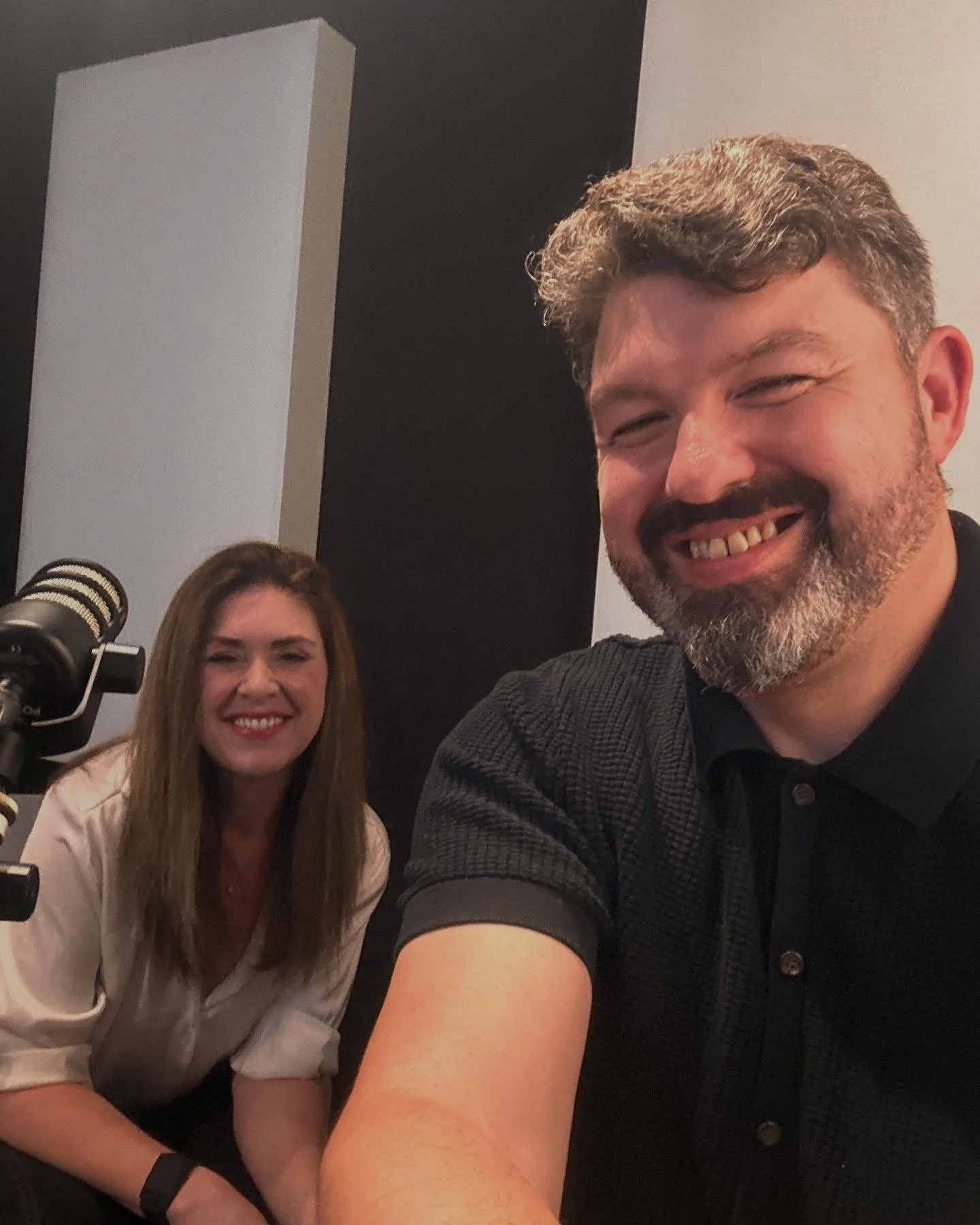
Episode 010
Olfactive Melbourne Mid Season Recap
The recovered YouTube transcript is available below.
Explore Olfactive Melbourne Perfumery
Visit Olfactive Melbourne PerfumeryRead the episode transcript
This transcript was made from the episode audio and checked for names and spellings. Timestamps are approximate, and any offers mentioned were current at the time of recording.
0:00 Hello and welcome to the Olfactive Melbourne podcast. I'm your host Trent Stokes and I'm Robyn Stokes. We're a husband
0:07 and wife team passionate about perfume and we're on a journey to better understand explore the art of perfumery.
0:14 We're coming to you today from Melbourne, Australia, and we'd like to acknowledge the traditional custodians of the land on which we're recording.
0:23 They are the Wurundjeri and Bunurong people of the Kulin Nation. We pay our respects to the elders past and present
0:31 and we extend that same respect to all Aboriginal and Torres Strait Islander people who are listening to the recording today. On this show we
0:39 interview Australia's premier niche artisal and indie perfume brands from the founders to the perfumers and onto
0:48 the creatives who take us on a guided journey through a fragrance that best represents their brand. The show is
0:56 wrapped around a master class in which we invite our guests to take us through each stage of the opening, the heart and
1:04 the bass. The show unfolds in real time, meaning that there is time in between the opening in the heart and the heart and the base. And this is known as the
1:13 dry down. During the dry down, we take the opportunity to deep dive into the perfumer's journey, their brand, their
1:20 mission, their vision, their values, along with getting a better understanding of some of the technical terms in perfumery along with how to
1:28 identify individual notes and accords so that we can more deeply connect with perfumery and also so that we can better
1:37 identify the notes that we like and dislike. This allows us to make more informed decisions about the fragrances that we connect with and that we
1:46 ultimately wear. The show is designed to be both educational and entertaining.
1:51 So, if you like what we do, please like and subscribe and make sure to sit back, relax, and enjoy the show. The Olfactive Melbourne podcast is proudly sponsored
1:59 by Watch Vault, Australia's premier destination for luxury and vintage time pieces. Each watch is trusted, verified,
2:07 and ready for its next chapter. Visit watchvault.com.au to discover your next timeless investment.
2:26 Hello and welcome to another episode of Olfactive Melbourne. Today's episode is a little bit different. We're now roughly
2:34 about halfway through our very first season and we thought it would be a great opportunity to reflect back on everything that we've learned so far.
2:43 It's been an amazing season so far and we'd like to share with you some of our key learnings along with some of our favorite moments.
2:51 Over the past several months, we've had the privilege of speaking with a number of perfumers and brand owners.
2:59 And today we'd like to take you back through some of those conversations to um some of the major learnings that
3:06 we've had, some of the aha moments, and some of the information that we found really interesting.
3:12 So, our very first guest on the show uh was Patrick Beggs and Sondrine Kehoe of Cygnet Perfumery, a beautiful natural
3:21 Australian brand focused on natural botanical perfumes.
3:26 we were introduced to a range of different um perfume notes and perfume concepts and one in particular really
3:34 stood out for us and it's this idea of perfection in imperfection and this really is a celebration of the variation
3:43 in those natural botanical um fragrances as each season uh es and flows. Let's
3:50 take a look at that clip now. they I really wanted to I guess foster more of
3:57 a mindful um consumer. I think that um a lot of things are overproduced,
4:04 mass-made uh that isn't necessarily respectful to the ingredients that we're working with. These are really yeah
4:12 precious materials. Um, and their the way they change from the soil they're
4:19 grown in to what the climate was doing that year really affects their smell.
4:23 And I think that's something we're not really aware of as a consumer. So, I wanted to really highlight that a bit like with wine making.
4:31 Um, just smelling that variation because there is perfection in imperfection. um
4:38 you know, we're not just producing this juice that smells exactly the same from batch to batch. I really want to highlight um yeah, the beauty of of
4:47 change. Um through that, we also learned that the note that we know in perfumery as mimosa is also known to Australians
4:56 more commonly as WLE, which really connects us back to the natural landscape in Australia. Let's take a
5:03 listen as we discover this. Let's have a look at uh Prima Vera which is our floral uh fragrance in the collection
5:11 released in spring and it really uh I think if yeah if there's one perfume that is seasonal uh like you know a
5:19 great time to wear it is spring it smells of um of pollen like nectar honey
5:27 um it it is uh yeah really inspired by um I guess that regener generation of
5:36 everything wakening um up. It has a beautiful um beeswax absolute in it that I use in a honeycomb accord um lots of
5:45 rare flowers like pink lotus and um wle or as it's known in perfumery mimosa.
5:53 Uh and um lynen blossom which I love as you might know with the old PLEIN AIR.
6:02 Yeah. Um and um an orus butter which is just yeah a gorgeous material. Yeah.
6:10 Did you know that waddle was referred to as mimosa? There was Yeah. It's something new there. Yeah.
6:15 Yeah. And and you do get different kinds as well. So it's not all just the one kind of um yeah different uh yeah kinds of memo.
6:25 So Sondrine also introduced us to the fragrance family. fougère.
6:31 fougère in French simply means fern and it is a fragrance family that is characterized by fresh green and slightly woody notes.
6:42 We also learned about oak moss as a fixative.
6:45 This is a foundational ingredient that helps to stabilize a fragrance especially the lighter more volatile notes. Let's take a listen. I don't
6:54 think I mentioned PLEIN AIR is a fougère fragrance uh which is a fragrance uh family um that's really centered around
7:03 oak moss kumarin which is what is in tonkabin um and uh often geranium and viver and
7:11 lavender is the really important one um so with the base notes uh we get that
7:18 really strong uh cumarinone hay note um from the ton Tonka bean and
7:26 uh tonka bean is also a little bit uh sweet and it can have a kind of uh
7:32 vanilla facet to it. Um and which I know you noted before the
7:39 sweetness and and then the vetiva is a beautiful hyishian vetiviver. Uh it's got that earthiness to it that um depth.
7:50 uh and the oak moss um brings a real kind of undergrowth facet to it. So fougère
7:58 means fern in French. Um and I also use uh notes which used to be listed like
8:06 puli. I know that we had a chat about puli in the PLEIN AIR earlier. Absolutely.
8:11 Yeah. So that um is now more of a support note of the oak moss. Um it puli has this beautiful um kind of
8:19 undergrowth mossy facet to it that uh we've used to push the oak moss.
8:25 Uh so for me it the dry down um is it's earthy. Um there's still a little bit of
8:32 sweetness of that um hay but it has um to me like a really uh dry facet to it.
8:40 Like there's a little bit of woodiness coming through from the vetiviver. Um, and then the tonka bean as well still
8:48 has that sweet um slightly almost uh van vanilla facet to it. Yeah.
8:54 What What are you getting off on your skin there? Cuz I noticed it was still a bit sweet on your skin.
9:00 It's It Yeah, it it's still a little bit sweet, but I also get the hay. Mhm.
9:06 Now that I know that it's hay, I can recognize it better. Um, and then I think perhaps I'm getting
9:14 that what I think is oak moss, you know, from how you've described it. I just I guess I want to ask like does the oak
9:21 moss help with longevity? I think I've written that a long a long time.
9:25 It does. Yeah, it has great fixative qualities. A lot of the base notes do have that um fixitative qualities, so they'll help give that Yeah. longevity
9:33 to the fragrance. Um, and yeah, it's a really beautiful deep material. Well, it's actually quite restricted in use
9:42 now in perfumery. Um, not I'm sure that you've heard of ifra. Um, and uh they kind of set the standards for how much
9:51 uh of each material you can use when you're formulating a fragrance.
9:55 And um some essential oils can uh be uh kind of cause you to be sensitive to the
10:03 sun. Well, you've probably heard of that like bergamo. So yeah, we follow ifra standards to make sure that our perfumes
10:10 are you know safe for the uh consumer and um so with oak moss it's such a beautiful material it's very it was used
10:19 a lot in a lot of vintage perfumes so I think um whilst ours are modern interpretations there's definitely like
10:28 they've got quite a vintage appeal a lot of the fragrances um yeah so now a personal favorite uh moment of
10:37 both mine and Robyn's uh during this episode was this moment uh from Patrick Beggs that really reinforced to us that
10:45 sharing our learning journey uh in fragrance and sharing that journey with you is something that actually truly has value.
10:52 Um but I found that actually there was a big hole in the market for this because
10:59 the perfume industry is only just kind of growing in Australia. It's really exciting. It's awesome to see you guys doing this because
11:08 um it's really young and I think it's a exciting time to be in in Australia. Um and definitely with botanical perfume as
11:18 well, there wasn't really anything uh there weren't many brands doing that and showing people behind the scenes of how
11:25 this is made. Um very yeah materials and perfumer focused um business. So yeah, I
11:32 guess we did find that it it did have a spot in the market, but you might have something else to speak to that. Yeah.
11:40 Yes and no. Like I think there's something really special about a business that is come from passion. I think you can feel that in in a product.
11:48 I know I always do when you you find something and all of a sudden you look behind the label and you and you start to know that story a lot more. And
11:56 everyone the hot word now is authenticity. But Sundre just has carried that since 12. and to have that passion is is really beautiful. I think
12:04 pretty rare for the market. Um and and my role has just always been just how to support that and and how to speak and
12:12 and and that that's in that people be introduced and and how that's going to work. Um, I think it's really beautiful what you two are doing here because one
12:21 thing that we've always come up in the market is that educational piece around what this perfume is and what a perfume can be because in Australia it just
12:29 isn't there that knowledge. Um, but it's starting to get there with the rate of the way that we consume and where we consume. And I think everyone,
12:37 especially in Melbourne, loves, you know, the hidden coffee corner, but now it's the hidden perfumery or do you know, it's it's something new. And I think that's something but it's been
12:46 around forever. Um but there it's something new and exciting but also something that hearkens to the old the traditional techniques have been around.
12:55 So there's that story that you can really um grab onto and grab onto a historical piece but then to see it represented in a modern time is really beautiful.
13:05 In episode two we met Corey Newcombe who's the founder and perfumer for Criminal Elements perfumery. Criminal Elements is
13:13 a brand that pushes the boundary of scent and known for its strong evocative fragrances.
13:19 During the episode, Corey introduced us to a really fundamental concept in terms of constructing perfume. So, we know
13:28 that when we smell perfume, we smell our opening notes first, followed by our heart, and then our base. But that's not the way perfume is actually constructed.
13:38 Let's take a look at Corey's explanation.
13:41 I um create a fragrance um contrary to to what most beginners might might think um you actually have to start with the
13:49 bass notes and work your way up to the top. If you start with the top notes, then you have to wait for the top notes to disappear before you can really smell
13:56 what's going on underneath properly. And that will take, you know, up to 20 minutes, half an hour, up to an hour
14:03 sometimes. Um so you can't really formulate from the top down. You actually have to formulate from the bottom up. So you start with um a a base
14:12 like the base of the pyramid for example.
14:14 Corey also took us through an education on bridging notes. He used an example of his fragrance called Hansel where
14:23 saffron acts as a transition between the layers of the composition.
14:28 Let's take a look for this fragrance. Saffron is a bridging molecule. Um, I'm not entirely sure if that's the official name for it,
14:35 but it's essentially a chemical that smells both like a spice and also like leather. So, if you've smelled saffron straight out of the jar, it's it's quite
14:44 leathery. U, but it's also spicy and aromatic and it's got a couple other little note facets there. Um, so what
14:51 that does is it it smooths the transition between the rest of the spices in the composition and the leather and the heart. Corey also
15:00 introduced us to a very popular note in perfumery, which is the note of amberree.
15:06 Corey explained to us what amberree actually is and how it's actually used in perfumery. And that gave him the
15:13 opportunity to introduce us to a fragrance term that we were unfamiliar with, which is the term exaltant. Amber
15:21 green is used as a uh note that amplifies other notes in perfume. Let's get that explanation directly from Corey.
15:31 So, uh, most people will never have the opportunity to smell it. Um, it is a product that comes from Wales. Um, and
15:40 it's been extensively studied over the last, um, couple hundred years. Chemists have been working to isolate the
15:47 aromatics from it and recreate them in labs and, um, they've done a spectacular job. I think amberree is probably one of
15:54 the um the best well-made synthetic reconstitutions of the real product that
16:00 exists out there. Um like osmanthis for example, very expensive, lovely material, the synthetic reconstitutions smell nothing like the natural product.
16:10 Um but having tried both um yeah, you can basically do a really really good job. Um so amberress or amberree smells
16:19 like uh papery. It's it's warm. It's got leathery facets. Um it's it's rich. It's
16:26 elegant. Um it's also dry. It's it's um also an exaltant. So it makes other um
16:34 materials kind of pop pop out a bit in the composition. So when you put a bit of amberree in something, it just makes everything smell
16:43 like it's got an extra dimension. It's it's no longer flat. It's no longer just one smell. That's like a spectrum of
16:51 smells that are all coming at you at the same time.
16:53 A personal favorite moment from us from the episode comes towards the end where Corey tells us that he was not a classically trained perfumer, but that
17:02 he's actually been self-taught and he gives us the advice that anybody who has a love of perfumery and who has a
17:10 playful and creative mindset um can do it. Let's hear from Corey.
17:16 See, oh my pleasure. Look, I mean, perfumery can be intimidating for people starting out. Um, but like anything, I
17:24 mean, you don't need to go to cooking school to become a good chef. You could just need to understand what you're working with. And for me, that was just
17:32 trial and error. So, anyone out there who's interested in becoming a perfumer, I would strongly recommend it. It's a great it's a great art form. It's a
17:39 great hobby. Um, even if that's all it is. Um, but all you need to do is just get materials, start sniffing them, mix
17:47 them together, see what they do and how they smell and how long they last and then you just kind of develop this understanding of what you're working with and then you just get more complex
17:56 as time goes on. So, it can happen quite organically or you can go to, you know, perfumery school in France and spend four years of your life in intense um
18:04 workshops and that also works. Uh, not for me, but um yeah.
18:09 Yeah. In episode 3, we welcome Sophie Marcoux, who is the founder of Ficifolia Fragrances. Ficifolia Fragrances is a
18:17 female-led Australian brand that is all about experiences and memories in Australian cities.
18:24 So, in the episode, we had a great conversation around the use of synthetics, which Sophie refers to as
18:31 safe synthetics. Now, this is an extremely important conversation because there's a lot of misinformation out there in perfumery around synthetics and
18:40 the perception that these things can be dangerous. However, there are safe synthetics as well as dangerous
18:47 synthetics just as there is safe naturals and dangerous naturals and all of this is monitored by ifra. This was a
18:56 great conversation. Let's take a look now as part of uh that process and we obviously we did a bit of uh research on your your your brand before you came on
19:04 the show and we've experienced your your fragrances before. You've noted that you use a combination of um natural
19:11 ingredients and safe synthetics um which really means that you're talking about a clean formulation. So I guess a two-part
19:19 question for you. What is a clean formulation and why should consumers be concerned with a clean formulation?
19:26 Okay, I love this question for many reasons. I think what is very sad about
19:33 the fragrance industry is the fearongering about synthetic molecules and aroma molecules because it is it is
19:43 regulated by ifra. Um and so all of our fragrances are ifra compliant. Um it is
19:50 not a legal regulation but it is the only type of regulatory body in
19:56 fragrance and I think people are taught to avoid synthetics because that word in
20:05 itself is quite scary but it's really not. So to be honest with you, I call them safe synthetics because of that
20:13 fear that people have. But yeah, there are so many regulations now that it's really hard to find fragrance uh
20:20 synthetic fragrances that are truly bad for you. Um definitely a little while
20:27 ago when it was less regulated, it was very different. Um but natural fragrances have their own issues. you
20:34 know, it's so exhausting on the environment and the pure amount of product you need for a small amount of
20:41 oil is crazy. There's so much waste. So, I think when I talk about natural versus
20:49 synthetic, I try to speak about it in a way that is digestible for the average consumer who does still hold these kinds
20:57 of reservations about what is safe and what isn't. Um but I am very diligent about that and all of our fragrances are
21:05 ifra compliant so therefore they are considered safe formulations.
21:09 Fantastic. It's definitely worth noting that um of course there are dangerous naturals as well that are also regulated
21:16 by ifra and used in very controlled uh quantities. We did cover that off with with a previous guest as well. Um just because something is labeled natural doesn't necessarily mean that it's safe.
21:26 something is labeled synthetic doesn't necessarily mean that it is dangerous.
21:30 Um what is very very important here is that you are purchasing fragrances from perfume houses that are compliant with
21:38 ifra. If you are not you are taking a risk you are putting this substance on your skin and you don't know what's going to happen. So please make sure
21:46 that you're buying from a reputable sources just like ficky folia.
21:51 Another key insight was around longevity where Sophie helped us to by clearing up any misunderstandings we may have had
21:59 around concentrations and performance of uh fragrance on the skin in terms of projection seage and longevity. Let's have a look at what Sophie had to say.
22:11 probably important to note that your perfume so all of them are I guess listed as extract dipform which is I
22:20 think around 25 um correct% yes so um an EDP which is what you'll find typically
22:26 in odapam is typically between 15 and 20% and then an extract is anything
22:33 above 20 um I made that choice for a couple of reasons um I think
22:40 specifically ally in the Australian landscape um the mass market landscape people
22:47 complain my fragrance doesn't last long enough and one of the solutions to that is having a higher concentrated
22:55 fragrance um and I think a caveat to that is also your fragrance isn't lasting long for a
23:03 lot of reasons and it's not necessarily reflective of the quality of the fragrance um it could be due to its
23:10 largely molecular makeup could be quite small in molecular size. That's why you'll find woody and heavier fragrances
23:17 which are typically larger in molecular size will last longer. Um but I chose to do extrate because I think that um from
23:26 the perspective of a consumer, this fragrance is going to last you longer cuz you need a little bit less. Um, and so especially those who are heavyhanded
23:34 with the spritz, um, you can still go crazy and it'll last you all day or you can just spray a little bit and it'll last all day, but just for you.
23:43 So, this particular episode centered around Sophie's very popular fragrance, Bro. And Bro is centered around a rather
23:53 delicious note of Baratha, which is an Italian mozzarella and cream cheese.
24:00 And this gave us the opportunity to discuss another fragrance family. And that fragrance family is gourmands. And
24:08 as uh the name alludes to, it is a reference to notes that are particularly delicious and have a sense of being
24:16 edible. So let's take a look at Sophie's explanation now. Fantastic. Just um before we proceed through some of the
24:23 notes here um it's probably worth explaining what a gourmand is cuz not everybody is super experienced um in in
24:31 perfumery. So Sophie, what is a gourmand?
24:34 A gourmand is typically an edible fragrance or it smells edible. So a lot of your vanillaas, your your sweet
24:42 caramels, um anything with cocoa. And look, I think that it can vary because you can get gourandish notes in a
24:50 fragrance that you wouldn't classify as a gourmand, but it does sit as its own category and family.
24:56 So, it's a bit delicious. You do want to eat it, but not it's not always necessarily food. Correct. Yeah.
25:02 In episode 4, we introduced Ali Erkekli, who is the perfumer and the founder of
25:08 Anka Kuş Parfüm. Anka Kuş perfume is known for bold, strong fragrances that take us
25:15 on an alactory journey through time and is inspired by history, mythology, art and so much more.
25:25 Ali is extremely well known for his use of ultra highquality ingredients and
25:32 during this conversation he introduced us uh to one of his key suppliers insarud.
25:39 That conversation led to a discussion around one of my personal favorite notes in perfumery, oud. During this conversation, we had a chat about what
25:48 ud actually is, a little bit about what it smells like and how it's generally viewed uh across the Arabic world. Uh
25:56 it's a fascinating conversation. Let's take a look. Um you sort of unpack here, but this is no ordinary oud here. Ali,
26:03 what kind of ud is it? Uh originally the the first uh few batches uh it was
26:11 called Ud Mustafa which was a a particular line or a batch that uh a
26:17 gentleman called um Ensard U. Uh he's absolute afficionado. He eats, drinks,
26:26 lives ud almost worships the the trees that produce it. And yeah, like you can
26:33 just uh tell with the quality. Oh, I think it's one of the the the best brands out there for pure wood. And
26:41 yeah, no expense spared. It's in an incredible ingredient in in pure form even. Um it's not very
26:50 barnyardy, not too skanky. Um yeah, it's just it's just absolute heaven. Like
26:58 even if you dab the raw form on your skin. Yeah.
27:02 Yeah. Which quite often happens uh particularly in the Arabic world. So that's right.
27:07 Um uh oud uh in Muslim culture, but just in Arabic culture is sacred. Um so it's
27:15 burnt in every mosque. Um it's often used just in um its raw form. It's sort of burnt as an incense and it it can fragrance clothes.
27:24 Yeah. They call that bhur bhour which I I have never heard that description before. Also, that's fantastic. Another thing to that we can learn about.
27:33 Yeah, that smells beautiful. If you get top quality, yeah, somewhere we're dying to to go to to the Middle East. We we would love to. Um
27:41 there's also like an oil form that I've experienced before, which is anar um that you roll straight onto your skin or
27:49 you dab straight onto your skin, which also can be sacred uh as well.
27:54 Um, and wood is quite expensive. Fran, now it can there can be uh a spectrum I
28:01 guess of of how much you spend on this going from like a synthetic form to maybe a farmed form. Although this stuff
28:09 is not easy to to farm. Um, but there are goods there that are far more expensive than gold or any sort of
28:16 precious uh metal. Um, some of it goes for for sometimes millions of dollars uh per ounce, which is quite incredible.
28:25 So, I guess um next question is what is wood? Um, I think you summed it up perfectly.
28:33 I'll handle all of that there.
28:36 So, uh I guess yes, I have had some experience with wood. So, it's the uh the resonous heart of a tree that has
28:42 been infected with a fungus. Um it happens in nature. Um, so quite often it is an insect that might burrow into a
28:50 tree, creating a bit of a hole inside of the tree that lets this fungus inside.
28:54 Um, but it's random. Uh, so this doesn't happen to every one of these trees that are out there. Um, and so it's very difficult to farm. You can purposely
29:03 infect these trees with this this fungus, but you don't get the same high quality result. And so, uh, people will go out into the jungle and look for
29:11 these trees, um, to to farm them, which is why they're so rare, uh, to get in the first place. So, um, the process
29:18 from there is that we cut down the tree, bring it back, and we have to carve all of the bark off the outside of this
29:26 reinous core to actually get to the wood itself. Um, and the way that wood smells really depends on where that tree is
29:34 located. So, uh, we can have it in located in Laos versus, uh, having it in, um, I guess what's another location
29:43 you might find, uh, Vietnam. Vietnam. Yeah. Absolutely. Asia.
29:48 All over the sort of the subcontinent, right? So, and each one of those woods smells a little bit different or sometimes drastically different. Yeah.
29:56 So, it's really amazing ingredient. And if you haven't got your nose on wood, do yourself a favor, go out and smell
30:04 something. A great way to start is start with this ember and uh have a bit of a smell. So also spent some time talking to us about
30:11 the storytelling element in perfumery and how for him it's such an integral part of every fragrance that he creates.
30:20 Every single fragrance has a narrative that and that's actually the starting point for his creative process. Let's
30:28 hear from Ali now. Um, and so I guess what is the importance of storytelling in terms of of how you go about the the creation process?
30:37 Uh, it's usually pretty much everything.
30:40 Yeah. Um, sometimes I do on occasion uh create the fragrance first uh and then
30:47 uh choose a maybe like a backstory that suits it quite well. But I prefer doing it the other way. uh having the story,
30:54 having the theme and then uh it it helps me in uh get inspired even in a like a
31:04 eager way to create something hopefully spectacular. And yeah, I prefer it the other way having the theme first.
31:13 And I must say we absolutely loved the story that Ali told about the Rose
31:20 Bandit. uh and that centered around a key note inside of his fragrance uh Ismael Aphendi aka the rose bandit of
31:28 Turkish rose. It really highlights um the importance of storytelling through notes. Let's take a look.
31:36 Lace together so many rich roses because you know to epitomize the the rose bandit himself.
31:44 And I can um I'll give you a bit of a tidbit on the story. This man was around in the like I think it was in the 1890s.
31:53 Um a Turkish man. He was visiting Bulgaria at the time. I'm not sure if if
32:01 it was a post or if if it was just like a visit, but he fell in love with the I think they call
32:08 it Kazanluk or Kazunlook the area. It's a valley known as the rose valley in Bulgaria. He absolutely loved the roses
32:18 and uh unbeknownst to the the the rose cultivators, harvesters there, he ended
32:27 up stealing um uh he cut off a sapling, a rose sapling, and he uh hit it in the
32:37 the belly of uh his walking cane or walking stick or I'm not sure what you'd call Yeah, cane I'd say. and yeah, took
32:46 her back to Turkey. And if you know about the Turkish rose in an area called Esparta,
32:54 uh that's sort of like middle to southern Turkey. Uh his sapling is now
33:00 like a multi-million dollar um uh rose uh what would you call it? Rose crops
33:07 and the rose industry in Turkey in that area. And it all started from that single that single sapling. He kicked it off as I'm feeling the very first rose.
33:17 Yeah. No.
33:19 For episode five, we were lucky enough to meet with Callum Mitchell, who's the perfumer and founder at PERDRISÂT perfume.
33:28 Callum's brand is based in Victoria, and he's known for his not only evocative fragrances, but also for being rather
33:35 provocative. So during this episode, Callum introduced us to the idea of fantasy notes and fantasy notes are
33:45 effectively a modern creation. So with the advent of synthetic notes which were born in the 21st century, perfumers
33:52 were no longer constrained by notes that cannot be extracted via natural distillation.
34:00 This provides a lot more versatility to the perfumer. But let's have Callum explain here. And so I just I don't want to skip over any of the these important
34:08 details. So you mentioned that, you know, we've got a banana note here, but that a b banana note is not actually a note. Like you can't just extract um
34:16 these notes from bananas. And you mentioned a fantasy note. Tell me what is a fantasy note?
34:23 It's almost my specialty at this point because I live for the fantasy notes. I find them very fun to make like as a perfumer. they're more challenging as
34:31 opposed to just, you know, there's um something beautiful in using a raw material as it stands. But when you have to use all these different things to
34:38 create a material and then you can determine whether it's with a banana, if it's the lolly banana or if it's like the nail polish banana banana or if it's
34:47 like the, you know, sort of more of a dried out banana peel. Like there's so many things and um avenues you can take
34:56 with a fantasy note. So essentially a fantasy fantasy note is something that doesn't exist by itself. It's an accord.
35:05 And um I think we're seeing more and more fantasy notes these days because you know we've had centuries of
35:12 beautiful raw materials you know jasmine puli rose but now we're getting these like modern um interpretations and
35:21 creative license to interpret fragrance in a more abstract way. And I think these fantasy notes are showing that and
35:28 they're more they're popping up more and more and I think that's maybe the reason you also found me. I'm kind of known for some of the fantasy notes I throw in there.
35:36 Yeah, I would agree with that. Uh this is what we're seeing across the range and we are going to unpack some of um your broader range a little later in the show and I guess it'll make a bit more
35:44 sense to our um to our listeners as to what we're talking about here. But um I I would agree with you. I mean,
35:51 perfumery is a creative process. And isn't it the ultimate creativity to actually pull together a fantasy note that can actually communicate something
35:59 that is actually not in the fragrance at all, but you're actually managing to communicate banana or whatever it it might be. So
36:07 yeah, I think I've actually heard fantasy notes being called storytelling notes as well a lot, which is yeah, I also thought was really
36:14 good and helps um a new person to fragrance understand it as well because you know whatever's listed on
36:21 the perfume pyramid of a or the note pyramid of a perfume, it's not always everything that's in there. There's so
36:27 many little things that are tucked into the fragrance to support, but they're not often present as themselves. So,
36:35 it's interesting cuz you have to be kind of I'm very loose with the notes in terms of like with Daddy, there's a lot of like hidden materials in there, raw
36:43 materials as well that I if I put them in, it throw the story off because they're not actually present. For example, there's a little bit of green
36:50 mandarin in the top, but it's not citrusy enough to bring attention to it.
36:54 It just gives a little pulpiness to the banana little um you know, I think it
37:01 offsets the dry tobacco. And so like using little things like that and more texture or like add to the fabric of the story.
37:09 Callum also taught us about anosmia where certain molecules such as those that are found in iris can't be detected
37:17 by the human nose. This is also sometimes known as nose blindness. The lesson for us here is that you don't really need to be drowning yourself in
37:25 your favorite fragrance for other people to smell you. Let's take a look at the clip now. Description. So tell us about porcelain.
37:33 It's an iris fragrance. So iris is so fun to play with cuz a lot of people cannot smell iris cuz the molecules are
37:40 so big. So in the nose they actually give you like anosmia.
37:45 I can't. Some people go and they just don't smell it cuz their brain is like clocked off pretty much. This is the casual this is the non-scientific way of
37:52 saying it. But you know your so these these things that make up iris are quite large molecules but I wanted to play into that. So, like it's almost like an
38:00 aura fragrance. And I love porcelain. I wear the porcelain and money water. I kind of chop and change between those two depending on the mood. If I'm
38:07 mysterious or if I'm, you know, like don't touch me. It depends what energy I mean. Okay.
38:13 Yeah. So, Iris has that. So, I was thinking that elegant black dress. Um, lipstick smell.
38:18 Yeah. The lipstick smell. Yeah. You hear from from Iris.
38:21 So, you just said a word there. Was it osmia? Anosmia.
38:25 anosmia. So, is that like nose blind blind? Yes. Okay. So that's not like the technical word for when you go nose blind, which happens to me with several
38:32 fragrances. Like I've spray it on and 5 minutes later I'm like, "Is it there? Can you smell it?" Rob can still smell it, but I can't smell it anymore.
38:39 Yeah. So the idea is not the idea. I think that the the chemistry or the science behind it is your brain only picks up new smells. So once it's
38:47 clocked a smell, it's like, "Yep, good to go." So that's why people can't smell their own fragrance and they apply so much and then they're like, "I still can't smell it." And then people like
38:55 can smell them from the next room. um because they're picking up on a new smell.
39:00 Now, in true PERDRISÂT style, Callum lived up to his reputation of being rather
39:07 provocative and introduced us to one of those fantasy notes, being cocaine,
39:14 which is one of the key notes inside of his provocatively named perfume, Fuckboy. This was an extraordinarily
39:22 memorable moment in the episode. Let's take a look now. Fantastic. All right. So, what are we going to look at next?
39:29 I Okay, we have to do Fuckboy.
39:32 Absolutely. We must do Fuckboy. So, this is um I guess I this is how I heard about your brand in the first place. Uh
39:40 heard about Fuckboy. Uh obviously, you know, just inherent in the name. It's uh you know, not I keep using the word controversial. I don't think it's
39:48 controversial. We use we use this word every day of our lives. I used it several times on the drive in. But um
39:54 you know it it it is um I guess a little bit polarizing and so um you know when
40:02 you're you're looking for a fragrance um you know you you might not be necessarily really understanding what you're getting here when you when you
40:09 pick this fragrance up just due to the name. And so I think it's definitely worth unpacking a little bit more so you understand what you're getting and what you're communicating here.
40:16 It's funny because just on the name alone, um I was aware, oh no, I was not aware that a lot of people don't know what a [ __ ] boy is and that's just maybe I spend too much time on the internet.
40:27 So I get questions sometimes like sent to the email, the website um about like
40:35 I think people think it means something a little bit more sexual or something, but it a [ __ ] boy just is a party boy, a
40:43 hedonist. He doesn't really have any thing to he doesn't really stand for anything. He just wants to have fun. And I think that loose morals character was
40:52 important to to me in this in this picture because it was a summer collection. And I feel like there are the summer people or the characters or
41:01 the archetypes very different to the winter ones. And this is almost like if you're not going to date the pretty boy, you're going to go for the [ __ ] boy. You know, it was like this. They're very
41:10 different personalities. And so when I was making this, I was very aware of, you know, I I personally love the smell of pineapple. I don't know if anyone else does. Yeah, I do.
41:18 It's something about it. It just makes me so happy. It's a happy scent. So I was making a pinina colada accord. And then I found it quite linear. And I was
41:27 like, there needs to be something. He's not just a someone who drinks pina coladas. He's there's something else.
41:32 And then it took me a while. And when I was originally thinking of him as the party boy, but I was like, it's too close to pretty boy. Party boy, pretty boy. It would confuse people. Yeah. But
41:41 I was like, he is the party boy. What do party boys do? Oh, a lot of party boys, especially in this summery Miami, LA
41:49 kind of personality. You know, they get up to doing lines. And so I was like, let's put in the cocaine accord. What does that smell like? Let's let's work
41:58 it out. Um, and you know, a lot of people do I'm not the only person the brand to do this. Like a lot of brands
42:05 now are doing this cocaine accord. I find it's funny cuz like back in the day having a tobacco cord was quite risque
42:13 and now it's like it's like that's normal. Like tobacco is not controversial or cheeky but it used to be very like oo that's a bit naughty.
42:21 And so I think right now we're in that transition phase where people are realizing people do these things. They do have bad habits and I I'm not going
42:30 to if I'm going to write about this character, I want to write about him fully. So, this [ __ ] boy had to have that little note. And I guess it worked for me in terms of notoriety.
42:39 It's a talking point, an icebreaker, but I just felt like it was unfinished without it. So, let's spray it. Yeah, let's spray. Let's have a smell.
42:46 And I think um I think what you're just calling out here is um yeah, [ __ ] boy sounds a little bit uh challenging in terms of you know just
42:54 cuz it's got a um you know it's got a swear word in it I guess but um it's just modern nomenclature for um a a
43:02 generation of people that exist in every generation right this would have been your hippies of of the ' 60s and every generation's got that um party person
43:10 who's hasn't got a care in the world u and they're just out there to have a little bit of fun and that's what we're trying to communicate. here with this fragrance. So, let's have a smell.
43:18 So, the top is I really wanted the cocaine note to be quite divisive. It's like, you know, it's metallic. It's it's
43:26 tangy and the tanginess kind of works with the pin colada accord because there is a creaminess to the pin colada and a
43:33 fruiness. And I thought you it's very almost basic without a bit of off notes, these off kind of like I so when I added
43:41 these to it, I was like this feels more like the person I'm talking about. It's more metallic. It's more um and that's it's funny cuz a coke
43:50 note, you know, casual. The cocaine note is a lot more um it's more nuanced to me. I think people are thinking it's
43:59 going to be really strong in the uh perfume, but it's I don't think it's that strong, but maybe I'm just No, it's um I'm I'm getting that
44:07 metallic edge, but it's just a slight edge while you've got that real freshness, that sort of fruity freshness that's coming through. So, this feels like this is in the summer collection,
44:16 isn't it? So, that 100% belongs in the the summer collection. I think it's probably pretty versatile. You probably wear this all year round, right? But
44:23 this will shine in the heat of of uh summer, spring, any time that's sort of warm.
44:30 And it really does. It screams party to me for sure. Absolutely. I like this. Yeah. Very, very fresh. Yeah, it's gorgeous.
44:37 It sounds controversial, but this is extraordinarily wearable. Do yourself a favor and check this one out for sure.
44:42 And thank you for describing the cocaine note cuz Yeah.
44:45 Um when you said metallic, it it just helped me to recognize it. And once you get it, you get it. You could pinpoint it. Yeah.
44:53 Yeah. Cuz you know, some brands would interpret or even on paper uh it could be powdery. It could be a powdery note, you know. Um but I wanted to get that
45:01 sort of nasal drip quality which is part of the experience of um of cocaine. So we're I mean we're we can uh
45:10 we're not going to shy away from any of this stuff today because this is what the what the fragrance is about, right?
45:14 In episode 6, we met Amanda Thompson from Siuno. Siuno is a beautiful natural
45:20 perfumery house from Australia and it's known for its rich storytelling and connection back to nature.
45:28 So Amanda took us on a deep dive into a really important distinction that needs to be made inside of natural perfumery
45:36 and that is the distinction between whole botanicals and isolates. So you can have natural perfume that does both
45:45 or either or. But the distinction that Amanda makes here is quite important because with whole botanicals, we're
45:53 using the entire plant ingredient. This speaks to both ethical sourcing and transparency.
46:00 We love the fact that Amanda places such an emphasis on ethical sourcing. So let's take a look at the clip now. Let's
46:07 start with what is an isolate and then let us know why you choose not to use them.
46:13 Yeah. So um if you imagine um a plant when we extract an essential oil it's made up of um we steam distill it for
46:21 example it's made up of thousand molecules and that makes up the DNA of that plant and we're extracting the oil from it. When we go to create an
46:29 isolate, most of the time it's something that we have to leave the distillery for and go into a lab. And within the lab,
46:36 we use chemicals to extract one molecule from um that product. And then one molecule is what kind of carries I guess
46:45 the strongest scent note. So for example, um from an orange pill, you might get limonel for example, and
46:52 that's the isolate or deranial or vanilla. So these are these are all isolates, but they're still considered natural in
46:59 that they've been derived from something naturally. You can you can do it naturally as well in terms of you can use fractional distillations and things
47:06 like that, but they're very hard to trace. Um it's very hard to know your origins of your isolate. And for us, the
47:14 reason we choose not to isolate is because I'm a strong believer that it's the whole of the plant that brings the healing properties. So they tried to do
47:23 a study on manuka honey and tried to understand what was the what was the healing molecules in manuka honey and the study went on for years and what
47:31 they realized it was it was the whole it was everything as it worked together and that's that's a foundation of aromatherapy as well so in aromatherapy
47:39 you don't use is you certainly don't use isolates you only use essential oils right because that they're they're healing so if you're if you're a trained
47:46 and I'm not but if you're a train I've learned lots about aromatherapy along the way if you learn about aromatherapy you just work within a within a spectrum
47:54 of um you know essential oils. You don't use other scents and things like that.
47:58 So that's why we choose to just use whole botanicals and also I guess I work with really niche and small distilleries so you know they don't make isolates.
48:07 So you stick to the whole ingredient that that's absolutely wonderful. Yeah, it's very interesting to me and I love the fact that it, you know, I didn't
48:16 know that the whole is what makes it healing. But it's just the beauty of nature, isn't it? That that's a bit
48:22 mysterious in how it all works, but as as a whole, it does.
48:26 Yeah. And I would say that isolates are more like in their profile similar to a synthetic scent that they're um you
48:34 know, they're really sharp. Amanda also gave us the insight that scent is normally connected to story or it might be about a memory that's been evoked.
48:44 But Amanda's insight is that it could also be connected to a place or it could be the source ingredient itself. Let's
48:51 hear from Amanda as she talks us through this.
48:54 You mean interview without someone bringing up memory, right? It's like scent is memory.
48:59 Um and it's true. Um and the big perfume houses, you know, that's what they connect to. So they want to be there for your mother's day and your weddings and
49:07 all that sort of thing. But scent can be something positive or negative, right?
49:10 And we make this association, it's almost like a bit of a Pavlov dog kind of thing where it's we're trained that that scent is now that memory. I guess
49:17 what I'm trying to do with Sor is kind of instead of focusing on like singular memories is actually connect people back
49:26 to um the DNA of nature. So when people spray my perfumes, they all they go it's so organic. It smells so natural. It's and bring them back to nature in a way.
49:38 Um and that's why our philosophy is so so strict on the the essential oils that we use and things like that as well. So
49:47 um yeah, in episode 7, we met with an extraordinary voice in Australian perfumery, Aysha Hansen. Aysha Hansen is a
49:55 perfume educator and the founder of Aysha Hansen Fine Fragrances. Her fragrances
50:01 are crafted with elegance and complexity and draw upon mood, nature, and memory.
50:10 Asia gave us a really important perspective on sustainability, explaining why natural isn't always
50:18 better, not only from the perspective of cost, but also on environmental impact. Let's take a look.
50:25 Yeah. And I think sustainability is an important discussion to have in perfumery. And this is why not everything can be natural. It's not
50:33 viable for the environment for everything to be natural.
50:36 That's a huge part of it. and and also the cost as well. Um,
50:44 if you're you're a big company, you can you have your own rose fields and you you can have these um resources at your fingertips. Not everybody has the money
50:52 or or the resources to be able to spend thousands and thousands and thousands on, you know, a liter of rose oil or the
51:00 top jasmine oil or even vanilla. These beautiful vanillaas where I'm using that, they're really expensive, but they're worth it. that there's that that
51:07 you know for most people um I think I was saying earlier that they'll smell it and they'll like it or they won't but it is an education piece around
51:15 sustainability so people understand the quality of what they're smelling the rarity of it the sustainability aspect um and yeah it's a big piece I think to
51:24 be explored because I think when people hear the aroma chemicals they straight away go to that's something that's negative
51:32 where I'm very much like these are magic If these are magic and if people were educated more on why they're magic and where they come from.
51:43 Yeah.
51:43 Um I think it would really dispel a lot of fear in the industry and um with consumers. Yeah.
51:50 Yeah. I'm a good learning for us and we're still learning about it. It's it's very um interesting side of the industry. We've also introduced to
51:58 Michael Edwards and the fragrances of the world which is a brilliant resource that is fantastic for beginners and
52:06 actually for everyone um to draw map out fragrance families and to learn more about perfumery. Listen to this clip
52:14 where Asia educates us on how much she got out of it.
52:18 Before we leave this point, you did mention uh Michael Edwards. So what what's Michael Edwards sort of known for for for those people who are maybe a little bit new to to perfumery?
52:28 Sure. So Michael Edwards um is just an amazing resource to catalog all of the
52:35 fragrances around the world. Um and and the whole concept of the fragrance family is which fragrance fit into which fragrance family. for a complete
52:43 beginner and someone who's thirsty for knowledge. I found he was well really at the time the only resource that I could
52:50 get my hands on to understand and make sense of the fragrance families. Um the
52:57 the history of the the perfumers I mean it's just this wealth of information all all in one place um which was the first at its time.
53:08 Absolutely.
53:09 Yeah. in the I mean that would have been late 80s early 90s.
53:13 So when we reference the the fragrance wheel which is those fragrance families we're talking about that Michael Edwards fragrance wheel it helps us to better
53:21 understand um you know fragrance families where they're positioned uh and to get an understanding of what you're actually looking at before you even spray uh anything on.
53:29 Yeah. And also if you did had a a favorite perfume you could therefore research other perfumes in that family that you may also like. So, it was a
53:38 fantastic resource. We used to use it all the time in sales because it was like an encyclopedia of well, if you don't like this one, you'll probably
53:46 like this one and this one, this one, have me grab a bottle to show you kind of thing.
53:49 Yeah. Yeah. Cuz it's really hard to to navigate cuz everything is sort of marketed by brand rather than, oh, you like a spicy oriental. If you like a
53:57 spicy oriental, you'll love these. And so, yeah, it points you in the right direction to uh to experience more of what you love.
54:04 Yeah. Absolutely.
54:06 Asia introduced us to the note of lily of the valley and it's important to note here that lily of the valley is actually
54:13 an accord. It is a very small piece of material difficult to extract and so
54:20 therefore it needs to be recreated. So, as Callum explained to us earlier in the season around fantasy notes, essentially
54:28 an accord is a reconstruction taking individual elements and pulling them together to recreate that note. So, when
54:37 we say the words fantasy notes or a chords, those terms are essentially interchangeable. Let's take a look of the explanation of lily of the valley
54:46 with Asia. Now, I don't actually know what it is. So, what is lily of the valley? It is the teeniest tiniest
54:54 beautiful. It's like a little white bell. It's a flower that looks like a little teeny tiny white bell on just a little They're only about that high.
55:02 They're tiny little things. Really tiny delicate flowers.
55:06 And so, you know, in nature, you you can't squeeze anything out of them cuz they're so small. because they're so small and and they you know um so the
55:16 perfumes in this instance have created an accord to smell like the realistic version of the lily of the valley and it
55:24 does capture all of those del the delicacy of the flower and you know it is a white flower um it's almost a
55:32 little bit I think aquatic like it's very fresh very clean a very clean um flower so it's not your typical white
55:40 flower that can be heavy and heavy and sometimes clawing like tuberose can be a little bit that way.
55:46 Sometimes some jasmine can be a little bit that way as well.
55:49 Um so yeah, it is an accord. And finally, we discovered the delightful pink pepperc corn note which adds just a
55:57 little bit of sparkle on top. Let's listen as explains. Isaiah, did you say pink pepperc corn?
56:06 Yes. Tell us a little bit about how does that come up as sparkling? cuz that that's interesting to me.
56:12 Yeah. So, um it's it's what we'd call a cool spice. So, it's um where where black pepper is a little bit warmer, has
56:20 a little bit more heat to it, but the pink pepper um adds just a little bit of a pop of interest, a pop of spice, and a little bit of um lift um to something.
56:31 It can kind of cut through citruses. It can cut through Yeah. It's just really interesting. Like a lot of these ingredients when you smell them in
56:39 isolation, you think, "Oh, that's that's interesting." But and it could can be quite overwhelming, but with the right, you know, the right amount, it just adds
56:47 a little pop of interest. I think a little bit of sparkle. It's Yeah, it's fascinating how it interacts with the other ingredients. Um
56:56 whereas black pepper, it's it's just so different. It's so much heavier. And um again, it can be quite beautiful.
57:04 In episode 8, we met with Eden Meilland, who's the founder of Eden of Y. Eden of Y draws on a deep love of flowers,
57:12 antiquity, and the natural beauty of scent to deliver some amazing uh handcrafted fragrances.
57:19 Eden's fragrances are 100% natural. And early in the episode, Eden took the opportunity to explain to us that we can
57:28 expect a different level of performance from natural perfumes as opposed to those that use synthetics. Meaning that
57:36 natural perfumery tends to not last as long. And that's okay. As Eden explains, it's absolutely fine to have a perfume
57:44 that you carry around with you and that you reapply through the day. Let's listen to Eden now.
57:50 I really fell in love with it as as an art form. I'd never really considered as an art. You know, I learned about it and learned that it's been around since the
57:58 be beginning of time basically that we've been making perfumes um whether it's through incense and smoke,
58:06 religious um ceremonies or to yeah perfume our skin. Um, so I just, yeah,
58:12 really fell in love with the art form of it. And the naturals are really special because they're so precious as materials. And honestly, we're so
58:21 privileged to be living in a time where we have access to all of these wonderful materials. Like back then, obviously, it would have been limited to a certain region, but now we they're just so
58:30 accessible, but still as precious as ever. And I just feel honored honored to be working with these materials and yeah
58:38 and continuing that traditional sort of perfumery which is natural. Um yeah yeah certainly an art form. Uh I think
58:46 that there's um a little bit of a a um a perspective out there certainly in maybe
58:53 the fragrance community or maybe more broadly with consumers that uh you know 100% natural perfume doesn't last. And I
59:01 think that's where the art form comes in, doesn't it? So, it's really about how you actually construct your fragrance using that fragrance um pyramid, you know, sort of building up
59:09 from the from the base to the opening notes, how you construct it, the types of materials that you select and that you bind together that gives you the longevity out of your fragrance.
59:18 Absolutely. But I think yeah, it's also important to sort of acknowledge and understand and accept that natural perfume is ephemeral. So, it does not
59:27 last as long. That's just, you know, the nature of it. Um, but yeah, it has been this way since the start of time. Um,
59:35 synthetics really were only introduced in the 20th century, but before that, you know, this is the way it was. And there's really nothing wrong with that.
59:44 And I think, yeah, it's sort of beautiful to think of it as something ephemeral. And, you know, if you want it to last longer, you can just reapply it.
59:53 Rather than waiting the 6 hours, just apply after 3 hours or so. this. Yeah.
59:58 And we also learned from a previous guest that um it's, you know, it's never quite the same. It slowly it's different
1:00:05 according to each batch or season as well, which is kind of beautiful about natural perfumery as well. Exactly.
1:00:13 Yeah.
1:00:14 Eden embraces the idea of handcrafted uniqueness.
1:00:17 her handmade batches of natural perfumery are never quite the same due to seasonal changes, the nature of the
1:00:25 source ingredients and so on. Here from Eden as she explains to us what makes this so special cuz it really did stand
1:00:32 out. Yeah, it takes a bit of bowing around like just to get the right rose.
1:00:38 Um and as you mentioned before, um even the same rose from the same supplier will smell different the next
1:00:45 time you buy it. And that's also because sometimes our nose smells differently, but they're so complex. There's over 100
1:00:52 chemicals in every natural material. So, it's really Yeah, it can be easy to sort
1:00:58 of smell it differently every time. Um, it must be challenging to achieve sort of consistency with that that sort of
1:01:06 factor in there. But um I suppose when we're talking about sort of niche perfumery, which is what we're talking about today, I don't think it really
1:01:14 matters if that there's a little bit of variation, uh you know, from batch to batch. I think that's one of the nice things that that you have with niche
1:01:22 perfumery that you don't necessarily get with a designer. The designer perfume is always the same, and that's that's okay because you got that same sort of
1:01:29 reliability, but isn't it nice to be able to experience that little bit of something different each time, you know, you experience a new batch? I think that's actually quite a nice uh facet of the the sort of smaller artisal brands.
1:01:40 I really love it.
1:01:41 Yeah. And also cuz it's like hand poured as well. You know, every drop, you know, you might slip a drop or two. So that also provides a slight difference.
1:01:50 During the episode, Eden introduced us to quite a unique ingredient, Jesuit balsam. We hadn't heard of this
1:01:57 particular ingredient before and it is absolutely steeped in history and it is a note that is used consistently across
1:02:05 Eden's entire range. Let's take a listen now. Jesuit Bolson. It's uh I think you you've mentioned a few times through the
1:02:12 the course of the um through the podcast here. All of these notes have a variety of of different names in which you can describe them. You opt with the more I
1:02:21 guess poetic uh names which I love. Um uh it's yeah it's because it's odd brand.
1:02:29 Absolutely. Um so we've done a little bit of research as well on on Jesuit balsam. We have also seen that it can be
1:02:37 referred to as friars um balsam. And I think the reason why it's been given
1:02:44 this particular name is uh it relates to the Jesuit missionaries
1:02:51 um who brought this back from I guess the new world which sort of indicates that it's quite old but um I guess
1:02:58 what's the what's the story uh there with the with the Jesuit um balsam?
1:03:03 Yeah, you got it. Like so the Jesuits were a religious group, Catholic religious group and they yeah on their
1:03:11 travels to the Americas they sort of came upon this material um and brought it back to Europe in the 16 um no the
1:03:20 17th century so the 1600s and yeah I guess they were sort of used for medicinal purposes as well as um yeah
1:03:29 for the scent as well. And do you know what those medicinal purposes were?
1:03:35 I guess with a lot of balsams, it's they sort of have antiseptic um anti-inflammatory qualities. Um especially if you have a skin burn,
1:03:43 something like that, they can treat help to treat that. Yeah, can certainly imagine a few hundred years ago with the state of of medicine
1:03:51 back then just how valuable something that had antiseptic qualities to it would be and why they would go to the effort of actually wanting to transport that back from I guess what they
1:03:59 referred to as the the new world back to back to Europe.
1:04:03 It sounds quite rare. Is it um difficult to source?
1:04:09 It's not exactly rare as a material. I guess it's fairly Yeah. easy to source.
1:04:14 It's from the Brazilian tree, the capera tree. Um, but I guess it's rarely used in perfume. Um, I think it's because
1:04:23 it's not it's not a heavy base. It's not that strong. But that's exactly why I used it here because I was creating a
1:04:31 sort of lighter, greener, fresher fragrance. And I found that a lot of the base notes were very strong and very overpowering. You could sort of smell
1:04:39 them from the first sniff almost. Um, so this is just very delicate. Um, so that's why I've used it. Yeah.
1:04:48 And finally, we uncovered the rose of 100 petals, also known as rose centia.
1:04:54 This is the ma one of the main notes in raisel. Hear from Eden as she talks to us about this beautiful rose. So tell us
1:05:03 about a rose of 100 petals, which is um a unique rose, I'm assuming. I don't know much about it. So, please help me
1:05:11 understand what's is that particular rose.
1:05:14 Yep. It's actually the rose centifolia which means rose of 100 petals quite literally. So, I just thought I' I'd
1:05:21 list that as in a more poetic way. Um, and yeah, this rose is fairly young compared to the domestic rose. I suppose
1:05:28 it's it was hybridized in the 17th century by a Dutch horiculturalist.
1:05:34 Um, and it's a a mix of roses. So, it's it's a mix of the Damascus rose, um the canina rose, and the muscada rose. And
1:05:43 it creates it's a pretty fresh um green rose as opposed to the damasque which is a bit deeper, richer, spicier. So, yeah,
1:05:52 it's more of that green sort of fresh, delicate, sweet, you know, slightly honeyed and fruity like leachy notes. In
1:06:01 episode 9, we meet the delightful Lucy Bradshaw from Tulita. Tulita is a natural
1:06:07 plant-based brand that draws upon the Sanskrit idea of transformation. They're known for their beautiful mood enhancing fragrances.
1:06:18 Lucy gave us some insight into why Tulita are focused on using all natural ingredients.
1:06:25 She also discussed some of the ambiguous nature of perfumery terms like cling and
1:06:32 the lack of transparency that we commonly see inside of the perfumery industry when talking through the ingredients that are used. Let's listen to Lucy now.
1:06:42 My own fertility journey and just wanting to go all natural in a lot of my, you know, cleaning products, eating habits, everything was starting to sort
1:06:51 of shift in that way. And I started to read a lot about what's contained within fragrances. For your listeners that aren't aware, fragrance is the only
1:07:00 category in all of health and beauty that's not required to disclose their ingredient list. Um, which means that it can be a bit of a black hole about
1:07:07 what's in it. Um, and that just sort of got me really ticking and going, "Okay, I wonder if we could actually just completely burst open the doors and, you
1:07:16 know, invite full transparency and let's print our ingredient list and let's go 100% plant-based and let's go as organic
1:07:23 as possible." And, yeah, I guess I'm just sort of on this little quest to, you know, prove that it can be done.
1:07:30 Lucy also explained to us why Tulita places such a specific emphasis on where their source ingredients come from.
1:07:38 Transparency is very important for Lucy and Tulita. Let's hear from Lucy as she explains why we're calling out where our ingredients
1:07:46 come from. And I I don't actually often see this. So I I see, you know, a notes list and it's just got the ingredient rather than where they're from.
1:07:54 Talking about where they're from is it's just this almost celebration of the communities that have actually grown and harvested these botanicals. And it's
1:08:03 just like this sort of like gentle reconnection to the botanical itself.
1:08:08 And you know, just to pay homage to the fact that, you know, this isn't an ingredient that was made in a lab to make it smell like a cedar wood tree.
1:08:16 This was grown, this was cared for, this was harvested, this was cleaned, this was distilled, you know, just to really,
1:08:24 you know, recognize that. Um, and secondly, it's really about the transparency that we really love and as far as we can possibly go in our
1:08:33 transparency, the better. So, it's really those two things of why I love um really celebrating the country of origin of each of the ingredients.
1:08:43 Lucy also gave us a lesson in biology and explained to us how perfume is recognized and processed by the brain.
1:08:53 It is an absolutely fascinating insight into how our brains process perfume. Let's take a listen.
1:09:01 That's really because um scent is the only one of our senses that isn't processed through the cortex of the brain. It's processed through the
1:09:08 amygdala. And the amygdala is the exact same part of the brain that's responsible for memory, which you know a lot of fragrance houses harness. But
1:09:18 it's also um the part of the brain that's emotion and mood. And that's really why scent and mood play such an
1:09:25 important role. But then obviously at Tulita we encompass that and enrich that even further by taking the vdic qualities and bringing the chakra
1:09:33 harnessing energetics to it as well as where it's actually processed scientifically in the brain. So it's
1:09:39 yeah I completely um resonate with what you're saying because you know it's it's scientifically proven that it's you know
1:09:47 responsible for triggering different moods and emotions and memories. Lucy took a moment to educate us on the concept of upycling which is a process
1:09:56 that reduces waste and also adds a certain something special to fragrance. Let's take a look.
1:10:04 Can you just explain it a little?
1:10:06 Yeah, absolutely. So, when um the rose oil is actually being distilled, it's you know it's been it's going through like a steaming or a distillation process where water and steam is used.
1:10:17 And so often that would just be discarded and it's just the oil that's sort of taken from from the top that is
1:10:23 is sort of used and highly coveted. And so essentially very simply what we're doing is we're reusing that water that
1:10:31 had been used in the distillation process that still has a lot of fragrant qualities within it and lends itself so
1:10:39 beautifully. And I think we would have a really different fragrance if we didn't have that upcycled rose water uh in in the fragrance itself.
1:10:47 Okay. So, typically that gets discarded as part of the the process. It just gets wasted. Yeah. Okay. Isn't that interesting?
1:10:54 It is. I haven't seen upycled as a term in fragrance before. This is my first experience with it. So, it's very Yeah.
1:11:02 Very good to know. And finally, Lucy explained to us that even though Tulita
1:11:08 is 100% natural, it is actually possible to achieve longevity through careful
1:11:15 craftsmanship and blending and sourcing of unique ingredients. Let's take a listen now.
1:11:22 But from a structural integrity, cardaman is a really wonderful ingredient because it's one of the ingredients that naturally allows us to
1:11:30 have longevity. It's a wonderful natural binding agent in binding those sort of more citrus or those lighter top notes
1:11:39 to the woody base notes. So, it's how it's those sorts of ingredients of really going back to, you know, the original craftsmanship of the way that
1:11:47 fragrances were made sort of a 100red years ago. Cardamon was their sort of like longevity agent naturally. So it's
1:11:54 a wonderful ingredient not just for its facet of like that warm spicy quality and that slight bit of sweetness but um you know how we get that staying power.
1:12:05 That wraps up our recap for today. We hope that you have enjoyed learning with us as much as we've been enjoying
1:12:12 learning from these amazing perfumers and founders.
1:12:17 If you have, please leave us a review or leave some comments so that we can understand what resonates and what would you like more of.
1:12:25 We'll be back soon with more episodes and more deep dives into perfume. As Robyn mentioned, if you like what we do,
1:12:32 please make sure to like, subscribe, and leave us a comment. And importantly, let us know which perfume brands you'd like us to feature here on the Olfactive Melbourne podcast.
1:12:42 Thank you so much for listening. Until next time, please continue to support our amazing Australian perfume industry
1:12:49 and get your nose on as many of those beautiful fragrances as you can. Thank you so much and goodbye.
1:12:57 [Music]